
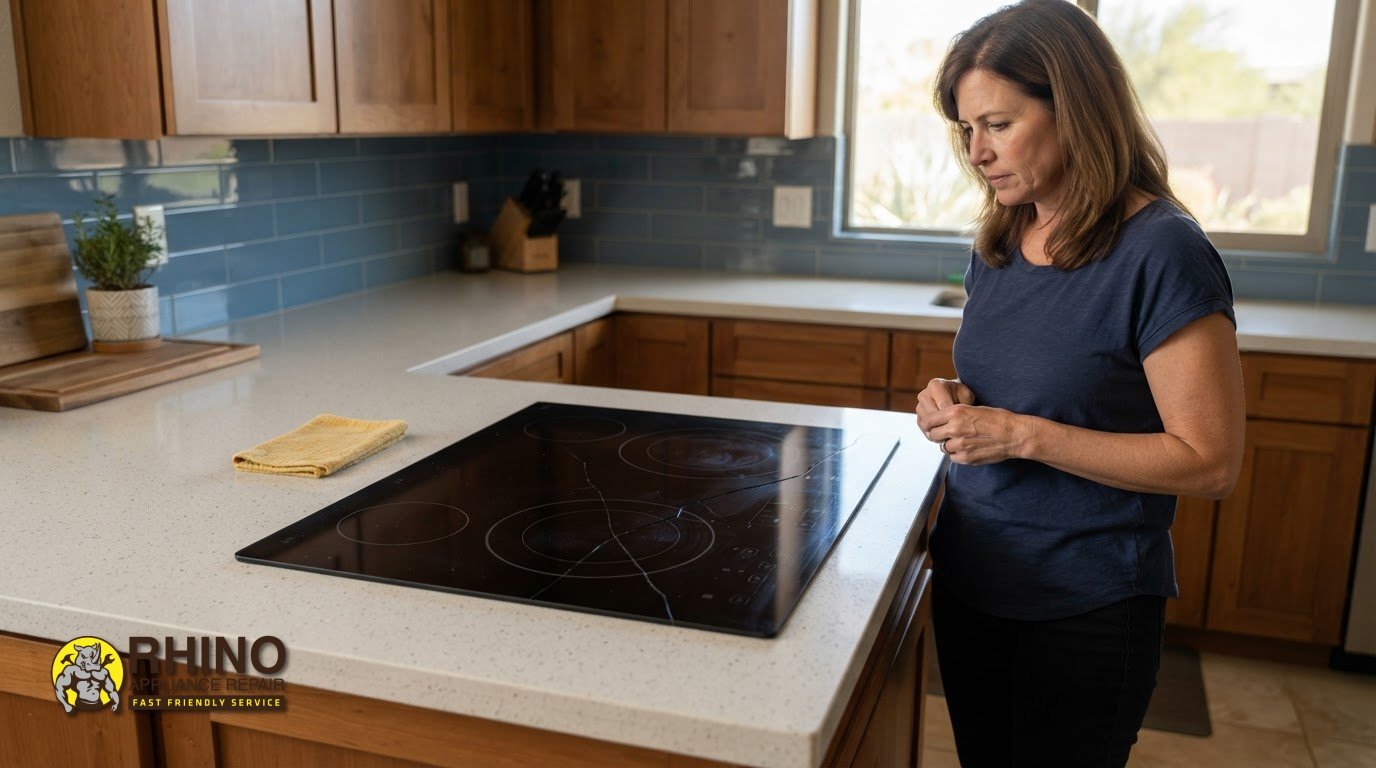
A cracked glass cooktop is more than a cosmetic problem. If you’re researching glass cooktop crack repair cost in Gilbert, start with safety: don’t use a cooktop with a structural crack. The damaged glass assembly needs replacement, not a patch.
It’s understandable to hope a thin line is only a scratch, especially if the burners still work. But spills can pass through damaged glass and reach electrical components, so continuing to cook may create a hazard.
This guide explains how to distinguish scratches from structural cracks, which warning signs mean you should stop using the cooktop, and why replacing damaged glass may make more sense than patching it. It also covers the factors that shape a repair-versus-replacement decision, including the appliance’s condition, the extent of the damage, and parts availability. Use these details to assess the issue before deciding what to do next.
Key Takeaways
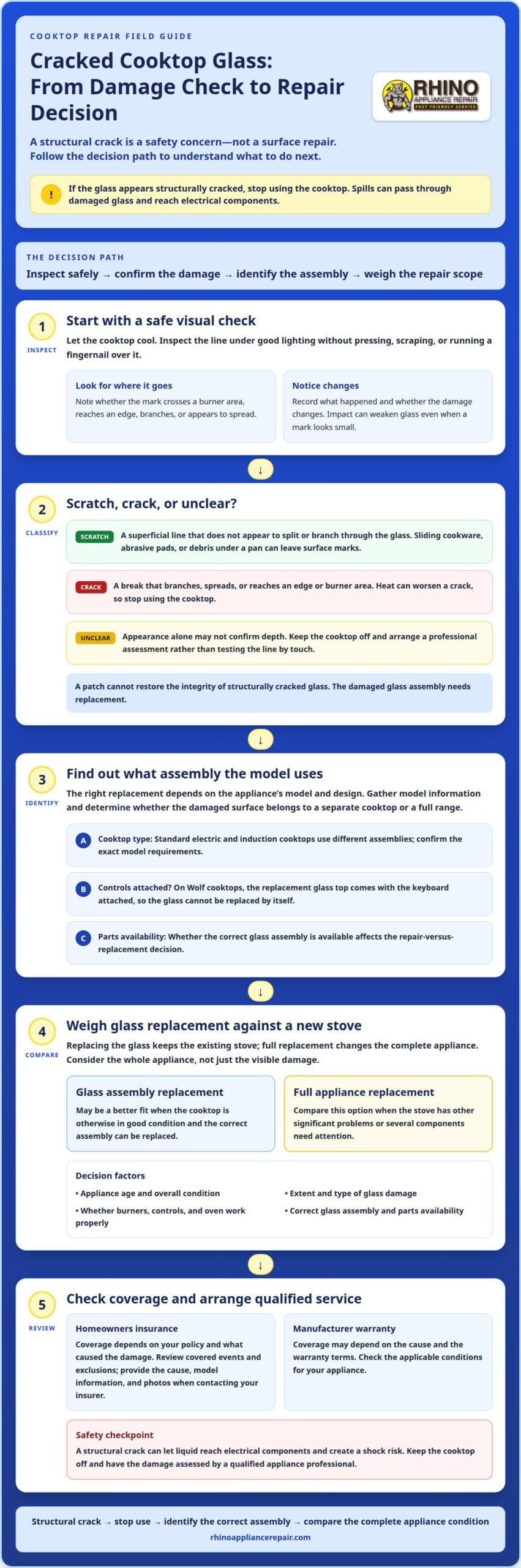
- Stop using a cooktop if the glass has a structural crack; damage can expose electrical components to spills and needs more than a surface patch.
- Learn how to tell a surface mark from a crack by checking whether the damage appears to break through or spread across the glass.
- Replacement decisions depend on the damage, the cooktop’s overall condition, and whether the correct glass assembly is available.
- Impact damage can weaken the glass even when the mark looks small, so note what happened and watch for spreading or new chips.
- Warranty coverage may depend on what caused the damage, so the cause and condition of the cooktop matter when reviewing coverage.
Replacing rather than patching cracked or pitted glass
A structural crack calls for replacing the glass assembly, not covering the damage with a patch. The right repair scope depends on the cooktop’s design and the condition of the rest of the appliance.
Cooktop Glass Versus Full Stove Replacement
Replacing the glass keeps the existing stove, while full replacement means changing the complete appliance. This distinction matters when the burners, controls, and other components still work as intended. For example, an isolated crack on an otherwise functional electric range may call for glass replacement. A stove with other significant problems needs a broader repair-versus-replacement comparison.
Glass replacement varies by cooktop type. Standard electric and induction cooktops use different assemblies, so the correct replacement depends on the appliance’s model and design. Before deciding, identify the model information and whether the damaged surface is a separate cooktop or part of a full range. This helps establish whether the glass can be replaced on its own.
Some assemblies include more than the glass. On Wolf cooktops, the replacement glass top comes with the keyboard attached, so the glass cannot be replaced by itself. That changes the job’s scope. A technician needs to identify the specific assembly before comparing glass replacement with replacing the whole stove.
Repair Versus Replacement Considerations
The repair-versus-replacement decision means weighing glass assembly replacement against buying a complete stove. It depends on the appliance’s age, overall condition, damage, and parts availability. A cooktop in good condition with a replaceable assembly may be a better candidate for glass replacement than one with other component problems. Model details matter, particularly when the controls are attached to the glass.
Consider the whole appliance, not just the visible mark. A surface scratch differs from a structural crack, while pitting can affect the cooking surface in a way a coating cannot correct. Also consider whether the burners, controls, and oven still operate properly. If several parts need attention, replacing only the glass may not address the appliance’s overall condition.
- Identify whether the appliance is a separate cooktop or a full range.
- Compare standard electric and induction assembly requirements for the exact model.
- Check whether the glass comes with attached controls, as on Wolf cooktops.
- Weigh the glass condition alongside the stove’s other working components.
These details help clarify the decision before work begins. A qualified appliance technician can assess the damage and determine whether the correct glass assembly fits the model. For a structural crack, stop using the cooktop while arranging professional service. A patch cannot restore the glass assembly’s integrity.
Identifying surface scratches versus structural cracks
A surface scratch marks the finish, while a structural crack breaks through the glass. On an electric cooktop, inspect the surface under good lighting. A shallow mark may look like a thin line without branching or separating the glass. A crack may spread, branch, reach an edge, or look more visible from different angles. Appearance alone can’t confirm how deep the damage is.
Don’t press, scrape, or run a fingernail over the line to test its depth. Instead, let the cooktop cool and inspect the mark without touching it. Note whether it crosses a burner area, reaches an edge, or changes after normal use. Because heat can worsen a crack, stop using the cooktop if the glass appears structurally damaged.
Small scratches usually affect the surface, not the glass structure. They can result from sliding cookware, abrasive cleaning pads, or debris trapped under a pan. A scratch may remain visible after cleaning, but that alone doesn’t mean the glass is cracked. Clean a cool surface with cooktop cleaner and a soft cloth, following the appliance manufacturer’s care instructions.
- Scratch: A superficial line that doesn’t appear to split or branch through the glass.
- Crack: A break that branches, spreads, or reaches an edge or burner area.
- Unclear mark: Keep the cooktop off and arrange a professional assessment.
A razor scraper can remove some cooked-on residue, but it isn’t a repair tool for scratches. If the manufacturer permits a scraper, use it only on a cool surface and keep the blade at an angle under 30 degrees. Avoid abrasive pads and forceful scraping, which can add marks or worsen existing damage. A deep line needs assessment, not aggressive cleaning.
Repairing scratched cooktop glass depends on the appliance and the type of damage. Surface scratches may not be removable with a patch, and repair options depend on the cooktop and the damage. Small cracks also shouldn’t be treated as ordinary scratches. If you can’t confidently distinguish the two, a professional cooktop assessment can help determine the next step.
Is a Cracked Glass Cooktop Dangerous?
Yes. A structural crack can expose electrical components to spills, creating a shock risk. The U.S. Consumer Product Safety Commission identifies liquid reaching electrical components as a primary shock trigger in cracked cooktops. Stop using the appliance if the glass is cracked and arrange qualified service.
Does homeowners insurance cover a cracked glass cooktop? Coverage depends on your policy and what caused the damage. Review the covered events and exclusions, then contact your insurer with the cause, model information, and photos of the damage.
Warranty coverage is separate from homeowners insurance. Many manufacturers provide a 1-year limited warranty on parts and labor, but coverage depends on the cause of damage. A manufacturing defect may be treated differently from a crack caused by a dropped pot, impact, or misuse. Check the warranty terms for your exact model before arranging paid work.
Warranty and Recall Options
Find the appliance’s model and serial numbers before contacting the manufacturer. These identifiers can help locate warranty terms and determine whether a recall applies to that specific unit. Keep the purchase record and clear photos of the glass to document when the damage appeared and what happened beforehand.
A recall is different from a warranty claim. A warranty addresses coverage under the manufacturer’s terms, while a recall concerns a product issue identified for corrective action. Search the manufacturer’s recall information using the model number and review any notice carefully. Don’t assume a cracked surface qualifies for a recall just because the appliance has a known model or brand.
What Can Affect Warranty Coverage?
The cause and location of the damage matter. For example, a crack that appears without an impact may raise a different warranty question than glass broken by a heavy pan falling on it. The manufacturer may also consider the appliance’s model, purchase date, and warranty period. Describe what happened accurately, and take photos before cleaning or altering the damaged area.
Keep the relevant records together: the purchase receipt, warranty booklet, model and serial numbers, photos, and any communication with the manufacturer or insurer. If a technician has assessed the cooktop, retain the written findings. These details can help distinguish a possible manufacturing issue from accidental damage or normal wear.
Whatever the warranty status, don’t use a cooktop with a structural crack while a claim is being reviewed. Heat and spills can worsen the damage or reach electrical parts. A qualified technician can assess the glass and explain whether the assembly needs replacement. Coverage decisions are separate from the safety decision to leave a damaged cooktop switched off.
Damage caused by dropped objects or external force
A dropped pot can chip or crack glass immediately, while pressure on the cooktop can leave damage that appears later. The object, impact location, and visible marks can help explain what may have happened.
Damage From Dropped Objects
A falling object concentrates force on a small area of glass. For example, a cast-iron skillet slipping from someone’s hand may chip the surface or create a line near a burner. Even a small chip can mark a weak point, so note its location and whether the line spreads. Don’t press the damaged spot or heat the burner to test it.
Record the event while the details are clear. Note whether a pot, utensil, or jar fell, where it landed, and whether the cooktop was hot or cool. Take a photo from above and another at an angle without touching the damaged area. These details can help distinguish impact damage from an older surface mark during a professional assessment.
Where the object landed matters. A chip beside a burner may affect a different part of the glass assembly than damage near the controls or outer edge. Small fragments may also remain on the cooktop after an impact. Keep people away from loose shards, don’t sweep them toward a burner, and leave the appliance unused if the glass has broken.
Damage From External Force
External force can mean pressure or impact that doesn’t come from a dropped object. For example, leaning hard on a glass surface while reaching across the counter can stress the cooktop. The source matters because force may create a crack without leaving a clear impact mark, making visual assessment more difficult.
Other examples include a heavy appliance or countertop item striking the surface during a move, or a cookware handle hitting the glass. A crack may start near the contact point and extend beyond it. Look for signs of contact on nearby cabinets and the counter edge, but don’t shift a heavy appliance across the cooktop to investigate.
After an impact, keep the cooktop off and note which burner was closest to the damage. Photograph the full surface, then take close-ups of chips, branching lines, or displaced fragments. Avoid abrasive pads and scraping, which can alter the visible evidence. If the impact left broken glass or a spreading crack, stop using the appliance and arrange qualified service.
For a glass cooktop, knowing what caused the damage helps a technician assess whether the surface needs replacement and whether surrounding components need inspection. Describe the event plainly, including a dropped pan or pressure during a move. Don’t cover a crack with adhesive or attempt a patch; that won’t establish whether the glass is safe to use.
Safety concerns from cracked or broken glass
A cracked cooktop can pose more than a cut hazard. Liquid may pass through the damaged surface and reach electrical components, while heat can worsen an existing break. If the glass is structurally cracked or broken, stop using the appliance and arrange qualified service.
The U.S. Consumer Product Safety Commission identifies liquid spills reaching electrical components as a primary shock trigger in cracked cooktops. For example, soup boiling over a damaged burner area may seep through a crack. Don’t test the surface by heating a burner or pouring water nearby. Keep the cooktop off until it has been assessed.
Broken edges and loose fragments create a separate injury risk. A cracked area may shed small pieces during ordinary handling, such as moving a pan or wiping the surface. Keep children and pets away, and don’t pick up fragments with bare hands. Don’t place cookware on the damaged area, even if the crack looks narrow.
Heat adds uncertainty. A cooktop warms and cools during normal use, and these changes can worsen damage to the glass assembly. Pay particular attention to a line that reaches a burner or control area. Wolf’s guidance says not to use a cooktop with damaged glass if the affected area touches a burner element or controls. A burner that still operates does not prove the surface is safe.
- Stop cooking: Don’t use any burner on a cooktop with structural glass damage.
- Keep clear: Prevent contact with sharp edges and loose glass pieces.
- Watch for electrical warning signs: Stop use if you notice a burning odor, unusual heat, or visible damage near controls.
- Arrange service: Have a qualified professional assess the glass and related components.
Don’t attempt a patch, open the appliance, or work around its wiring. Many electric cooktops use a dedicated 240 V circuit, and internal electrical work requires appropriate expertise. Leave disconnection and inspection to a qualified professional. If liquid has spilled through a crack, mention that during the service call.
A structural crack requires replacement of the glass assembly, not a cosmetic repair. A technician can assess whether the crack affects nearby components and identify the correct next step for the model. For a damaged residential cooktop in the East Valley, schedule professional cooktop repair rather than continuing to use the appliance.
Rhino Appliance Repair: Refrigerator Repair
Rhino Appliance Repair provides residential cooktop repair when cracked glass, a damaged burner, or another cooktop problem needs professional attention. If the glass is structurally cracked, leave the appliance off and share the damage details and cooktop model when arranging service. This helps focus the assessment on the glass assembly and related components.
For homeowners in Gilbert, Chandler, Queen Creek, Tempe, Mesa, and San Tan Valley, a professional diagnosis can clarify whether the cooktop needs glass replacement or attention to another fault. Rhino Appliance Repair also handles refrigerator, freezer, ice maker, and washer repair for household appliances.
Contact Rhino Appliance Repair to discuss residential appliance repair for your home.
Make Your Next Step a Clear One
The next step is to move from uncertainty toward a practical repair decision. For glass cooktop crack repair cost in Gilbert, the question isn’t only what the damaged surface needs, but whether that work makes sense for the appliance overall.
Before arranging service, consider what you need from your cooking appliance: continued use of the current range, repair of a separate cooktop, or a broader replacement decision. A qualified assessment can define the repair scope and identify related concerns that may affect your choice. This gives you a sound basis for comparing repair and replacement instead of relying on a surface patch or guesswork.
Rhino Appliance Repair provides residential appliance repair in the East Valley, including cooktop repair. If you want professional help assessing a damaged cooktop, contact Rhino Appliance Repair. A clear diagnosis can help you choose a sensible path forward for your kitchen.
Frequently Asked Questions
Quick Diagnosis: Is It Safe to Use?
If the surface is visibly broken, don’t cook on it. If you’re unsure about a mark, note its shape and location, including whether it reaches a burner or control area, and share those details during an assessment. A clear photo taken from above can help document the damage. Don’t run a burner as a test, since heat won’t reliably identify the type or extent of the damage.
Should You Repair or Replace Your Broken Cooktop?
Choose based on the cooktop’s overall condition and the proposed work. A useful comparison considers whether the burners and controls function normally, whether the correct replacement assembly is available, and whether the rest of the appliance needs attention. Request the repair scope in writing, then compare it with replacing the complete unit. This keeps the decision focused on the appliance, not just its damaged surface.
How much does glass cooktop crack repair cost in Gilbert, Arizona?
Glass cooktop crack repair cost in Gilbert depends on the model and the work involved. Before comparing estimates, provide the appliance’s model information and describe where it is damaged. Review whether the proposed scope includes the glass assembly, attached controls, and labor. Estimates are easier to compare when they cover the same components and repair outcome, rather than using a vague “glass repair” description.
What is the average cost to replace a cracked glass cooktop in Gilbert?
There isn’t one average cost that applies to every cooktop in Gilbert. The replacement part and installation scope vary by appliance design and model. For a useful comparison, request an estimate based on the unit’s identification information, not a generic cooktop description. Make sure it distinguishes glass assembly replacement from replacing the entire appliance, so you can compare the options on equal terms.
Do appliance repair companies in Gilbert replace cooktop glass or the entire appliance?
Both approaches may be appropriate, depending on the appliance’s design and condition. A service assessment can clarify whether the glass assembly is a separate replacement component or part of a larger assembly. Ask for a recommendation that identifies the specific work and any affected controls. This gives you a clear basis for deciding whether component-level repair or full appliance replacement better suits your situation.
What factors affect glass cooktop crack repair costs?
The model, assembly configuration, parts availability, and required work all affect the repair scope. To help assess your cooktop, gather the model information, photograph the damage, and describe any other symptoms, such as a burner that wasn’t working before the impact. This context helps distinguish glass-only work from repairs involving additional components and makes estimates easier to compare.
Can a cracked glass cooktop be repaired, or does it need replacement?
Filling or covering a structural break won’t restore the glass. The appropriate remedy is replacement of the damaged glass assembly. A surface scratch is a different issue and may not require the same work. If you’re unsure about the mark’s depth, note whether it branches, reaches an edge, or crosses a cooking zone. This helps a technician assess the condition without you scraping or pressing the surface.
Is it safe to use a glass cooktop with a crack?
No. Don’t cook on a cooktop with broken glass, and don’t heat a burner to confirm the damage. If there has been a spill, mention where it landed and whether it reached the damaged area when arranging service. If you’re unsure about a line, record its location and appearance instead of testing it. A professional assessment can determine the next step for that appliance.