A freezer that still feels cold may not be holding a steady temperature. Softening food, unusual frost, or a freezer that runs differently can each have several possible causes. If you’re dealing with freezer temperature problems Gilbert homeowners face, note what has changed before assuming a part has failed.
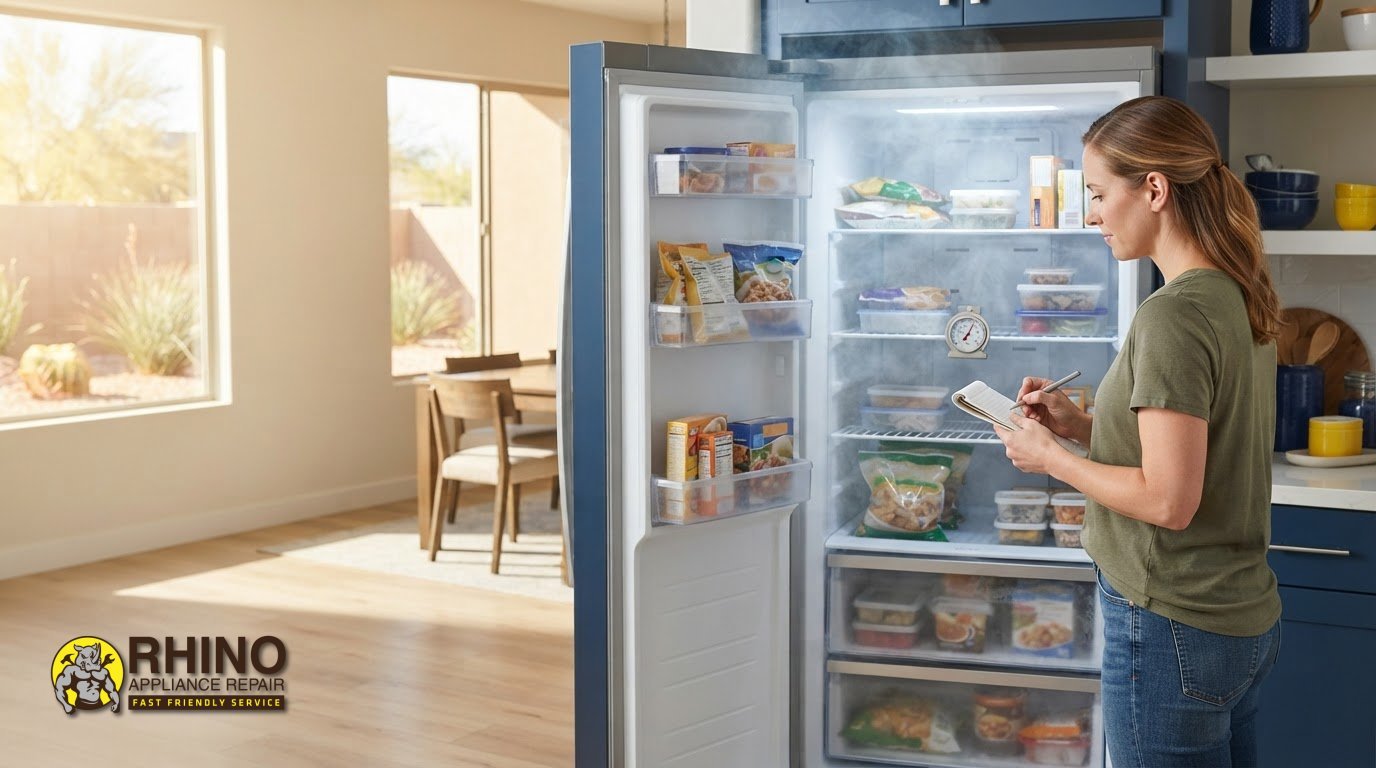
Start with the symptom pattern. A thermometer reading and notes about when the concern occurs can help describe the problem. Keep your checks visual and avoid opening sealed panels or attempting electrical repairs.
This guide explains what to observe, what you can safely check, and when to arrange professional diagnosis. Heat around a freezer may also be relevant if it’s in a garage or another warm area. Rhino Appliance Repair provides residential freezer repair in Gilbert and nearby East Valley communities.
Key Takeaways
- Note whether the temperature concern is persistent, intermittent, or newly noticed.
- Similar symptoms can have different causes, so don’t assume a particular component has failed.
- Record visible display information and changes in freezer use or surroundings.
- For freezer temperature problems Gilbert homeowners can’t resolve through basic checks, professional diagnosis can help identify the next step.
- Burning odors, damaged wiring, or water near electrical components are reasons to stop using the freezer and seek qualified professional service.
Freezer Temperature Problems in Gilbert: Recognize the Symptoms First
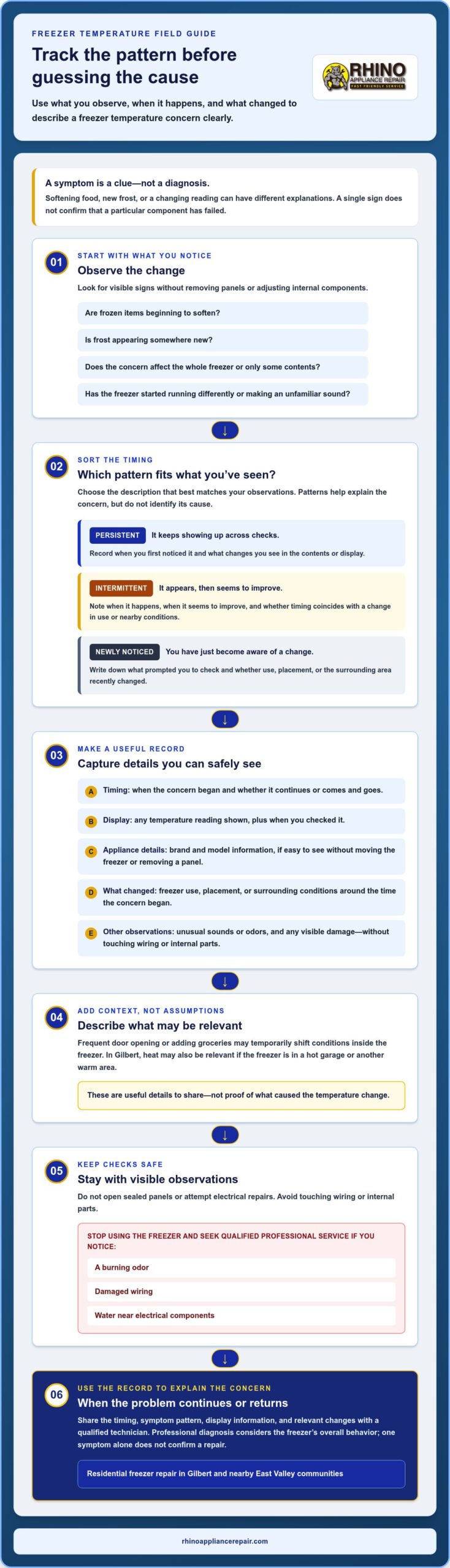
A freezer may seem warmer than usual, fluctuate from one check to the next, or stop keeping food consistently firm. Softening food, new frost, or a change in how the freezer runs are worth noting, but none identifies the cause on its own.
Start with what you notice and when. Write down when the change began and whether it continues or comes and goes. The freezer’s location and surroundings may be useful context, but a symptom alone doesn’t prove that local heat or a particular part is responsible. These details make freezer temperature problems Gilbert homeowners notice easier to describe clearly.
What freezer temperature trouble can look like
Look for changes without removing panels or adjusting internal components. Are frozen items beginning to soften? Is frost appearing somewhere new? Does the concern affect the whole freezer or only some contents? These observations are more useful than a guess about the cause. A Freezer keeps stored items cold, but signs of trouble can vary.
A persistent concern shows up repeatedly or across different checks. An intermittent one appears at certain times and then seems to improve. Neither pattern points to a single repair. If the appliance displays a temperature reading, record it along with the time. A single reading may not explain a change that comes and goes.
Which details help explain the problem
Simple notes can make a service conversation more useful. Record the brand and model information if it’s easy to see without moving the appliance or removing a panel. Note when the issue began, whether it’s constant or occasional, and what changed around that time. Changes in use, placement, or surrounding conditions are helpful context, not proof of a cause.
- Describe what you noticed, such as softening contents, visible frost, or an unfamiliar change in operation.
- Write down display readings if the freezer provides them, including when you checked.
- Note unusual sounds or odors and describe visible damage without touching wiring or internal parts.
- Include relevant changes, such as moving the freezer or changing how it’s used.
Keep the notes specific. “Food felt softer this morning” describes an observation; “the compressor is broken” assumes a diagnosis. If you notice a burning odor, damaged wiring, or water near electrical components, stop using the freezer and seek qualified professional service.
Why a Freezer May Not Hold Temperature: Possible Causes, Not Guesswork
A changing reading or softening food is a reason to pay attention, not proof that a particular part has failed. Conditions inside the freezer may shift temporarily with normal use, such as opening the door or adding groceries. A concern that keeps returning, lasts, or affects how well the contents stay frozen deserves closer attention. The pattern helps explain what is happening, but it doesn’t confirm the cause.
In Gilbert, outdoor heat may be relevant if a freezer is in a hot garage or another warm area. Share that context when describing the problem, but don’t assume it explains the temperature change. The appliance’s location, use, and observed behavior all matter.
How to think about a changing freezer temperature
An observation is something you notice, such as a reading that varies or food that seems softer. A confirmed appliance fault requires assessment beyond that observation. Compare what you notice over time and whether it coincides with a change in use or surroundings. Treat a display reading as one piece of information, not a diagnosis.
Symptom patterns guide diagnosis; one sign alone rarely identifies the cause.
Why the same symptom can have different explanations
Similar temperature concerns can arise in different circumstances. A freezer may have had its door opened often, may be in a warmer spot, or may be operating differently than usual. An issue with how the appliance closes or maintains its internal conditions may also need assessment. These are possibilities to consider, not conclusions about what has failed.
For example, a freezer that seems warmer after frequent use and one that stays warmer over repeated checks may look similar at first. The timing and persistence of the change offer useful clues, but neither identifies a repair by itself. Diagnosis depends on the freezer and its observed behavior.
A technician considers the overall picture rather than replacing a component based on one symptom. Your notes about timing, use, and surroundings can help explain what’s happening. If the concern continues or recurs, Rhino Appliance Repair provides residential freezer repair in Gilbert and nearby East Valley communities.
Freezer Temperature Problems: Compare the Symptom Patterns You Observe
Not every temperature concern behaves the same way. Describing whether it is persistent, intermittent, or newly noticed gives a technician a clearer starting point than naming a part you suspect has failed. Use the comparison below to organize what you’ve seen. These patterns help describe the issue, but don’t confirm its cause.
| Pattern | What to record |
|---|---|
| Persistent | When you first noticed the concern, whether it continues across checks, and what changes you see in the freezer’s contents or display. |
| Intermittent | When it appears, when it seems to improve, and whether it coincides with a change in use or nearby conditions. |
| Newly noticed | What prompted you to check, what you observed, and whether anything about use, placement, or the surrounding area recently changed. |
Persistent versus intermittent temperature concerns
A persistent concern keeps showing up when you check; an intermittent one comes and goes. Note when you first noticed the pattern and whether it changes over time. If the freezer provides a display reading, record what it shows and when. Stick to observations rather than deciding what they mean. A change that follows a door opening or a shift in use is useful context, not proof of a fault.
You might note that the freezer seemed warmer on several checks, or that the concern appeared only at certain points in your routine. Avoid setting your own cutoff for how long to wait. Report a recurring or ongoing change so it can be considered alongside the appliance’s other symptoms.
When Gilbert’s outdoor conditions may be relevant context
Outdoor heat matters as context if it affects the freezer’s surroundings, such as when the appliance is in a garage or another area exposed to hot conditions. If that applies, record where the freezer sits and whether the nearby environment changes. This doesn’t establish that heat caused the concern, and it shouldn’t be assumed for every home in Gilbert.
Also note other nearby changes, such as a recent move or a different pattern of use. The goal is to give a clear account, not to identify a cause in advance. For freezer temperature problems Gilbert homeowners are tracking, a concise description of what happened and when can help focus a professional assessment.
Symptom patterns help organize a diagnosis, but they don’t confirm a specific fault. Keep your notes factual and share them along with visible display information. The freezer’s behavior and its context need to be assessed together.
What Gilbert Homeowners Can Safely Check Before Calling for Freezer Repair
You can gather useful information without opening panels or trying to repair the freezer. Keep your checks visual and simple. Note the appliance’s location and any changes in nearby conditions, especially if it sits in a garage or another area exposed to outdoor heat. That context may help describe the situation, but it doesn’t prove what caused the problem.
Safe observations to record
Take a quick look at the freezer’s exterior and surrounding area. Don’t move electrical connections, remove covers, or reach behind the appliance if doing so could strain a cord or bring you near exposed wiring. Note what you can observe:
- Write down display information, including a visible temperature reading or alert, if the freezer has a display.
- Describe changes in how the contents look or feel. Avoid moving items around to inspect internal components.
- Check visually whether the door appears to close fully and whether anything is visibly obstructing it. Don’t force or adjust parts.
- Note changes in use, placement, or surrounding conditions, such as a recent move or greater exposure to heat.
- Record unusual sounds, odors, or visible damage without touching suspect areas.
Be specific, but don’t try to interpret every sign. “I heard a new sound after moving the freezer” is useful; it doesn’t establish that moving it caused a fault. A short written record can help a technician understand a recurring or changing concern.
When to stop using the freezer and seek help
Some signs call for more than observation. If you notice a burning odor or damaged wiring, stop using the freezer and seek qualified professional service. Treat water near electrical components as a hazard. Don’t touch the water or nearby electrical parts. Arrange qualified service rather than attempting a repair yourself.
Don’t perform live electrical tests, handle refrigerant, or bypass safety devices. These are not safe troubleshooting steps. Don’t remove panels to look for a cause or operate the freezer with a cover removed. If you’re unsure whether a visible condition is safe to inspect, leave it alone and describe it to a professional.
If basic observations don’t resolve a persistent or recurring concern, arrange a professional diagnosis. Arrange residential freezer repair with Rhino Appliance Repair in Gilbert and nearby East Valley communities.
When to Arrange Freezer Repair in Gilbert with Rhino Appliance Repair
A temperature concern that continues or keeps returning is a good reason to arrange professional diagnosis. Safe observations can help explain what you’re seeing, but they can’t confirm which part, if any, needs repair. If the freezer still isn’t holding temperature consistently, having it assessed can clarify the next step.
One symptom can have several possible explanations. A freezer that seems warmer, runs differently, or shows a change on its display may need an assessment of its specific behavior. A technician can consider the symptom pattern and appliance details together rather than relying on a single clue. For freezer temperature problems Gilbert residents are experiencing, clear notes help make that conversation more useful.
What to share when arranging freezer service
Before contacting the service team, gather a few details if they’re readily available. Describe when the concern began, whether it’s constant or intermittent, and what you’ve observed. Include visible model information, unusual odors or sounds, and any warning signs or damage. Don’t remove covers or touch damaged areas to find a model label.
- The symptom pattern and when you first noticed it.
- The freezer’s brand and visible model information, if accessible.
- Any display messages, unusual sounds or odors, or visible damage.
- Relevant changes in use, placement, or nearby conditions.
Local residential freezer repair in Gilbert
Rhino Appliance Repair provides residential freezer repair in Gilbert and nearby East Valley communities, including Chandler, Queen Creek, Mesa, Tempe, and San Tan Valley. The team commonly services major residential brands including Samsung, LG, Whirlpool, GE, KitchenAid, Maytag, Kenmore, Electrolux, Frigidaire, Amana, and Bosch.
Published hours are Monday through Friday, 7:00 AM to 7:00 PM, and Saturday, 8:00 AM to 1:00 PM. Rhino is closed Sunday. If the concern is persistent or recurring, share your notes and arrange a professional assessment during business hours. You don’t need to identify the failed part before reaching out.
Contact Rhino Appliance Repair to discuss residential freezer repair in Gilbert. A clear description of what you’ve observed is a helpful place to start.
Take the Next Step Toward a Clear Diagnosis
The goal of troubleshooting isn’t to guess which part failed. It’s to get a clearer picture of what the freezer is doing and whether the concern continues. That distinction helps you decide what to do next.
If freezer temperature problems Gilbert homeowners notice remain unresolved, focus on getting a diagnosis rather than trying one adjustment after another. Record the symptom pattern and leave the cause to a professional assessment.
For persistent or recurring freezer concerns in Gilbert and the East Valley, contact Rhino Appliance Repair to arrange residential freezer service.
Frequently Asked Questions
Why is my freezer temperature changing?
A changing temperature can reflect a short-lived shift or an issue that needs professional diagnosis. Check whether you’re comparing the freezer’s displayed setting with a separate temperature reading, since they describe different things. If you use a separate thermometer, place it among stored items rather than against a wall, and record when you check it. Follow the appliance manual for guidance specific to your model.
Can extreme heat around my Gilbert home affect a freezer?
Surrounding heat can matter, particularly if the freezer is in a garage or another warm space. Check the owner’s manual for the model’s placement guidance before changing where the appliance sits. A warm spell alone doesn’t establish that the freezer has a fault. Consider its operation and the conditions around it together.
Is it safe to keep using a freezer that smells like something is burning?
No. Stop using the freezer and seek qualified professional service. Don’t turn it back on to see whether the odor returns, open panels, or try to locate the source yourself. If you can identify the area the odor seems to come from without approaching or touching the appliance, share that observation when arranging service.
What should I check before calling for freezer repair in Gilbert?
Note the freezer’s visible information and whether there was a recent power interruption or a change in how the appliance is used. Check the owner’s manual for user-level guidance specific to your model. Avoid repeatedly changing controls or attempting electrical checks. If food is beginning to soften, limit unnecessary door openings while you decide on the next step.
Does Rhino Appliance Repair service freezers in Gilbert?
Yes. Rhino Appliance Repair provides residential freezer repair in Gilbert. When describing the appliance, mention whether it’s a standalone freezer or the freezer section of a refrigerator. You can also explain whether it’s in a kitchen, garage, or another setting, without trying to diagnose the issue.
Which freezer brands does Rhino Appliance Repair commonly service?
Rhino Appliance Repair commonly services Samsung, LG, Whirlpool, GE, KitchenAid, Maytag, Kenmore, Electrolux, Frigidaire, Amana, and Bosch appliances. If the brand name isn’t obvious, check the appliance’s exterior or owner’s paperwork rather than removing a panel. Sharing the brand helps identify the freezer being discussed.