The fan going quiet doesn’t automatically mean a part has failed. A convection oven fan not working Gilbert homeowners notice may relate to the selected setting or the oven’s operating sequence. Persistent silence, grinding sounds, or changes in cooking can also point to a problem. Because several causes are possible, the symptom alone can’t identify what’s wrong.
Start with observations, not a teardown. Check that you’ve selected a convection mode, note when the sound changes, and look for visible debris only when the oven is cool. Don’t reach behind panels or touch the fan. If you notice a burning odor, damaged wiring, or another hazard, stop using the oven and seek qualified professional service.
This guide explains what a stopped fan may indicate, which checks are safe, and when to arrange oven repair in Gilbert. It also covers what to note for a professional diagnosis, including whether the issue could involve the fan, an obstruction, or another component.
Key Takeaways
- A convection oven fan not working Gilbert homeowners notice can have several possible causes. The symptom alone doesn’t identify the faulty part.
- Compare whether the fan appears still, sounds unusual, or works intermittently. Note what happens during normal use.
- Use the oven manual and external observations for safe checks. Don’t remove panels, probe wiring, or bypass safety devices.
- For a persistent fan issue or recurring noise, Rhino Appliance Repair provides residential oven diagnosis and a parts estimate in Gilbert and nearby East Valley communities.
Convection Oven Fan Not Working in Gilbert: What the Symptom Tells You
The oven is set to convection, but you don’t hear or see the fan moving. A fan that appears stopped is a symptom, not a diagnosis. The cause could relate to the oven’s operating sequence, its controls, or a component that needs professional attention.
Oven designs and control behavior vary by model. Some fans may operate only under particular settings or conditions, so a quiet fan at one moment doesn’t automatically confirm a breakdown. Check your owner’s manual for how your model is intended to operate. If the instructions don’t explain what you’re observing, a qualified diagnosis can help identify the cause without guesswork.
What does a convection fan do?
During convection operation, a fan circulates heated air around the oven cavity. This movement is part of how a convection oven works, though the fan’s timing and operation can differ between models. For a general overview of convection oven operation, see this reference. It explains the basic design, but it can’t establish the expected operating sequence for your specific oven.
Which observations help describe the problem?
Start with what you can safely notice during ordinary use. Record the selected cooking mode, whether the fan appears to move, and whether the symptom happens again. Note when you first noticed the change. Don’t reach into the oven or remove a cover for a closer look.
Listen for unusual sounds, such as scraping, rattling, or squealing, and note when they occur. A burning odor or visible damage is more urgent: stop using the oven and seek qualified professional service. Don’t investigate inside the appliance, even if you think you can locate the source.
A short record can make a service conversation more useful. For example, note that the fan appeared still during a particular convection setting, or that a sound occurred only while the oven was in use. Stick to observations rather than guessing which part has failed. Similar symptoms can have different explanations, and what you can see or hear from outside may not reveal the underlying fault.
If the manual describes a fan cycle that matches what you observe, follow its guidance. If the fan remains inactive in a mode where the manual indicates it should operate, or the symptom persists, arrange professional oven diagnosis. For homeowners dealing with a convection oven fan not working Gilbert, these notes can help a technician understand the concern while keeping checks to safe, external observations.
Why a Convection Oven Fan May Stop: Possible Causes, Not Assumptions
A convection fan that appears inactive can have several possible explanations. The observation alone doesn’t show which one applies. A technician may consider the fan’s normal operating sequence, a possible obstruction, a mechanical issue, or an electrical or control concern. These are areas to investigate, not confirmed faults.
Possible areas for investigation include:
- Normal operating sequence: The oven may run the fan only under certain conditions for that model or setting.
- Obstruction: Something may be interfering with the fan’s movement.
- Mechanical concern: A fault affecting the fan’s ability to turn may be involved.
- Electrical or control concern: The system that directs or supplies power to the fan may need attention.
These possibilities can’t be sorted out reliably by guessing from the symptom. Similar fan behavior may have different explanations, and a cause that seems obvious from outside may not be the actual fault. Don’t treat any one item on the list as a confirmed diagnosis or try to correct it by opening the oven.
How can one symptom have several explanations?
A fan that seems still is an observation, not proof of a particular failure. The selected mode or operating sequence could explain why it isn’t running at that moment. In another situation, the same symptom could involve a fault. Since oven behavior varies by model, the observation doesn’t point to the same cause in every kitchen.
What information can help a technician diagnose it?
If you request service, note the oven’s brand and model from an accessible label or the manual. Describe the setting and what you observed, including any sound or warning sign. Don’t remove panels or attempt internal testing to gather more information. Factual notes give the technician useful context without turning an observation into a guessed repair conclusion.
Whether the fan issue relates to normal operation or a component concern depends on the oven and the circumstances. A repair decision should follow inspection, not an assumption based on a single symptom.
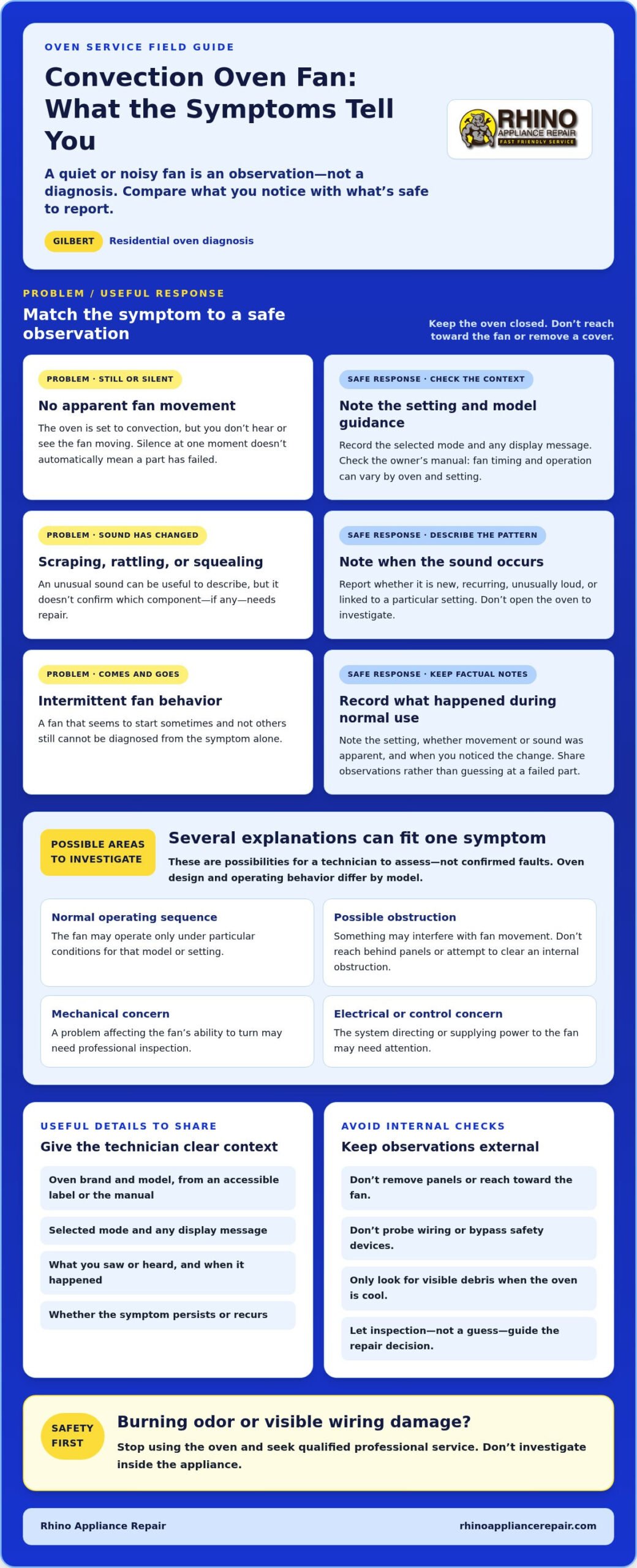
Fan Not Spinning or Making Noise? Compare the Symptoms Before Deciding
A fan that seems still, sounds different, or works inconsistently gives you useful information to report, but none of these signs confirms what has failed. The table below separates what you can observe from what a technician may need to investigate. Keep the oven closed and don’t reach toward the fan, even if you can see it.
| What you notice | What you can safely report | What it may indicate |
|---|---|---|
| No apparent movement | Selected mode, display message, and whether you can see or hear movement during normal use. | The oven’s operating sequence or a fault may explain the stillness. Silence alone doesn’t identify the cause. |
| Unusual noise | Whether the sound is new, repeated, unusually loud, or present only with a particular setting. | A change in fan movement or another operating issue may need inspection. |
| Intermittent behavior | When the fan seems to start or stop, which mode is selected, and whether the pattern repeats. | Operating conditions or an inconsistent fault could be involved. A technician can assess the pattern. |
What if the fan is silent and still?
Note the selected mode and what the display shows. If the manual explains a fan sequence, compare your observation with that guidance. Silence doesn’t prove an electrical or mechanical failure, and fan behavior can vary by model. If the symptom persists or affects normal use, arrange professional diagnosis rather than trying to access the fan.
What if the fan makes an unusual sound?
Describe the sound in everyday terms: new, repeated, rattling, scraping, or unusually loud. Note whether it occurs during a particular setting, but don’t touch, restrain, or reach toward moving components. If the noise comes with a burning odor or visible damage, stop using the oven and seek qualified professional service.
For intermittent behavior, don’t repeatedly change settings just to make the fan respond. Record what happened during ordinary use instead. For example, note whether the fan seemed to stop mid-cycle or whether the sound came and went. A brief description is more useful than a guessed repair diagnosis.
These observations help distinguish what you experienced from what still needs testing. They don’t establish whether continued use is appropriate in every case. If you’re unsure, or the oven’s behavior is affecting normal operation, leave internal inspection and repair to a qualified technician. For homeowners facing a convection oven fan not working Gilbert, a professional can assess the symptom and determine the next step.
Safe Steps for a Convection Oven Fan Problem at Home
Use a simple, safety-first approach. If there’s no burning odor, visible damage, or other immediate hazard, avoid turning a fan concern into a repair attempt. Don’t reach toward the fan, remove panels, probe wiring, or bypass a safety device. These actions can expose you to electrical and heat hazards without identifying the cause.
What can you check without opening the oven?
Limit your checks to using the controls as usual and observing the oven from a safe distance. If you notice visible damage, don’t touch it or try to move the appliance for a closer look. Record what you observed and when. Noting a symptom is reasonable; accessing internal parts or testing components is repair work.
Keep the information practical and factual:
- Describe what happened without guessing at a failed part.
- Note whether you saw visible damage or noticed another warning sign.
- Share these observations with a qualified technician rather than attempting an internal check.
Don’t use a tool or household workaround to make the fan move, and never defeat a safety feature to continue cooking. If the next step seems to require opening the oven or handling wiring, stop there.
When should you stop using the oven?
Stop using the appliance if you notice a burning odor, damaged wiring, or another electrical hazard. Don’t touch the damaged area or continue testing the oven. Seek qualified professional service. If you suspect a gas leak, stop using the appliance, move away, and seek qualified help from a safe location.
Once the situation is safe, share the observations you already have with an oven repair professional. There’s no need to reproduce a hazardous symptom or inspect inside the appliance. For a persistent fan concern without an immediate hazard, professional service can address the internal assessment and repair. Contact Rhino Appliance Repair for residential oven repair in Gilbert and nearby East Valley communities.
When to Arrange Convection Oven Repair in Gilbert
Consider arranging service if the fan behavior keeps returning, a new noise persists, or the oven no longer works as expected for the cooking mode you selected. A symptom that happens once may be hard to interpret. A repeating pattern that interferes with normal use is a clearer reason to have the appliance assessed.
Don’t wait until you’re certain about the cause before asking for help. You can report what you noticed without naming a part or deciding whether the oven is repairable. If there’s a burning odor, damaged wiring, or another safety concern, stop using the appliance and seek qualified service.
What happens during a professional oven diagnosis?
The technician considers the behavior you reported and evaluates the oven before identifying an appropriate repair path. Whether repair makes sense depends on the assessment and the condition of the appliance. Use that information to decide how to proceed rather than basing the decision on a symptom alone.
How can Gilbert homeowners take the next step?
When requesting service, give a concise description of what changed and how it affects your use of the oven. Mention any safety warning clearly. Don’t try to recreate a concerning sound or behavior just to demonstrate it. A straightforward account is enough to begin a service conversation.
If the issue is persistent or disruptive, contact Rhino Appliance Repair for residential oven repair. A professional assessment can help you make an informed decision about the appliance’s next step.
Move From Guesswork to a Clear Next Step
A fan concern doesn’t need to become a do-it-yourself repair project. If you’re unsure whether the oven is operating normally, use the model information and observations you’ve gathered to guide the next conversation. That keeps the focus on what the appliance is doing, not on guessing which component might be responsible.
For a convection oven fan not working Gilbert homeowners can turn to Rhino Appliance Repair for residential oven service. The company provides a 100% Satisfaction Guarantee, a 90-day labor warranty, and a 1-year parts warranty. If there’s a burning odor, visible wiring damage, or another safety concern, leave the oven off and seek qualified service rather than testing it further.
When you’re ready to move forward, request residential oven repair. Rhino Appliance Repair serves homeowners in Gilbert, Chandler, Queen Creek, Tempe, Mesa, and San Tan Valley, along with nearby East Valley communities.
Frequently Asked Questions
Is it normal for a convection oven fan not to run?
It can be normal for the fan to seem inactive in some situations, depending on the oven model and selected setting. Check the owner’s manual for how the mode you chose is supposed to operate. Note whether the fan remains quiet only on one setting or across different uses. If the behavior is new or keeps happening, share those details with an oven repair professional instead of opening the appliance.
Can I use my oven if the convection fan is not working?
Don’t assume another setting is safe or unaffected just because it doesn’t use convection. The answer depends on your oven and the mode, so consult the manufacturer’s manual before deciding whether to use it. If you notice a burning odor, damaged wiring, or another hazard, stop using the appliance and seek qualified service. If the fan issue persists, have the oven assessed before relying on it for cooking.
Why is my convection oven fan making noise?
An unusual fan sound can have more than one possible cause, and the sound alone can’t confirm a failed part. Note whether it’s new, intermittent, unusually loud, or tied to a particular setting. For example, record whether it happens every time you select convection or only occasionally. Don’t reach inside or remove panels to investigate. If the sound comes with a burning odor or visible damage, stop using the oven and seek qualified service.
What should I do if my oven fan stops during cooking?
Don’t reach into the hot oven or try to inspect internal parts while it’s operating. Note the selected setting and any display message or visible warning, then consult the manual once it’s safe to do so. If you detect a burning odor, damaged wiring, or another hazard, stop using the oven and seek qualified professional service. Otherwise, record whether the fan issue happens again and share that information with a technician.
Can I fix a convection oven fan myself?
Keep home checks to external observations and the manual’s instructions. Don’t remove panels, test live wiring, alter gas components, or bypass safety devices. Even if the fan looks accessible, reaching inside can create a hazard and may not reveal the cause. Several issues can produce similar symptoms. If internal inspection or testing appears necessary, leave that work to a qualified technician rather than attempting a repair yourself.
How do I arrange convection oven repair in Gilbert?
Contact Rhino Appliance Repair and describe what the fan does, when you noticed the change, and any related sounds or warning signs. If you have the brand and model information readily available, include it, but don’t take apart the oven to find a label. For a convection oven fan not working in Gilbert, clear observations help start the service conversation. Stop using the appliance if you notice a burning odor, damaged wiring, or another hazard.