

The shiny new refrigerator at the big-box store might actually be a worse investment than the 10-year-old unit currently leaking on your kitchen floor. It sounds backward, but in 2026, newer doesn’t always mean more reliable. When a major machine stops working, your first instinct is to check your bank account and brace for a massive bill. You’re stuck weighing the cost of appliance repair vs replacement while worrying if a new model will just break down even faster than the old one.
It’s a frustrating spot to be in. You want to make a smart financial choice without the hassle of measuring doorways or hauling heavy equipment. We understand the stress of a broken home routine. This guide gives you the tools to stop the guesswork. You’ll master the 50% Rule and learn exactly when to invest in a fix or pivot to a new purchase to save the most money. We’ll break down 2026 energy standards, part serviceability, and the specific signs that your current appliance still has years of life left.
Key Takeaways
- Master the “50% Rule” to determine if a fix is a smart financial investment or a waste of cash.
- Learn why the East Valley heat and dust make refrigerator maintenance a higher priority for local homeowners.
- Compare the real cost of appliance repair vs replacement by uncovering hidden installation, delivery, and disposal fees.
- Discover which specific kitchen appliances, like ovens and stoves, are almost always worth a repair rather than a full upgrade.
- Understand how a professional diagnosis prevents expensive missteps and identifies hidden secondary failures before they happen.
When to Repair vs. Replace Major Household Appliances
Deciding between a fix and a fresh start is a headache every homeowner faces. You’re staring at a broken washer, wondering if this is the first of many repairs or just a one-time fluke. The dilemma is real. Modern appliances aren’t always built with the same longevity as older generations. To make the right choice, you need to understand the cost of appliance repair vs replacement by looking at two different timelines: physical life and economic life.
The physical life is how long the machine actually spins or cools. The economic life is how long it makes financial sense to keep it. In 2026, we see a surprising trend. Many older, mechanical units are actually more reliable than their high-tech successors. These older machines avoid the complex, fragile computer boards that are prone to failure. Because of Planned Obsolescence, newer models often have shorter lifespans. This makes your 8-year-old dryer a prime candidate for a repair rather than a trip to the landfill.
The 50% Rule: A Quick Financial Baseline
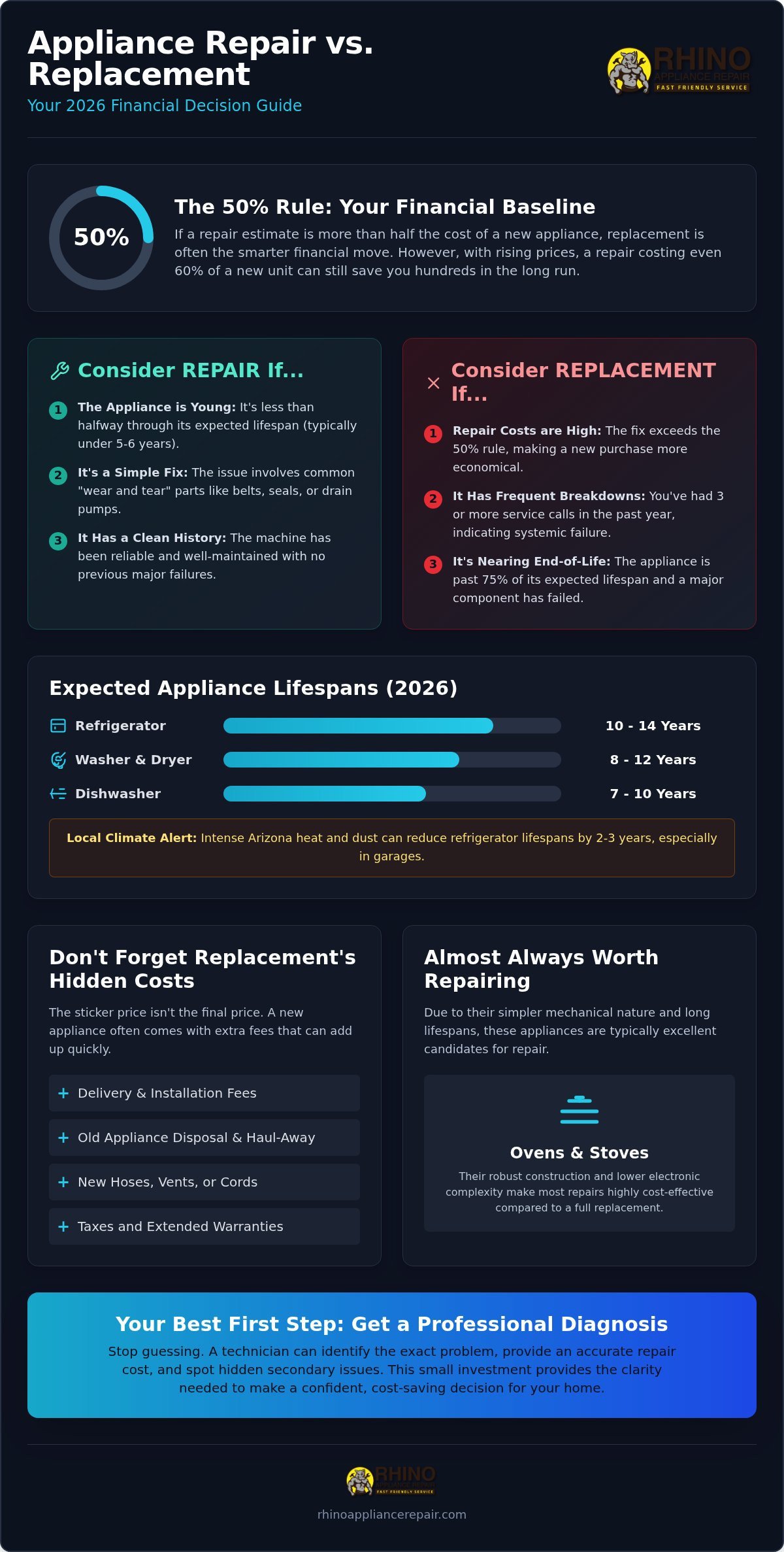
The 50% rule is a simple baseline for your budget. The 50% rule states that if the repair estimate exceeds half the cost of a brand-new unit, replacement is typically the more logical financial move. This provides a clear filter for homeowners caught in a crisis. However, this rule is becoming more flexible. With the price of new premium appliances climbing in 2026, a repair that costs 60% of a new unit might still save you hundreds when you factor in installation and taxes.
You have to look at the total value. If a repair gives you five more years of service for a fraction of the price of a new machine, the ROI is high. Don’t rush into a purchase just because the repair bill looks large at first glance. Compare it to the full “out the door” price of a replacement.
Signs Your Appliance is Worth Saving
Some machines are just “good” units that hit a small snag. These are the workhorses of the home. Your appliance is likely worth saving if:
- The unit is in its prime: It’s less than half of its expected lifespan (usually under 5-6 years).
- It’s a simple fix: The failure involves “wear and tear” parts like belts, door seals, or drain pumps.
- Clean history: The machine has been well-maintained and hasn’t required major work in the past.
Never guess the problem. A professional diagnostic call is the only way to get an accurate comparison of the cost of appliance repair vs replacement. A tech can tell you if a leak is a simple $5 seal or a catastrophic transmission failure. That clarity is worth the small initial investment. It turns a stressful guess into a confident business decision for your home.
Calculating the Financial Breaking Point: Age and Reliability
Age is more than just a number when your kitchen routine stops. To accurately weigh the cost of appliance repair vs replacement, you have to look at the calendar and the climate. In the East Valley, our environment is notoriously hard on machinery. The intense Arizona heat and fine desert dust in Gilbert and Chandler force refrigerator compressors to work harder for longer. This constant strain can easily shave two or three years off the expected lifespan of a unit, especially if it’s kept in a non-climate-controlled space like a garage.
Expected Lifespans of Common Home Appliances
Every machine has a natural expiration date. While routine maintenance helps, components eventually fatigue. In 2026, these are the standard ranges for residential units:
- Refrigerators and Freezers: 10–14 years. These are the marathon runners of your home, but high-heat AZ garages can drop this to 8 years.
- Washers and Dryers: 8–12 years. High-frequency households doing five or more loads a week should expect the lower end of this range.
- Dishwashers and Microwaves: 7–10 years. These units face high electronic complexity and moisture, which often leads to earlier failures.
The Cost of “Smart” Features in Modern Units
Modern smart-tech is a double-edged sword. While these machines use less water and power, their repairability is often lower. A single control board failure in a 2026 model can trigger an immediate replacement because the part cost is so high. Older “legacy” builds are different. They rely on mechanical timers and simple switches that are affordable to swap. If you own a well-built legacy machine, it’s usually worth preserving as long as the frame is solid and the drum is intact.
You should also track your machine’s recent history. A one-time belt replacement is just standard maintenance. However, if you’ve called a tech three times in the last year, you’re likely dealing with a systemic failure. At that point, you aren’t just paying for parts; you’re paying for the stress of constant breakdowns. If you aren’t sure if your machine has reached its breaking point, a trusted local expert can provide a clear-eyed assessment of its remaining life. We believe in being a good neighbor, which means giving you the honest truth about whether your appliance is a reliable workhorse or a money pit.
Beyond the Price Tag: Hidden Costs of New Appliance Installation
The sticker price on a new dishwasher or range is rarely the final number you’ll pay. When you are weighing the cost of appliance repair vs replacement, you must look at the Total Cost of Ownership. A targeted repair addresses a specific failure. A new purchase triggers a chain reaction of logistical expenses that can double the initial budget. From specialized installation fees to the environmental burden of e-waste, the “cheap” replacement often becomes the more expensive path.
Retailers love to advertise “free delivery,” but this is often a marketing trap. In most cases, this only covers dropping the unit in your driveway or garage. Moving a heavy refrigerator through narrow hallways, connecting delicate water lines, and hauling away the old unit typically costs extra. These fees add up quickly. If you have a built-in unit or a complex gas connection, professional installation isn’t just a luxury; it’s a requirement for safety and warranty compliance.
Modification costs are another silent budget killer. Appliance dimensions have changed significantly over the last decade. A 2026 refrigerator might be deeper or taller than your current model. This can lead to expensive cabinet trimming or countertop adjustments. You might also find that new high-tech features require plumbing or electrical upgrades that your older kitchen isn’t equipped to handle.
Installation and Logistical Friction
Measuring twice is the golden rule. Modern units often don’t fit 10-year-old footprints. Beyond the physical fit, there is the massive time cost. A professional repair can often be completed the same day or within 48 hours. A new delivery might involve weeks of waiting for stock followed by a four-hour delivery window that forces you to miss work. For a busy East Valley family, that downtime is a significant hidden expense.
The Reliability Gap in New Models
There is a growing reliability gap in the industry. Many new, high-efficiency models require their first professional repair within just three years. This is often due to unproven digital sensors or complex software that lacks the durability of older mechanical parts. If your current machine is a “tried and true” model, keeping it running is often the smarter financial move. You can find more longevity tips in our complete guide to washer and dryer repair. Maintaining your existing equipment helps you avoid the cycle of frequent replacements. It’s the most effective way to manage the total cost of appliance repair vs replacement over the long haul.
Decision Guide by Appliance Type: Fridges, Washers, and Ovens
Not all home machines are created equal. Some appliances are built to last decades. Others are designed for quick turnover. Navigating the cost of appliance repair vs replacement requires a category-by-category look at your home. In Arizona, the dust and heat specifically target different components. A stove in Mesa might last 20 years, while a garage freezer in Gilbert might struggle after eight. Understanding these nuances helps you avoid overspending on a machine that’s already past its prime.
Refrigerators and Freezers
These units are the hardest workers in your house. Before you assume a cooling issue means the end, check the basics. In the East Valley, dust buildup on condenser coils is a leading cause of compressor failure. Dirty coils or a cracked door seal can make a fridge act like it’s dying when it just needs a quick cleaning or a simple part swap. If you notice puddles on the kitchen floor, check out our guide on why your refrigerator is leaking water. These are often easy-fix scenarios that don’t require a full replacement. However, if the sealed system leaks or the cabinet is rusted, the labor costs usually justify a new purchase.
Ovens, Ranges, and Stovetops
Cooking appliances are the most repairable items in your kitchen. Most issues involve a burnt-out heating element or a faulty igniter. These parts are relatively inexpensive and can extend the life of your unit by several years. Unless the main control board is discontinued or the frame is physically falling apart, we almost always recommend a fix. Our expert range repair guide offers more detail for East Valley homeowners. Often, cosmetic damage is the only real reason to replace a high-quality range in 2026. If the burners still light and the oven holds its temperature, it’s a keeper.
For laundry equipment, the decision rests on the motor and transmission. If the “heart” of the machine is healthy, replacing a belt or a drain pump is a smart move. For dishwashers, the threshold for a fix is lower. The hard water in Chandler and Mesa can lead to scale buildup in dishwasher pumps. If your unit is struggling to drain, it might just need a professional descaling or a new pump rather than a trip to the curb. When evaluating the cost of appliance repair vs replacement for these units, consider how often you use them. A high-efficiency washer used daily might be worth a replacement sooner than a guest-room dishwasher used once a month. Similarly, if your microwave is delivering unevenly heated meals, our microwave turntable not turning fix guide can help you diagnose whether a simple mechanical repair will restore full performance before you consider a replacement.
If you’re stuck between a repair bill and a store receipt, get a professional opinion first. Schedule a diagnostic visit with Rhino Appliance Repair today for an honest, neighborly assessment of your machine’s health.
Why a Professional Diagnosis is Your Best First Step
Don’t let a guess turn into a thousand-dollar mistake. Misdiagnosis is the leading cause of unnecessary appliance replacement. You might assume your refrigerator is dead because it’s warm, but a professional might find a simple fan motor is the only issue. Getting an expert opinion is the only way to accurately weigh the cost of appliance repair vs replacement without gambling with your household budget. We help you move from a state of disruption to a state of resolution with facts, not guesses.
Our technicians analyze the entire system, not just the part that stopped working. We look for hidden wear that could cause another failure in six months. This “whole-system” approach ensures that if you choose to fix it, the machine stays fixed. In the East Valley, we often see how desert dust impacts internal components. A professional can clean and service those hidden areas to prevent secondary failures. It’s about protecting your investment and your time by getting the full picture of your appliance’s health.
The Value of an Honest Expert Opinion
We believe in being straight with our neighbors. If your appliance has reached its “economic breaking point” and will likely break again soon, we’ll tell you it’s time to go shopping. You get a clear, “no-surprises” estimate so you can compare the cost of appliance repair vs replacement with confidence. This transparency builds a foundation of trust. We value your long-term satisfaction more than a one-time repair bill. It’s how we’ve built our reputation as a dependable local expert who is genuinely invested in solving your problem.
Fast, Friendly Service in Gilbert, Chandler, and Beyond
Rhino Appliance Repair is a family-owned business focused entirely on major residential units. We specialize in the brands common in Arizona homes, from refrigerators and ovens to washers and dryers. We don’t handle commercial equipment or small countertop gadgets. This specialization allows us to provide efficient, high-quality service every time. We are proud to serve our neighbors in Gilbert, Chandler, Queen Creek, Tempe, Mesa, and San Tan Valley. Schedule your expert diagnostic visit with Rhino Appliance Repair today and get the honest advice you need to keep your home running smoothly.
Take Control of Your Home Budget Today
Navigating the cost of appliance repair vs replacement doesn’t have to be a guessing game. By mastering the 50% Rule and looking beyond the sticker price to hidden installation fees, you can make a choice that protects your bank account. Remember that older, mechanical units often provide better long-term value than high-tech replacements that might fail within just a few years. A professional diagnosis is the only way to confirm if your machine is a reliable workhorse or a sinking ship.
Rhino Appliance Repair is here to help you find the right path. As a family-owned team serving Gilbert, Chandler, and Mesa, we specialize in major residential appliances. We treat our customers like neighbors, providing the honest, expert advice you need to avoid wasting money. Whether it’s a leaking fridge or a cold oven, we’ll give you a clear answer so you can get back to your normal routine without the stress.
Get an Honest Diagnostic Quote from Rhino Appliance Repair
Your home deserves a reliable fix. We look forward to helping you save money and extend the life of your favorite appliances.
Frequently Asked Questions
Is it worth repairing a 10-year-old refrigerator?
Yes, it often makes sense to repair a 10-year-old refrigerator if the core cooling system is functional. Many units from a decade ago feature mechanical designs that are easier to service than modern smart-tech models. In Gilbert and Chandler, we find that cleaning condenser coils or installing a new door seal restores performance for a fraction of a new unit’s price. This approach avoids the logistical hassle of measuring for a new installation.
How much should I expect to pay for a typical appliance repair?
National industry reports for 2026 suggest most appliance repair jobs fall between $107 and $249, with a typical average around $178. These costs usually cover parts and labor for common issues like faulty heating elements or worn-out pumps. Local factors in the East Valley, such as the specific brand and the complexity of the failure, will influence your final estimate. A professional diagnostic visit is the only way to get an accurate quote for your specific situation.
What is the “50% rule” for appliance replacement?
The 50% rule is a simple financial guideline used to evaluate the cost of appliance repair vs replacement. It suggests that if a repair estimate exceeds 50% of the price of a brand-new unit, you should probably invest in a replacement instead. This rule works best when combined with the age of the machine. If your washer is eight years old and the fix is expensive, buying a new, energy-efficient model is likely the smarter move.
Which appliances are generally not worth repairing?
Small countertop gadgets and very old, low-cost microwaves are typically not worth a professional repair. Rhino Appliance Repair focuses on major residential units because the labor and parts for small gadgets often exceed the price of a replacement. For major units, significant rust or a failed main control board on an obsolete model usually signals the end. If your dishwasher has a cracked tub or a leaking internal frame, we generally recommend looking for a new unit.
Will a new appliance really save me money on my electric bill?
Yes, modern energy efficiency standards, including the 2026 reforms, mean new units use significantly less power and water. Industry data shows that a new Energy Star refrigerator or washer can save a household roughly $6,000 in utility bills over a decade. While the upfront cost is higher, these monthly savings help offset the initial investment. This is a major factor to consider when weighing the cost of appliance repair vs replacement for your home.
How long do modern washers and dryers usually last?
Most modern washers and dryers are built to last between 8 and 12 years. In Mesa and San Tan Valley, the high mineral content in our water can lead to scale buildup in washing machine pumps, which might shorten this lifespan if you don’t use a water softener. Dryers often last longer than washers because they have fewer moving parts and don’t deal with water. Regular maintenance, like clearing lint ducts, helps these machines reach the 12-year mark.
Can I perform my own appliance repairs to save money?
You can handle basic maintenance like cleaning refrigerator coils or replacing a dryer vent. However, complex repairs involving electrical systems, gas lines, or sealed refrigerant systems carry significant safety risks. DIY attempts often void manufacturer warranties and can lead to more expensive damage if a part is installed incorrectly. For major residential units in the East Valley, hiring a certified technician ensures the job is done safely and follows professional standards to protect your home and family.
What are the most common signs that an appliance is about to fail?
Unusual noises, such as grinding or loud humming, are often the first sign of mechanical fatigue. You should also watch for inconsistent temperatures in your fridge or water pooling under your dishwasher. If your monthly energy bills are spiking without a clear reason, your appliances might be working overtime to compensate for failing components. Spotting these red flags early in Queen Creek or Tempe allows you to schedule a repair before a total breakdown occurs.