An older appliance isn’t automatically ready for replacement, and a newer one isn’t always worth repairing. If you’re deciding whether to repair or replace an appliance, start by understanding what’s wrong rather than guessing from its age alone.
A strange noise, poor cooling, a leak, or a cycle that won’t finish can have more than one possible cause. Before committing to either option, find out what may be causing the problem and consider whether the appliance still suits your household. This guide explains how to weigh its condition, the likely repair scope, safety concerns, and your current needs.
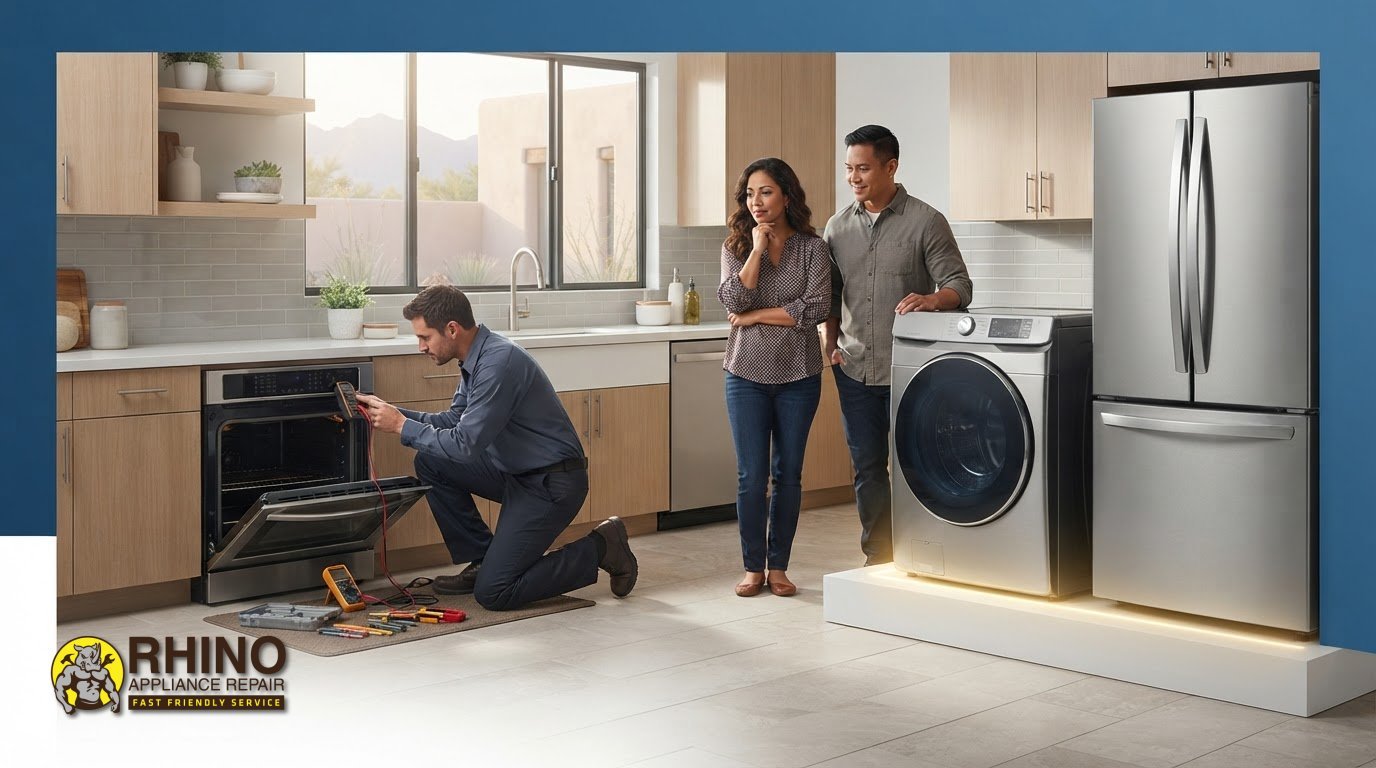
Stop using an appliance and seek qualified professional service if you notice a burning odor, damaged wiring, a gas leak, or water near electrical components. For homeowners in Gilbert, Chandler, Queen Creek, Mesa, Tempe, San Tan Valley, and nearby East Valley communities, a professional assessment can help clarify the problem and the next step.
Key Takeaways
- A malfunction doesn’t automatically mean replacement. Weigh the confirmed condition, repair scope, safety, and your household’s needs.
- To decide whether to repair or replace an appliance, record its symptoms and when they began, then request a professional assessment.
- If you notice a gas leak, burning odor, damaged wiring, or water near electrical components, stop using the appliance and seek qualified professional service.
- Note the appliance-specific symptoms and how they affect your household to help guide the assessment and decision.
- Homeowners in Gilbert, Chandler, Queen Creek, Tempe, Mesa, and San Tan Valley can seek local assessment for appliances Rhino repairs.
Repair or Replace an Appliance? Start With the Facts You Can Confirm
A malfunction doesn’t automatically mean an appliance needs replacing. A refrigerator that isn’t cooling well, a washer that stops mid-cycle, or an oven that heats unevenly can each have multiple possible causes. Before choosing a path, consider what’s known about the appliance’s condition, the repair scope, any safety concerns, and whether it still meets your household’s needs.
The repair-or-replace decision can’t be settled by one symptom or an age-based rule. Start with what you can observe, then seek a professional assessment to help clarify the cause. That gives you a practical basis for considering your options without relying on guesswork or assumptions about an appliance’s lifespan.
Which facts should shape a repair-or-replace decision?
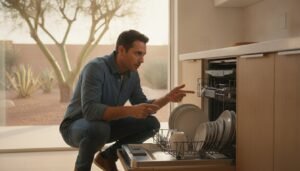
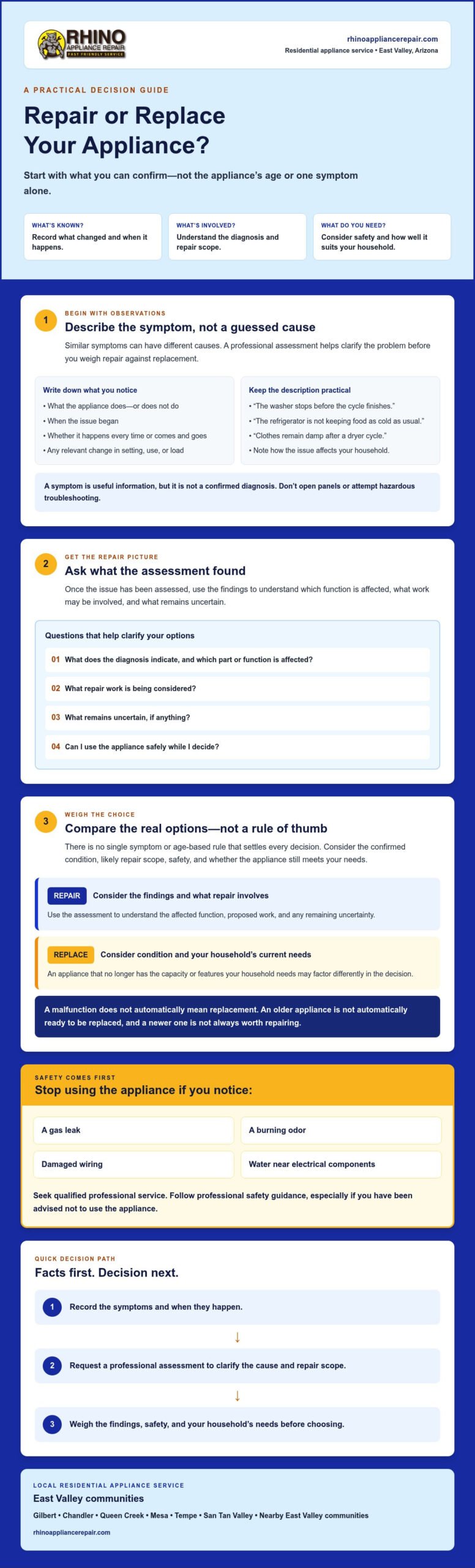
Make a brief record before requesting help. Note what changed, when the issue happens, and whether it occurs every time or only occasionally. For example, record whether a dishwasher leaves dishes wet after every cycle or whether the issue is inconsistent. Include recent changes in use, such as a different setting or load pattern, if they seem relevant.
Stick to observations rather than trying to find the cause yourself. Don’t open panels or attempt hazardous troubleshooting. Also consider how the appliance fits your household now. A unit that no longer has the capacity or features you need may factor differently into your decision than one that still serves you well.
Why a symptom alone cannot settle the decision
Similar symptoms can point to different issues. A dryer that takes longer to dry, for instance, could have more than one explanation. The symptom is useful information, but it isn’t a confirmed cause. A professional assessment can help identify the problem and explain the repair scope before you decide what makes sense.
A diagnosis clarifies the problem before you choose a path. It gives you a better basis for comparing repair with replacement, without guesswork or a blanket rule about an appliance’s age. Start with what you can observe, then use the assessment to make an informed decision.
How Diagnosis and Repair Scope Clarify Your Appliance Options
After recording what the appliance is doing, the next step is to understand what may be causing it. Describe the symptom, note any safety concerns, request a professional assessment, and weigh your options based on the findings. An assessment can clarify which functions are affected and what repair work may be involved. It doesn’t guarantee a particular outcome.
When arranging an assessment, share three basics: the appliance type, what it does or doesn’t do, and when the issue started. “The washer stops before the cycle finishes” is more useful than guessing which part failed. Mention whether the issue happens every time, comes and goes, or has changed. Symptoms can have multiple causes, so your observations help guide the assessment without replacing it.
What to tell an appliance technician
Use everyday language and stick to what you’ve observed. For a refrigerator, describe when you noticed it wasn’t keeping food as cold as usual. For a dryer, explain whether clothes remain damp after a cycle or the appliance stops unexpectedly. If you’ve noticed a connection to a different cycle or load, mention it.
Don’t open the appliance or test live components to gather more information. If you notice a gas leak, burning odor, damaged wiring, or water near electrical components, stop using the appliance and seek qualified professional service.
What to ask before choosing a next step
After the assessment, ask the technician to explain the findings in plain language. Useful questions include:
- What does the diagnosis indicate, and which part or function is affected?
- What repair work is being considered?
- What remains uncertain, if anything?
- Can I use the appliance safely while I decide?
Follow the professional’s safety guidance, especially if they’ve advised you to stop using the appliance. Decide whether to repair or replace it after you understand the likely repair scope and any remaining uncertainty, not before.
With a clearer explanation, you can weigh the appliance’s condition against how well it meets your household’s needs. If a professional assessment would help clarify the issue, Rhino Appliance Repair’s residential appliance service covers major household appliances in the East Valley.
When Safety Concerns Mean Stop Using the Appliance
A repair-or-replacement comparison can wait if an appliance shows a serious warning sign. Stop using it and seek qualified professional service. Safety comes before weighing the appliance’s condition or repair scope.
Watch for these hazards:
- Gas leak: Stop using the appliance and seek qualified professional service.
- Burning odor or damaged wiring: Stop using the appliance and arrange qualified service.
- Water near electrical components: Stop using the appliance and seek qualified professional service.
Don’t keep running an appliance to see whether a warning sign returns. Avoid opening panels, handling wiring, modifying gas components, or attempting electrical tests. These actions can expose you to risks and won’t replace a professional assessment.
What to do when you notice a warning sign
Keep the appliance out of use. When contacting a qualified professional, describe exactly what you noticed and when it happened. For example, explain that you smelled a burning odor during use, saw damaged wiring, or found water near an electrical component. Clear details communicate the concern without requiring you to inspect or handle the appliance.
If you’re unsure whether a sign is hazardous, explain what you observed and ask a qualified professional how to proceed. If you’ve noticed one of the hazards above, don’t restart the appliance while waiting for guidance.
Return to the repair-or-replace decision after safety is addressed
Once the immediate concern has been assessed, ask what the diagnosis indicates, what repair work may be involved, and whether the appliance can be used safely. The answers can help you make a considered choice. There’s no need to decide on replacement while a safety issue remains unresolved.
Rhino Appliance Repair handles residential appliances such as refrigerators, washers, dryers, dishwashers, ovens, and ranges across East Valley communities. If you need an assessment for an appliance it repairs, you can learn more about Rhino Appliance Repair. For a listed hazard, keep the appliance out of use and seek qualified professional service.
How the Decision Differs Across Common Household Appliances
The useful details to record depend on the appliance and how your household relies on it. A cooling change can affect food storage, while a washer problem may interrupt laundry. These observations won’t confirm the cause, but they can help a technician understand what’s happening and what to assess. Use the table to organize information before deciding whether to repair or replace an appliance.
| Appliance | What to document | Question to ask |
|---|---|---|
| Refrigerator, freezer, or ice maker | Describe changes in cooling, freezing, or ice production, when they occur, and how they affect food storage or daily use. | What does the assessment indicate, and can the appliance be used safely while I decide? |
| Washer or dishwasher | Note the affected cycle, what the appliance does or doesn’t do, and whether the issue interrupts laundry or dishwashing. | Which part of the cycle is affected, and what needs to be assessed? |
| Dryer | Record whether it stops unexpectedly, takes longer to complete the task, or behaves differently than usual. Note the effect on your laundry routine. | What does the diagnosis indicate, and is there a safety concern? |
| Oven, stove, range, or cooktop | Describe the cooking function that’s affected, such as an oven that doesn’t seem to heat as expected or a burner that isn’t working normally. | What needs assessment, and is the appliance safe to use? |
Cooling and ice-making appliances
Keep your description factual: what changed, when you noticed it, and whether it happens consistently. Don’t assume a cooling or ice-making symptom points to one specific part. If the cause is unclear, a professional assessment can help identify what needs attention. If you notice a gas leak, burning odor, damaged wiring, or water near electrical components, stop using the appliance and seek qualified professional service.
Laundry, dishwashing, and cooking appliances
For a washer or dishwasher, describe the affected cycle and what happens during it. For cooking appliances, explain which function isn’t working as expected. Mineral buildup may be relevant to a water-related issue in the East Valley if you’ve observed it, but it doesn’t establish the cause. Stop using an appliance if you notice a gas leak, burning odor, damaged wiring, or water near electrical components, and seek qualified professional service.
For an appliance Rhino repairs, a professional appliance assessment can help clarify the issue before you choose a next step.
Choose Your Next Step With Local East Valley Appliance Service
A clear next step can make a difficult repair decision more manageable. Document what the appliance is doing, check for safety hazards, and arrange a professional assessment if the cause is uncertain or the problem continues. Then decide based on the diagnosis, repair scope, and your household’s needs. The repair-or-replace decision should follow the facts, not just the symptom.
When to arrange a professional assessment
Contact a qualified appliance professional if you can’t identify what’s causing the problem or if it persists. Share the appliance type, what you’ve observed, when it began, and whether it happens consistently. Ask what the diagnosis indicates, what repair work may be involved, and what remains uncertain. That conversation can give you a clearer basis for choosing a next step without assuming a particular repair outcome.
Safety comes first. Don’t attempt hazardous troubleshooting while deciding what to do.
How Rhino Appliance Repair can help East Valley homeowners
Rhino Appliance Repair is a family-owned residential appliance repair business serving Gilbert, Chandler, Queen Creek, Mesa, Tempe, and San Tan Valley, as well as nearby East Valley communities. Its repair services cover refrigerators, freezers, ice makers, washers, dryers, dishwashers, ovens, stoves, ranges, cooktops, and microwaves.
Before arranging service, keep your notes handy. A concise description of the symptom and its effect on daily use can help start a useful conversation. After a professional assesses the appliance, consider the findings alongside how well it still meets your household’s needs. You can then make the repair-or-replacement choice with more clarity.
If you’d like to ask about assessment or repair for an appliance Rhino services, contact Rhino Appliance Repair.
Make Your Next Appliance Decision With Confidence
A malfunction alone doesn’t tell you whether replacement is necessary. Your repair-or-replace decision should reflect the confirmed condition, repair scope, safety, and whether the appliance still fits your household’s needs. Record what you’ve observed, get a professional assessment when the cause is unclear, and use the diagnosis to compare your options.
Don’t put comparison ahead of safety. Once safety is addressed, ask what the assessment found and what repair work may be involved.
Rhino Appliance Repair is a family-owned business serving homeowners in Gilbert, Chandler, Queen Creek, Mesa, Tempe, and San Tan Valley. Its residential repair services include refrigerators, freezers, ice makers, washers, dryers, dishwashers, ovens, stoves, ranges, cooktops, and microwaves. If you need help understanding an issue with an appliance Rhino repairs, Contact Rhino Appliance Repair about residential appliance service. A clear assessment can help you choose your next step with confidence.
Frequently Asked Questions
How do I know whether to repair or replace an appliance?
Start with the confirmed problem, any safety concerns, the repair scope, and whether the appliance still meets your household’s needs. Don’t treat a symptom as a diagnosis. A refrigerator that isn’t cooling or a washer that stops mid-cycle can have multiple possible causes. Ask a qualified technician what was identified, what work is being considered, and what remains uncertain. Avoid assumed lifespan rules or guaranteed outcomes.
Is it worth repairing an appliance if the problem keeps coming back?
A recurring problem calls for an assessment, not an automatic decision to repair or replace. Note when it happens, how often you’ve noticed it, and whether the behavior has changed. Share those details with a qualified technician and ask what the diagnosis indicates and what repair work may be involved. Don’t assume a previous symptom proves the same cause is present now. Similar issues can have different causes, so a fresh assessment can clarify the next step.
Can a technician tell me whether I should repair or replace my appliance?
A qualified technician can assess the appliance, explain the identified problem, and describe the repair work being considered. That information helps you weigh the repair path against your household’s needs, but it doesn’t guarantee a particular repair outcome or make the decision for you. Ask which findings are confirmed and what remains uncertain. With that explanation, you can make your own informed choice about whether repair or replacement better suits your situation.
What should I do if my appliance has a burning odor or damaged wiring?
Stop using the appliance and seek qualified professional service. Don’t open it, handle wiring, or test live electrical components. Clearly describe the warning sign when arranging help. The same cautious response applies if you suspect a gas leak or find water near electrical components: stop using the appliance and seek qualified professional service rather than attempting a repair yourself. Safety comes before deciding whether the appliance should be repaired or replaced.
Should I replace an appliance just because it is not working properly?
Not necessarily. A malfunction can have multiple possible causes, so the symptom alone may not show whether repair or replacement makes sense. First consider any safety concern. If there isn’t an immediate hazard, seek an assessment to understand the problem and repair scope. Then weigh those findings against how well the appliance serves your household. Avoid relying on assumed lifespan rules or unverified expectations about what a repair will achieve.
Does Rhino Appliance Repair help homeowners decide whether to repair or replace?
Rhino Appliance Repair provides residential appliance repair in Gilbert, Chandler, Queen Creek, Mesa, Tempe, San Tan Valley, and nearby East Valley communities. A professional assessment can help clarify the issue and repair scope for appliances the business services, including refrigerators, washers, dryers, dishwashers, and cooking appliances. Contact Rhino to discuss your appliance and possible next steps.