
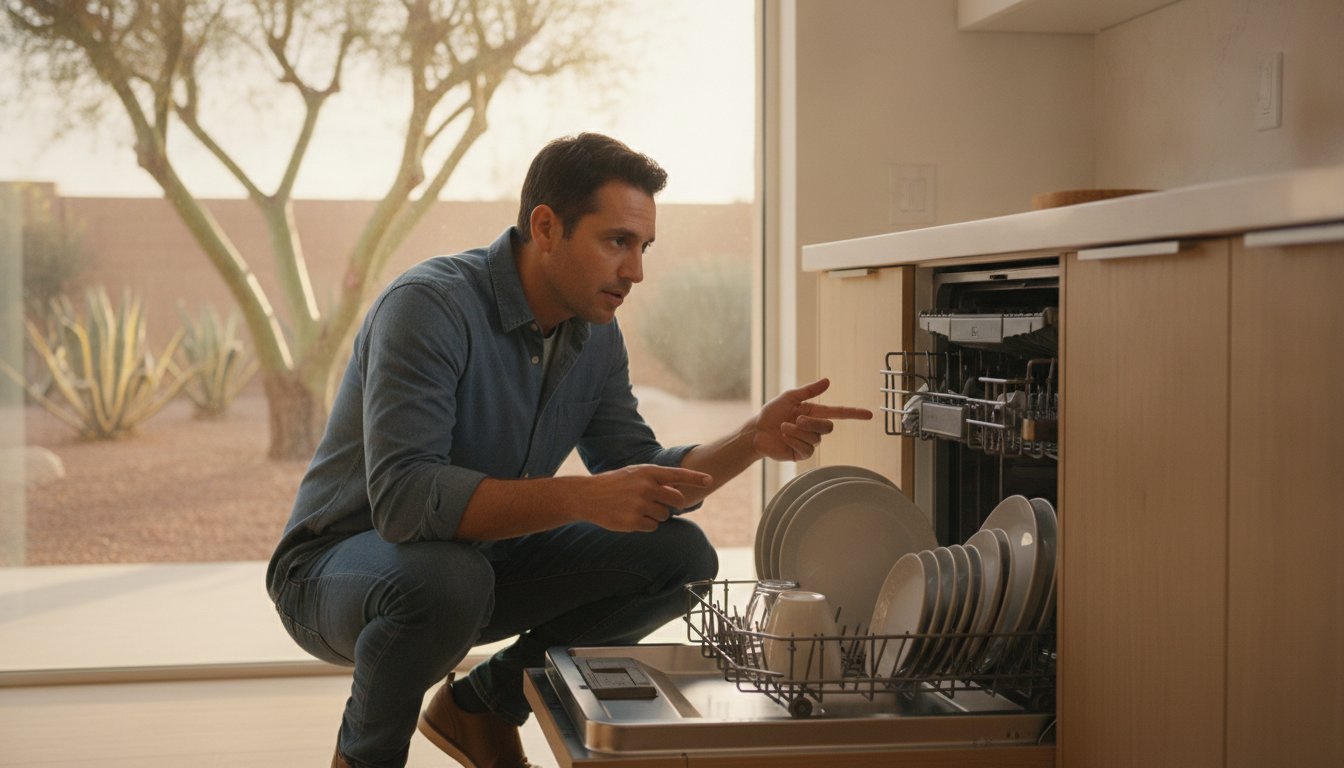
Imagine finishing a huge family dinner only to realize your dishwasher won’t start. The sink is overflowing, your evening is disappearing, and the thought of hand-washing every single plate is exhausting. You might fear a massive repair bill is coming, but don’t panic yet. Finding a dishwasher won’t start fix is often much simpler than you think. Most of the time, your machine isn’t actually broken; it’s just stuck in a cycle or waiting for a specific safety signal.
We know how much you rely on your kitchen appliances to keep your home running smoothly. This guide will debunk common myths about broken motors and show you how to troubleshoot the real culprits. You’ll learn exactly how to get your dishwasher working again by tonight. We’ll cover everything from simple button resets to identifying when a part replacement is truly necessary. By the end, you’ll know if you can handle the repair yourself or if it’s time to call in a trusted local expert to get the job done right.
Key Takeaways
- Stop the panic by debunking common myths that equate a silent dishwasher with a total motor failure or an expensive replacement.
- Check for hidden settings like the Control Lock or Sleep Mode which often trick homeowners into thinking their unit has no power.
- Use our step-by-step dishwasher won’t start fix to perform a hard reset and clear debris from the door latch assembly.
- Learn how Arizona’s summer heat can impact your kitchen’s circuit breakers and why a simple flip of a switch might be all you need.
- Pinpoint exactly when a DIY repair becomes a safety risk and why a professional is needed for complex control board or wiring issues.
Common Myths About Why Your Dishwasher Won’t Start
When your dishwasher stays silent after you press start, it’s natural to feel a sense of dread. You see a mountain of dirty dishes and imagine a massive bill for a brand-new machine. Before you start shopping for a replacement, let’s clear the air. Most “broken” dishwashers aren’t actually dead. They are often just confused by a setting or waiting for a specific safety signal. Finding a dishwasher won’t start fix is usually much more affordable than homeowners realize.
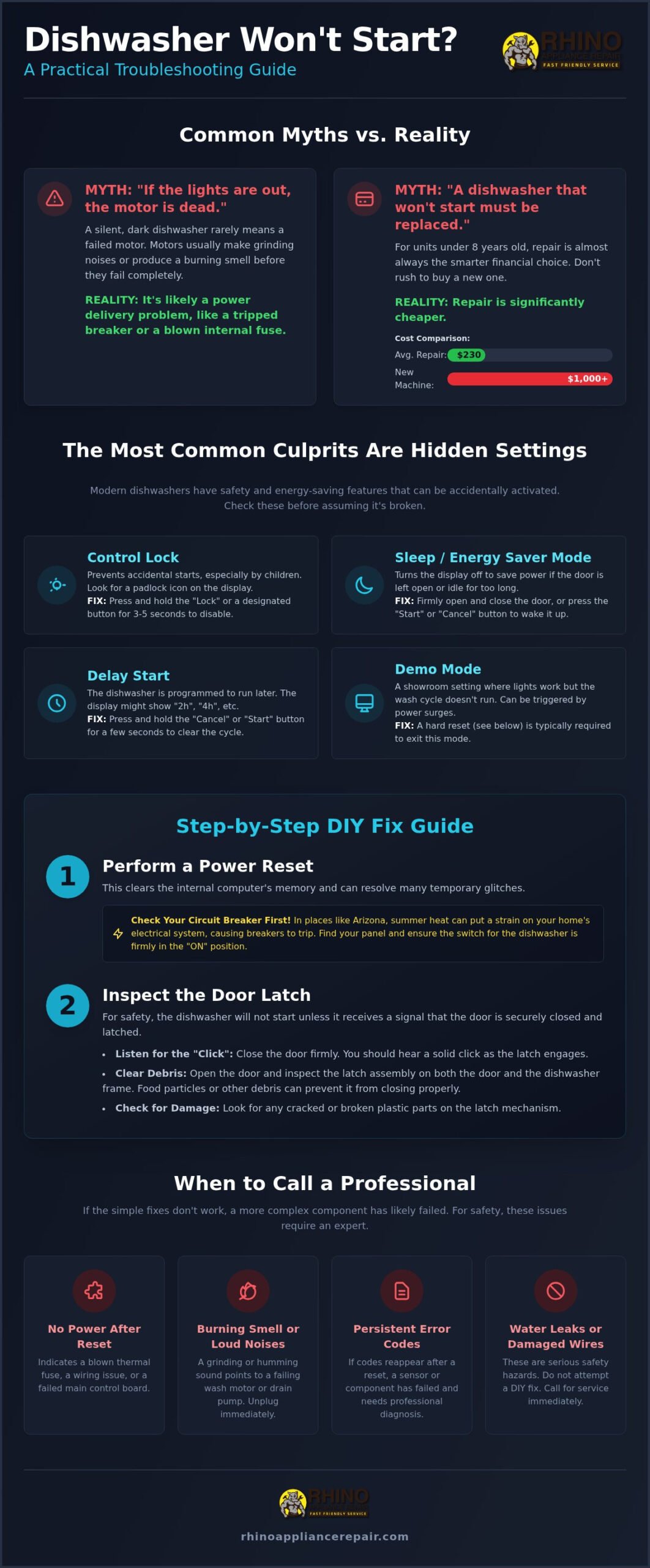
- Myth #1: If the lights are dark, the motor is toast. This is rarely the case. Motors typically make a loud grinding noise or produce a distinct burning smell before they fail. If there are no lights at all, you are likely looking at a power delivery problem or a blown fuse.
- Myth #2: A dishwasher that won’t start always needs to be replaced. Industry data from 2026 shows the average repair cost is approximately $225 to $230. When you compare that to the $1,000 price tag of a new high-end model, a repair is almost always the smarter financial move for units under eight years old.
- Myth #3: Modern electronics are too complex to fix. While smart appliances have more sensors, they also provide better diagnostic data. The “Right to Repair” movement has made it easier for independent experts to access the parts and information needed to get your kitchen back on track quickly.
The ‘Old vs. New’ Dishwasher Repair Myth
East Valley homeowners often tell us they miss their “bulletproof” older appliances. While older models had fewer electronic parts, modern dishwashers are designed to protect your home. Today’s sensors detect soil levels and monitor for potential leaks. If a sensor detects a blockage, it might trigger a safety lockout to prevent a flood. This isn’t a failure; it is your machine saving your Gilbert or Mesa kitchen from water damage. Choosing a dishwasher won’t start fix is also the more sustainable choice for our local community.
Is Your Dishwasher Actually ‘Dead’?
There is a significant difference between a machine with no power and one that won’t accept a start command. If the display is completely blank, your dishwasher might have a tripped thermal fuse. This small part acts like a bodyguard, cutting power to prevent electrical fires if the unit overheats. A silent dishwasher might also be waiting for a water signal. If the inlet valve is clogged, the computer won’t let the motor start because it knows there is no water to pump. Because we focus exclusively on residential repairs, our priority is always getting your family’s routine back to normal.
Hidden Settings: The Most Common ‘No Start’ Culprits
Before you pull out your tools or search for your warranty, take a close look at your display panel. Modern appliances are smart, but they are also incredibly sensitive. Often, a dishwasher won’t start fix is as simple as holding down a single button for three seconds. These hidden settings are designed for safety and energy savings, but they can easily be triggered by accident during a busy evening in a Gilbert or Mesa kitchen.
Mastering the Control Lock and Sleep Mode
The Control Lock is a safety feature that disables all button inputs. This prevents children from starting a cycle or changing settings while playing. You might have activated it without even knowing. It usually happens when you lean against the countertop while prepping a meal or cleaning up. Most brands require you to hold a specific button, like “Lock” or “Cycle,” for three to five seconds to release it. Look for a small padlock icon or a steady red light on your console to see if this is the culprit.
Sleep Mode is another common issue that mimics a dead machine. Some newer models turn off the entire display to save energy if the door has been left open too long. If your panel looks completely dark, try opening and closing the door firmly or pressing the “Cancel” button to wake the computer up. If these quick resets don’t bring the lights back, it might be time to consult a dishwasher repair expert to check the interface board.
The Delay Start Trap
Have you ever pressed “Start” only to see a number like “2h” or “4h” appear on the screen? You’ve likely bumped the Delay Start button. Your dishwasher isn’t broken; it’s simply waiting for its scheduled time to begin the wash. This is a great feature for managing utility costs, but it’s a major headache when you need clean plates immediately. To fix this, press and hold the “Cancel” button to clear the current cycle, then select your wash and press “Start” without touching the delay options.
In Chandler and Tempe, sudden power flickers during summer storms can also scramble your dishwasher’s internal logic. A brief dip in voltage might cause the machine to enter “Demo Mode.” This is a setting used on showroom floors where the lights work but the motor never actually turns on. If you see “Dem” or “Test” on the screen, check your manual for the specific button sequence to return to normal operation. These software glitches are frustrating, but they are usually easy to resolve without any heavy lifting.
Power Supply and Door Latches: The Physical Connection
If your settings are correct but nothing happens when you close the door, the problem is likely physical. The door latch is the number one mechanical reason a cycle won’t begin. It serves as a safety gate. If the dishwasher doesn’t “know” the door is sealed, it won’t let water enter the tub. This prevents a messy flood in your Gilbert or Mesa home. A faulty latch or a misaligned door is a common hurdle when you’re looking for a dishwasher won’t start fix.
Troubleshooting the Door Latch Assembly
Check the latch for visible damage. Look for plastic pieces that are chipped or bent. A loose door hinge can also prevent the safety switch from engaging. If the door hangs slightly crooked, the latch won’t line up with the strike plate. Try the “click” test. Close the door slowly and listen for a distinct mechanical click. If you don’t hear it, the microswitch isn’t engaging. Some online forums suggest slamming the door to force a connection. Don’t do this. Forcing the door can snap the plastic housing or damage the delicate internal wiring. This turns a simple repair into a much more expensive project.
Electrical Basics for East Valley Homeowners
Sometimes the issue isn’t the machine at all. It is the power coming from your wall. In the East Valley, our intense summer heat puts a massive strain on the electrical grid. Air conditioners running at full blast can cause minor power surges or trip sensitive breakers. Check your main electrical panel. Look for the dedicated circuit labeled for the dishwasher. Even if it looks “on,” flip it all the way off and then back on to ensure it’s fully seated.
Don’t forget to check the GFCI outlet. These are usually located under the sink or in a cabinet nearby. If the “reset” button has popped out, your dishwasher is effectively unplugged. This is a common safety trip caused by moisture or a brief power spike. A quick press of that button might be the only dishwasher won’t start fix you need today. If the breaker trips again immediately after a reset, you likely have a deeper electrical fault that requires a professional look to keep your home safe.
Step-by-Step DIY Fix for a Dishwasher That Won’t Start
If you’ve confirmed your settings are correct and the door is closing firmly, it’s time for a hands-on dishwasher won’t start fix. Following a logical order of operations can save you hours of frustration. We recommend starting with the easiest electronic solutions before moving to mechanical inspections. These steps are designed to rule out the simple glitches that often mimic major mechanical failures.
How to Properly Reset Your Dishwasher
Electronic glitches are incredibly common in modern appliances. A simple power cycle can clear the memory of a “confused” control board and restore normal function. Unplug your unit or flip the dedicated breaker in your panel for a full 30 seconds. This is the standard “reboot” method. For brands like Whirlpool or KitchenAid, you can often trigger a diagnostic reset by pressing three consecutive buttons in a 1-2-3 sequence three times.
If a reset fixes the problem once, you’re likely in the clear. However, if you find yourself resetting the machine every few days, your control board is probably failing. A recurring need for a reboot is a clear sign that the hardware can no longer hold its programming. In these cases, a professional diagnostic is the only way to prevent a total breakdown during a busy week.
Next, inspect the door strike and latch for hidden debris. A tiny piece of broken glass or a stray toothpick can prevent the latch from seating perfectly. Even if the door feels closed, the safety microswitch won’t trigger if it’s off by a fraction of a millimeter. Wipe the strike plate and the latch housing with a damp cloth to ensure a clean connection.
Checking the Water Supply
Your dishwasher is designed to protect itself from damage. If it doesn’t detect incoming water within the first few seconds of a cycle, the computer will kill the power to the motor to prevent it from running dry. Check the shut-off valve under your kitchen sink. Sometimes these valves are accidentally bumped by heavy cleaning supplies or trash bins. Ensure the handle is turned fully counter-clockwise.
You should also look for a kinked inlet hose. If you’ve recently moved the unit to clean your floors, the flexible hose might have folded over on itself. You can usually spot this by looking through the side gap of the cabinetry with a flashlight. Finally, check your display for error codes. Flashing lights or codes like “E1” or “F5” are a direct map to the problem. If these steps don’t get your kitchen back on track, it’s time to schedule a professional dishwasher repair with a local expert who can handle the electrical testing safely.
When to Call a Trusted Dishwasher Repair Expert
Sometimes the best dishwasher won’t start fix isn’t found in a manual or a reset code. If you’ve tried the basics and your machine remains silent, you might be facing a significant component failure. Modern dishwashers are packed with sensitive electronics that can be damaged by the power surges we discussed earlier. While we encourage homeowners to handle simple fixes, certain signs indicate it’s time for professional intervention to protect your home and your appliance.
Identifying Major Mechanical Failures
A failed control board or motor often leaves distinct clues. If you smell burning plastic or ozone when you try to start a cycle, stop immediately. This is a red flag for an electrical short in the main harness or a fried circuit board. Another common sign is a loud, rhythmic humming that doesn’t lead to water movement. This usually means the drain pump or circulation motor is seized. Trying to force a cycle by repeatedly pressing start can overheat these components and cause more damage.
Leaking is another situation where you should never attempt a DIY start. If you see water pooling under the unit, the computer may be blocking the cycle to prevent a flood. Tinkering with the main electrical harness without proper training is dangerous. High-voltage components and sharp metal edges inside the cabinet require specialized tools and safety protocols. If you’re seeing these red flags, check out our guide on when to call a trusted appliance repair technician for a deeper look at the diagnostic process.
The Rhino Advantage in the East Valley
Local expertise is vital when dealing with the specific challenges of Arizona kitchens. We specialize in dishwasher repair in Gilbert AZ, providing fast and friendly service that national chains simply can’t match. As a family-owned and operated business since 2020, we treat our neighbors in Mesa, Chandler, and Tempe with the honesty and integrity they deserve.
We focus exclusively on residential repairs. This means our technicians aren’t distracted by commercial contracts; your home is our top priority. We understand the urgency of a broken dishwasher, especially for large families tired of hand-washing. Our team provides transparent advice on whether a repair is the best value for your unit based on its age and condition. We take personal pride in our craftsmanship and aim to get your kitchen back to normal as quickly as possible.
Get Your Kitchen Back on Track Tonight
A silent dishwasher rarely means your appliance is headed for the scrap heap. As we’ve explored, the most effective dishwasher won’t start fix is often as simple as releasing a Control Lock or performing a 30-second hard reset at the breaker. By ruling out hidden settings and physical latch issues first, you can save yourself from unnecessary stress and the high cost of an unneeded replacement. Most modern units are designed with safety sensors that pause operation for your protection, not because the motor has failed.
When DIY troubleshooting isn’t enough, you need a neighbor you can trust to provide an honest diagnosis. Our family-owned team specializes in residential repairs for all major brands throughout Gilbert, Mesa, and the surrounding East Valley. We pride ourselves on fast, friendly service that puts your family’s routine first. Schedule your fast dishwasher repair in the East Valley today to get your kitchen running smoothly again. You don’t have to face a mountain of dirty dishes alone; we are here to help you find a reliable resolution quickly.
Frequently Asked Questions
Why is my dishwasher power on but it won’t start the cycle?
This issue is usually caused by active settings like Control Lock or Delay Start. Your dishwasher might also be waiting for a safety signal from the door latch. If the lights are on but the motor won’t turn, the computer hasn’t received the “safe to run” signal. Check for a padlock icon on your display or ensure nothing is blocking the door from closing firmly.
How do I hard reset my dishwasher?
You can hard reset your machine by disconnecting it from power for at least 30 seconds. Locate the dedicated circuit breaker in your electrical panel or unplug the unit from the wall outlet under the sink. This clears the control board’s memory and is a reliable dishwasher won’t start fix for minor software glitches or sensor errors caused by local power flickers in the East Valley.
Can a clogged filter prevent a dishwasher from starting?
Yes, a severely clogged filter can trigger a safety sensor that prevents a new cycle from beginning. If the dishwasher detects that water from a previous load didn’t drain properly, it won’t allow fresh water to enter the tub. Clean your filter and check the sump area for standing water. Clearing these blockages often resolves “no start” issues without needing technical repairs.
Is it worth repairing a 10-year-old dishwasher?
Guidelines for 2026 suggest that if a dishwasher is over eight years old, replacement is often better than repair. If the cost to fix the unit exceeds 50% of the price of a new model, you should consider upgrading. Newer models are significantly more energy and water efficient. However, a simple door latch or fuse replacement might still be worth the investment for a high-end unit.
What does the ‘Start’ light flashing mean on my dishwasher?
A flashing “Start” light usually indicates that the door was opened during a cycle or the latch hasn’t fully engaged. Your dishwasher pauses as a safety precaution to prevent spraying water into your kitchen. To resolve this, ensure the door is firmly closed and press the “Start” or “Resume” button. If the flashing continues, the door microswitch may have failed internally and requires a professional look.
How much does a typical dishwasher latch repair cost in the East Valley?
Repair costs vary depending on your specific brand and the complexity of the latch assembly. Industry data shows that most dishwasher repairs fall within the $150 to $400 range. Simpler mechanical fixes like door latches or gaskets are typically at the lower end of this spectrum. For an accurate quote in Gilbert or Mesa, it’s best to have a professional technician diagnose the exact failure at your home.
Why won’t my dishwasher start after a power outage?
Power surges often trip the GFCI outlet or the circuit breaker during an outage. Check the reset button on the outlet under your sink and inspect your main electrical panel. If the power is definitely reaching the unit but it still won’t respond, the control board may need a hard reset to clear the error state. This clears the temporary memory glitch caused by the sudden loss of voltage.
Can I use my dishwasher if the door latch is loose?
You should not attempt to run a dishwasher with a loose or damaged latch. The latch is a critical safety component that prevents the machine from operating while the door is unsealed. Using a faulty latch can lead to kitchen leaks, steam damage to your cabinetry, or electrical shorts. It’s much safer to address the mechanical issue before attempting to start your next load of dishes.