

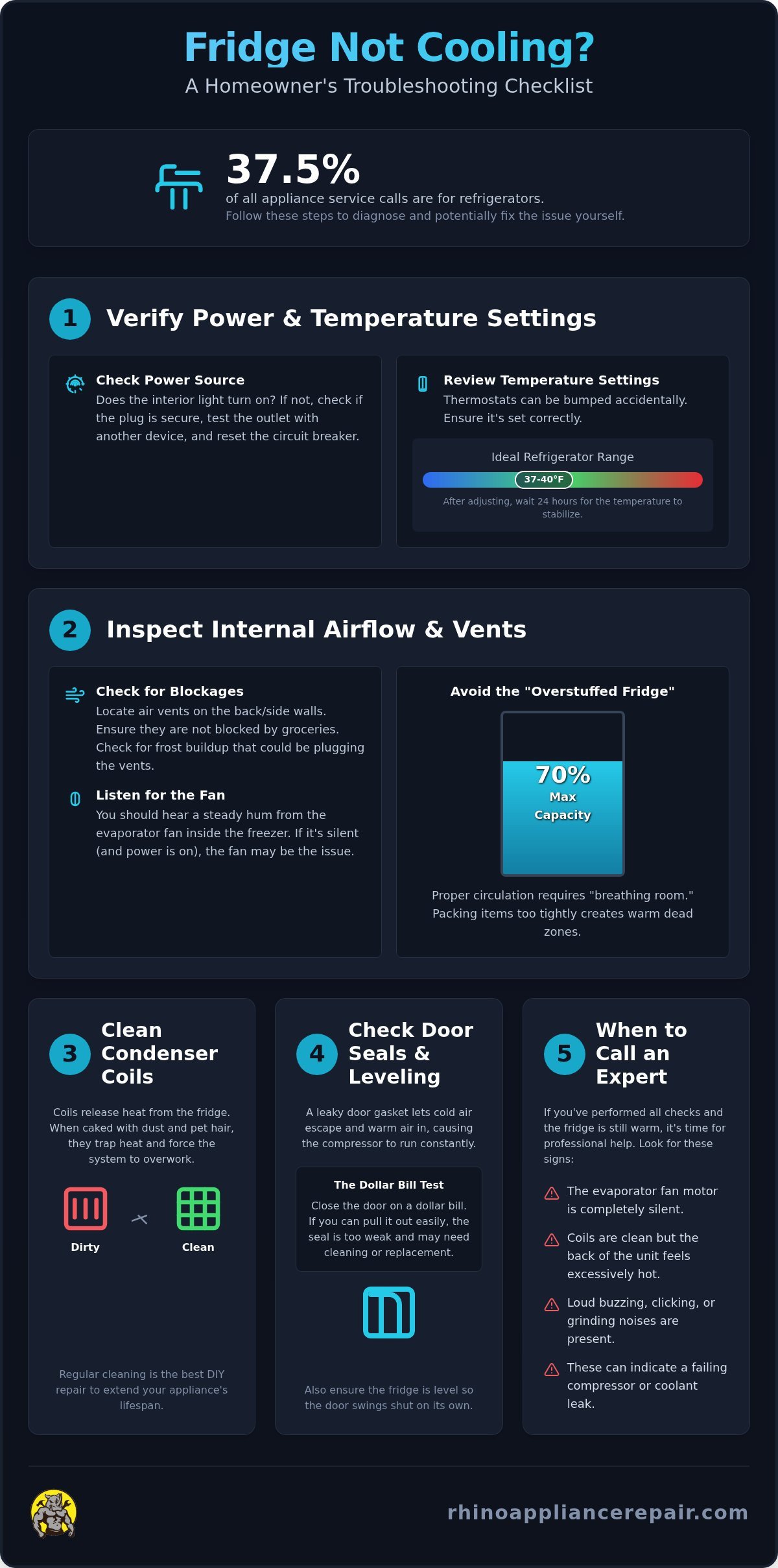
Last Tuesday, a Gilbert homeowner discovered a puddle on their kitchen floor and the smell of spoiled milk. They needed a fridge not cooling repair fast to save their groceries. You’re likely feeling that same immediate spike of anxiety. Nobody wants to face a massive repair bill or toss out hundreds of dollars in food. It’s a common stressor, especially since refrigerators account for 37.5% of all appliance service calls.
We understand the frustration of technical jargon and the fear of hidden fees. This expert troubleshooting checklist is designed specifically for East Valley homeowners to help you save time and money. We’ll show you how to identify the problem quickly and determine if you can fix it yourself. We’re covering the five most common culprits, from dusty coils to simple thermostat bumps, so you can get your kitchen back to normal today. Whether you live in Chandler, Mesa, or Tempe, these steps provide the clarity you need before calling in the pros.
Key Takeaways
- Learn how to rule out simple power issues and accidental setting changes that can mimic a major breakdown.
- Identify how blocked internal vents and failing door gaskets compromise your unit’s cooling efficiency.
- Discover why regular coil maintenance is the best DIY fridge not cooling repair to extend your appliance’s lifespan.
- Recognize the critical symptoms that signal it is time to call a local expert for specialized mechanical or coolant repairs.
1. Verify Power and Temperature Settings
Before you panic about a costly fridge not cooling repair, start with the basics. It sounds simple, but a significant number of service calls end with a technician simply plugging the unit back in or flipping a switch. Your first move should be opening the door. Does the light come on? If yes, the unit has power. If the interior is dark, you’ve narrowed the problem down to the electrical supply rather than a mechanical failure.
Check the power cord behind the unit. Sometimes, heavy vibrations or moving the fridge to clean can wiggle the plug loose. Ensure it’s pushed firmly into the outlet. If it’s plugged in but remains dark, test the outlet with a small lamp or phone charger to see if the socket itself is dead. This quick check takes seconds and could save you a wasted afternoon waiting for a technician.
The Tripped Breaker Test
If the outlet isn’t working, your next stop is the electrical panel. In Gilbert or Mesa, these are usually located in the garage or on an exterior wall. Look for any breaker that isn’t fully in the “on” position. Sometimes a breaker won’t look fully tripped; it might just be slightly out of alignment. Flip the fridge breaker to “off” and then back to “on” to ensure a full reset. This simple step is a core part of proactive refrigerator maintenance and can save you a service fee before you even pick up the phone.
Thermostat Accidental Adjustments
If you have power but the air feels lukewarm, check your temperature settings. It’s surprisingly easy to bump the control dial while loading a heavy gallon of milk or a large grocery haul. Many modern units use digital touchpads that can be accidentally locked or changed during cleaning. Here is what to check:
- The Ideal Range: Your refrigerator should stay between 37°F and 40°F. Anything higher risks food spoilage.
- The Airflow Factor: Ensure no large containers are leaning against the thermostat sensor or control dial.
- The 24-Hour Rule: If you do adjust the settings, don’t expect an instant fix. It takes a full day for the internal temperature to stabilize after a change.
Checking these simple settings first ensures you don’t pay for a fridge not cooling repair when the solution was a simple flick of a switch. If the power is on and the settings are correct but the milk is still warm, it’s time to look deeper into the unit’s airflow. Moving through these steps methodically helps you rule out user error before committing to a professional repair.
2. Inspect Internal Airflow and Vents
If your power is steady but the temperature is rising, your fridge might be suffocating. Airflow is the lifeblood of your refrigerator’s cooling system. Without it, your unit is just a very expensive, insulated box. You might assume you need a fridge not cooling repair, but the solution often involves rearranging your groceries rather than replacing parts. Before you call for help, listen closely to the back of the freezer. You should hear a steady hum from the evaporator fan. This fan pulls air over the cooling coils and pushes it through the entire unit. If it’s silent, you’ve found your problem.
Finding the Air Vents
Look for the small slotted openings on the back or side walls of both the fridge and freezer compartments. These are the gateways for cold air. Many East Valley homeowners accidentally block these with large items like milk jugs or bulk-sized juice containers. If a vent is blocked, the area around it might stay cold, but the rest of the fridge will warm up quickly. Check for frost buildup here too. Sometimes, humidity turns into ice right over the vent, acting like a plug. While many owners worry about the short lifespan of modern units, simple maintenance often prevents early failure. Following expert advice on appliance repair can help you distinguish between a simple ice blockage and a mechanical breakdown.
The Overstuffed Fridge Problem
A packed fridge is an inefficient fridge. While it’s tempting to stock up at the warehouse club, a crowded interior prevents air from reaching every corner. Proper air circulation is the single most important factor in maintaining a consistent internal temperature. We recommend keeping your unit at about 70% capacity. This leaves enough “breathing room” for the fan to push air around your food effectively. If you pack items too tightly, you create “dead zones” where bacteria can grow in the warmth. Blocked vents are a leading cause for an unnecessary fridge not cooling repair call. If you’ve cleared the vents and thinned out the shelves but the fan is still silent, it’s time to call for a professional refrigerator repair to inspect the fan motor itself.
3. Clean the Condenser Coils and Fans
Your refrigerator works by removing heat from the inside and releasing it into the kitchen. This vital heat exchange happens through the condenser coils. When these coils are clean, the system runs efficiently. When they are covered in grime, the heat stays trapped inside the system. This forces your compressor to run constantly, leading to premature wear and high energy bills. Many homeowners assume they need an expensive fridge not cooling repair when all they really need is a vacuum and ten minutes of effort.
You will usually find these coils behind the bottom kickplate on the front of the unit or on the back of older models. If you have pets or live in a high-traffic area, these coils act like a magnet for hair and debris. A simple visual inspection will tell you if it’s time for a cleaning. If you see a thick layer of grey fuzz, your fridge is struggling to breathe. Cleaning these coils is a core part of effective refrigerator repair and maintenance.
The Arizona Dust Factor
Living in the East Valley presents a unique challenge for appliances. Our desert environment is naturally dusty, and that fine silt finds its way into every corner of your home. In Gilbert and Mesa, this dust combines with pet dander to create a literal “dust blanket” over your condenser coils. This blanket acts as insulation, trapping heat right where it should be escaping. While standard guides suggest annual cleaning, we recommend a 6-month schedule for Arizona residents. Regular maintenance keeps your compressor cool and prevents the need for a professional fridge not cooling repair during our record-breaking summer heatwaves.
How to Clean Your Coils Safely
Cleaning your coils is a straightforward DIY task, but safety must come first. Follow these steps to ensure you don’t damage your appliance or yourself:
- Power Down: Always unplug the refrigerator before you begin. This is a non-negotiable safety step.
- Access the Coils: Pop off the front kickplate or pull the unit away from the wall to reach the back.
- Vacuum Thoroughly: Use a vacuum with a narrow crevice tool or a specialized coil brush to pull away the heavy dust.
- Check the Fan: While you’re there, look at the condenser fan. Gently wipe any dust off the blades to ensure it can spin freely.
Once you finish, plug the unit back in and listen. You might notice the fridge runs quieter immediately. If the coils were severely clogged, it may take several hours for the internal temperature to drop back to the safe zone. This simple maintenance task is often the difference between a working appliance and a total system breakdown.
4. Check Door Seals and Leveling
If your fridge is running but the temperature won’t drop, you might be cooling your entire kitchen instead of your groceries. The rubber gasket around your door is the only barrier keeping the Arizona heat out and the cold air in. Over time, these seals get brittle, crack, or collect sticky residue from spilled food. A compromised seal is a frequent cause for a fridge not cooling repair because it forces the unit to fight a losing battle against the ambient room temperature. You don’t always need a new part; sometimes you just need a deep clean.
Inspect the entire length of the gasket for visible gaps or flattened sections. If the rubber feels hard or “plasticky” rather than soft and pliable, it won’t create the necessary suction. Before you give up on it, try wiping the seal down with warm, soapy water. This removes the hidden grime that prevents the magnetic strip inside the gasket from grabbing the metal frame. It’s a simple, five-minute task that can instantly improve your unit’s efficiency.
The Dollar Bill Test
You don’t need fancy diagnostic tools to check your seal’s integrity. Grab a dollar bill and follow these steps to see if your door is leaking:
- The Placement: Open the door and place the bill halfway across the gasket.
- The Closure: Close the door firmly on the bill.
- The Pull: Try to slide the bill out. If it offers resistance, your seal is doing its job.
- The Repeat: Perform this test every 12 inches around the entire door frame, including the bottom.
If the bill slides out easily in certain spots, your gasket is failing. This lack of a tight seal is a common reason for a fridge not cooling repair call that ends in a simple part replacement rather than a mechanical overhaul.
Leveling for a Proper Seal
Even a perfect gasket can’t work if the fridge itself is crooked. If your appliance leans forward, gravity is constantly pulling the door open. Use a carpenter level on the top of the unit to check its alignment. Most refrigerators have adjustable legs or rollers at the bottom. You want the fridge to be level from side to side, but slightly higher in the front than the back. This subtle tilt ensures that if you walk away and leave the door ajar, gravity will swing it shut and engage the magnetic seal automatically.
A misaligned fridge is an easy fix that prevents long-term compressor strain. If you’ve cleaned the seal, passed the dollar bill test, and leveled the unit, but the temperature is still climbing, the problem is likely internal. In that case, it’s time to reach out to a local expert for a professional refrigerator repair to diagnose more complex mechanical issues.
5. When to Call Rhino Appliance Repair
You’ve checked the power, cleared the vents, and scrubbed the door seals. If your thermometer still reads in the danger zone, the problem likely lies deep within the mechanical heart of the unit. Some components simply aren’t meant for DIY fixes. Modern refrigerators are complex machines. Attempting a fridge not cooling repair on a sealed system or a control board without specialized training can lead to more damage. It can also void your warranty or create safety hazards in your kitchen.
Electrical components and refrigerant lines require a steady, experienced hand. For instance, new EPA regulations under the AIM Act, effective January 1, 2026, have changed how we handle certain refrigerants. These systems are now subject to stricter leak detection and repair thresholds. Working with a professional ensures your home stays compliant with these federal standards while keeping your family safe from mildly flammable A2L refrigerants used in newer models. If the basics didn’t work, it’s time to bring in a Expert Refrigerator Repair in Gilbert AZ to get the job done right.
Signs of Professional-Level Failure
How do you know when you’ve reached the limit of home troubleshooting? Certain symptoms point directly to parts that require professional diagnostic tools. If you notice any of the following, stop DIY efforts and call for help:
- Loud Clicking or Buzzing: This often signals a failing compressor or a bad start relay. If the compressor can’t kick on, the fridge won’t cool.
- The “Split” Cooling Problem: If your freezer is a block of ice but the fridge side is lukewarm, you likely have a failed evaporator fan or a defrost system malfunction.
- Visible Frost on the Back Wall: A thick sheet of ice on the interior back panel of the freezer suggests a defrost heater or timer failure.
- Oily Residue: Finding a mysterious oily spot inside or under the unit often points to a refrigerant leak.
Why Choose Rhino for Your East Valley Home
We aren’t a massive national franchise with a generic call center. Rhino Appliance Repair is a family-owned and operated business based right here in Gilbert. Since 2020, we’ve focused on being the dependable local neighbor you can trust when things go wrong. We know that a broken fridge is an emergency, especially during an Arizona summer. Our team specializes in major residential brands and serves the entire East Valley, including Mesa, Chandler, and Tempe.
We believe in transparency. We’ll give you a clear explanation of the problem and an honest assessment of whether the fix is worth the investment. If you’re on the fence about the cost, check out our Repair or Replace: An Appliance Decision Guide. We value long-term relationships over quick transactions. When you need a fridge not cooling repair, you deserve a technician who takes personal pride in their craftsmanship and treats your home like their own.
Get Your Kitchen Back to Normal Today
A warm refrigerator is a major disruption, but many cooling issues have simple solutions. By checking your power settings, clearing blocked vents, and cleaning dusty coils, you can often avoid a professional service call. These basic maintenance steps save money and extend the life of your appliance. However, if you’ve worked through the checklist and your milk is still warming up, don’t risk your groceries any longer.
Rhino Appliance Repair is your dependable local expert for any complex fridge not cooling repair. As a family-owned business, we take pride in providing fast response times for East Valley emergencies. We have the expertise to handle all major residential brands with transparency and honesty. Whether you’re in Gilbert, Mesa, Chandler, or Tempe, help is just a click away. Schedule Your Refrigerator Repair in Gilbert Today and let us take the stress out of your appliance crisis. You’ll have a working fridge and peace of mind before the day is over.
Frequently Asked Questions
How long should I wait for my fridge to cool after a repair?
You should wait a full 24 hours for your refrigerator to reach its target temperature after a repair. While you might feel cold air blowing immediately, it takes time for the internal cabinet and your food to stabilize. Avoid opening the doors frequently during this period. If the temperature hasn’t dropped to the safe range of 37°F to 40°F after a day, your fridge not cooling repair may need further professional adjustment.
Is it worth repairing a 10-year-old refrigerator that is not cooling?
Deciding whether to fix a decade-old unit depends on the specific failure. Minor issues like a fan motor or thermostat are usually worth fixing. However, if the compressor or sealed system fails, the cost often approaches the price of a new unit. Since 58% of consumers choose replacement for major appliance failures, we recommend getting a professional diagnostic to weigh your options before buying a new unit.
Why is my fridge warm but the freezer is still cold?
This problem usually points to an airflow blockage or a failed evaporator fan. In most units, the freezer creates the cold air which is then shared with the fridge. If the fan stops spinning or the air return vents are clogged with ice, the fridge stays warm while the freezer stays frozen. This is a common symptom that requires a professional technician to check the defrost heater and return ducts.
Can a power outage cause my refrigerator to stop cooling?
Yes, a power outage or a subsequent power surge can damage the main control board or start relay. Sometimes the unit simply needs a hard reset. Unplug the fridge for ten minutes and plug it back in to see if the compressor kicks on. If the interior lights work but you hear no humming after a surge, the electronic components might have suffered permanent damage that requires a professional inspection.
How often should I clean the coils on my fridge in Arizona?
Arizona residents should clean their condenser coils every six months. The high levels of desert dust and pet dander in the East Valley create a thick layer of insulation on the coils very quickly. This buildup forces your unit to work harder in our extreme summer heat. Regular cleaning prevents the need for an emergency fridge not cooling repair and keeps your monthly energy bills lower throughout the year.
What is the most common reason for a fridge to stop cooling?
Dirty condenser coils are the most frequent cause of cooling failures. When dust prevents the coils from releasing heat, the entire system loses efficiency and eventually shuts down. Other common culprits include blocked internal vents and worn-out door gaskets. Since refrigerators are the most frequently repaired home appliance, accounting for 37.5% of all service calls, simple maintenance is your best defense against a total breakdown.
How do I know if my refrigerator compressor is bad?
A bad compressor usually makes a loud clicking noise or a persistent buzzing sound. You might also notice the compressor running constantly without actually lowering the temperature. In some cases, the unit will be completely silent because the compressor won’t start at all. Since the compressor is the heart of the cooling system, you need a professional diagnostic to confirm if a replacement is necessary or if a simple relay failed.
Can a dirty condenser fan stop a fridge from cooling?
Yes, a dirty or obstructed condenser fan prevents the unit from shedding heat properly. This fan sits near the compressor and pulls air across the coils to keep the system cool. If pet hair or debris jams the blades, the compressor will quickly overheat and shut down as a safety precaution. Checking the fan for obstructions is a simple step that can restore cooling without needing expensive replacement parts. If your unit has an ice maker and you notice it has also stopped working, our guide on refrigerator not making ice causes and fast fixes can help you troubleshoot that issue alongside your cooling problems.


Pingback: Freezer Repair Near Me: Fast Residential Service in the East Valley
Pingback: Washer Won’t Drain? 5 Fast Fixes to Get Your Laundry Moving
Pingback: When to Call an Appliance Repairman: The Ultimate Homeowner Checklist – rhinoappliancerepair.com
Pingback: Average Cost of Appliance Repair: 2026 Homeowner’s Price Guide – rhinoappliancerepair.com
Pingback: Expert Appliance Repair in Mesa, AZ: Fast Residential Service You Can Trust – rhinoappliancerepair.com
Pingback: Expert Refrigerator Repair in Chandler AZ: Fast, Reliable Residential Service – rhinoappliancerepair.com
Pingback: Expert Kitchen Appliance Repair Near Me: Trusted East Valley Service – rhinoappliancerepair.com