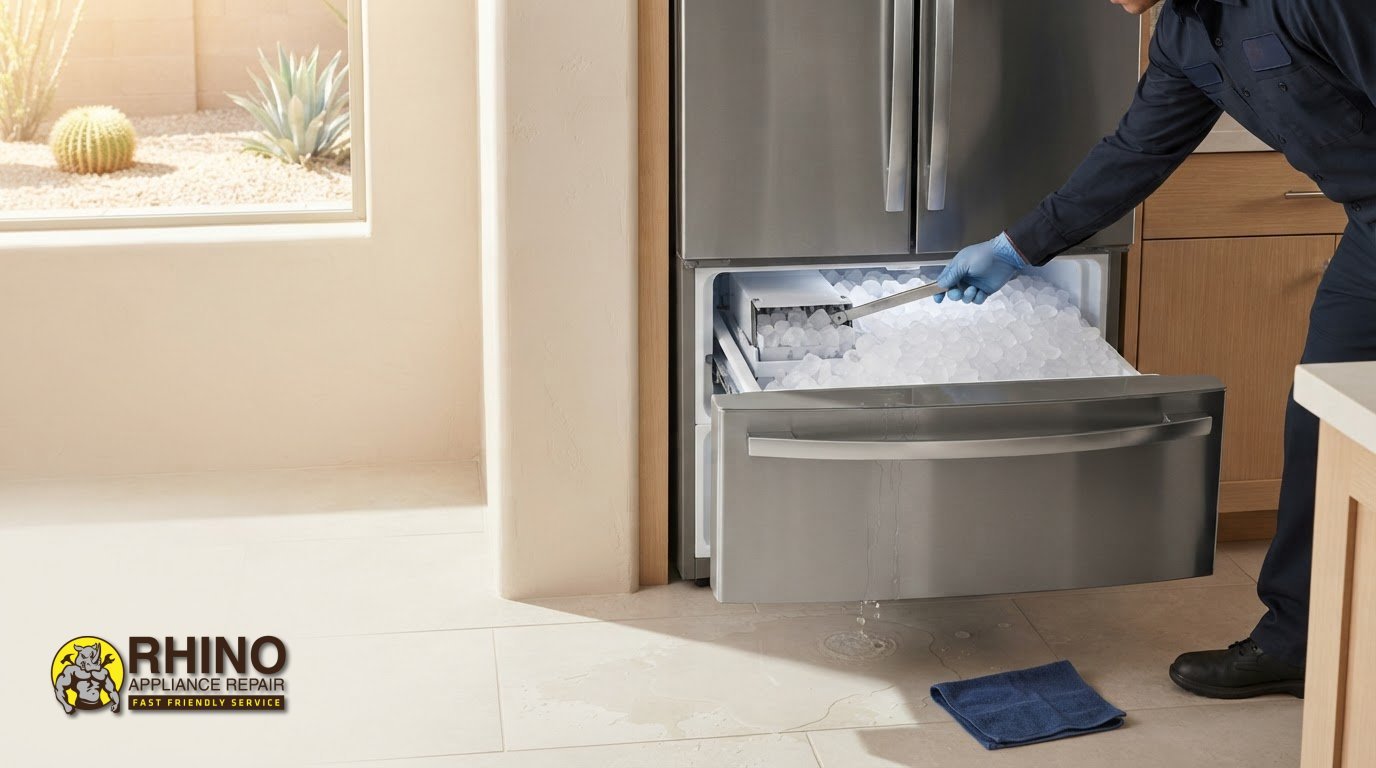
Waking up to a puddle of water creeping across your kitchen tile is an immediate headache. You pull open the freezer door only to find a solid block of ice encasing the storage bin. When facing an ice maker overflowing repair Gilbert homeowners often wonder whether a simple mechanical arm jam or a failed component caused the flood.
You shouldn’t have to guess while water risks damaging your baseboards and subfloors. Extremely hard water across the East Valley frequently coats internal valve seals with mineral scale, though an overflow can also stem from low water pressure or a stuck switch. In this guide, you’ll learn how to quickly stop the water flow to prevent property damage, diagnose common Arizona limescale issues, and determine when to call a professional technician for help.
Here is what you need to inspect right now to protect your flooring and get your freezer working properly again.
Key Takeaways
- Halt active water flow immediately by lifting the shutoff arm or closing the supply valve to prevent floor and cabinet damage.
- Identify how severe Arizona mineral buildup and water pressure changes can cause inlet valves to stick open.
- Perform safe homeowner checks, such as clearing ice bridge jams and inspecting supply lines, without risking electrical hazards.
- Recognize the warning signs that indicate you need professional ice maker overflowing repair Gilbert specialists can safely diagnose.
Immediate Steps: What to Do When Your Ice Maker Overflows
A flood in the kitchen demands quick action. Before you start inspecting components, your top priority is cutting off the water supply to protect your flooring and drywall. Understanding how ice makers work helps you trace the line from the wall to the internal mold, but stopping active flow comes first. If you need professional assistance, calling for refrigerator leaking water repair gets an East Valley technician on-site, but these immediate triage steps will limit property damage right away.
Stopping the Water Supply Safely
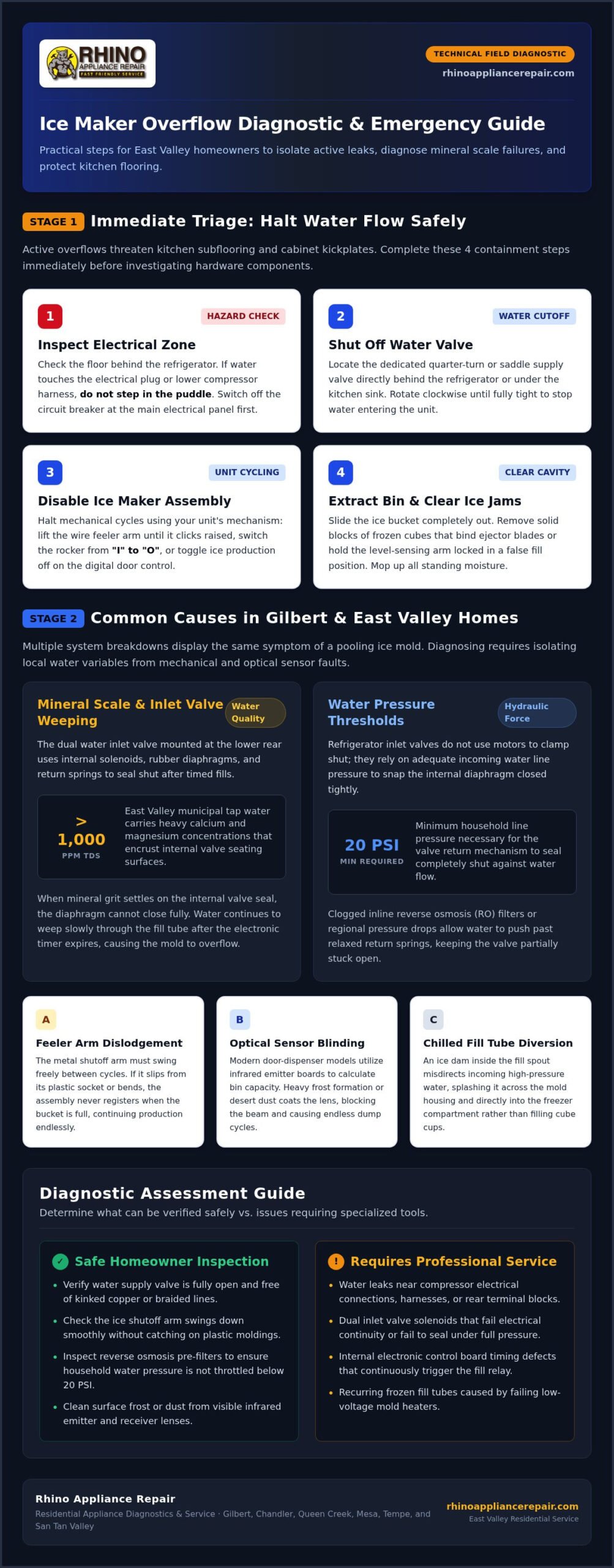
Check the floor around the back of the refrigerator before stepping into any water. If moisture touches the electrical plug or lower compressor harness, do not step into the puddle. Go straight to your main electrical panel and switch off the breaker labeled for the refrigerator or kitchen circuits.
Once electrical hazards are cleared, locate the water shutoff valve. Most homes feature a dedicated quarter-turn valve or older saddle valve located directly behind the refrigerator or under the kitchen sink. Rotate the knob clockwise until it stops tight. Water should halt flowing into the unit within seconds. Mop up standing water immediately. Standing moisture damages cabinet kickplates and quickly seeps into kitchen subflooring common in Gilbert builds.
Disabling the Ice Maker Unit
After isolating the water line, turn off the appliance assembly itself so the mechanical cycle stops cycling through fill commands:
- Mechanical Feeler Arms: Locate the wire arm on the side of the mold. Lift it gently upward until it clicks into the raised, off position.
- Digital Controls: Modern door dispensers often include an ice toggle on the exterior display. Press and hold the ice button to switch production to off.
- Internal Rocker Switches: Reach inside the freezer compartment near the modular ice head. Flip the switch from “I” (on) to “O” (off).
- Bin Extraction: Pull the ice bin completely out of the freezer. Remove large blocks of frozen cubes that might be binding the motor or ejector blades.
Taking these simple steps eliminates ongoing water damage while you assess the situation. Once the leak stops and the freezer bin is clear, you can safely look for underlying faults or arrange for professional ice maker overflowing repair Gilbert homeowners rely on for lasting solutions.
Common Causes of Ice Maker Overflowing in Gilbert Homes
Diagnosing an overflowing freezer takes patience because multiple distinct faults produce the exact same flood. Water can pool from an electrical control failure just as easily as a mechanical blockage. Identifying the root cause requires checking each part of the assembly systematically, starting with the components that handle water regulation and level sensing.
Water Inlet Valve and Solenoid Failures
The dual water inlet valve mounted at the lower rear of your refrigerator regulates water for both the door dispenser and the ice maker mold. It relies on internal solenoids, rubber diaphragms, and return springs to start and stop flow. Gilbert municipal tap water carries heavy mineral concentrations, often measured with Total Dissolved Solids exceeding 1,000 PPM. Calcium and magnesium limescale can gradually encrust the valve’s internal seat. When mineral grit prevents the seal from seating completely, water continues to weep through the fill tube after the electronic timer ends.
Water pressure issues also cause mysterious leaks. Residential water inlet valves require adequate pressure, typically at least 20 PSI, to snap closed tightly against incoming water. When municipal drops or clogged reverse osmosis filters drop house line pressure below this threshold, the valve may stick partially open. Technicians testing water lines often review local water system reports to assess how regional supply variables interact with household plumbing hardware.
Mechanical Feeler Arm and Sensor Malfunctions
Beyond valve problems, mechanical shutoff failures frequently cause an ice bin to overfill:
- Feeler Arm Damage: The metal shutoff arm must swing down freely between ejection cycles. If it slips out of its plastic housing or gets bent, the motor never receives the mechanical signal to stop dumping ice.
- Blinded Infrared Sensors: Modern door-in-door models use optical emitter boards to monitor bin volume. Heavy frost or desert dust can block the infrared beam, prompting continuous production cycles.
- Chilled Fill Tube Diversion: A partially frozen fill tube misdirects water, splashing it across the top of the ice mold rather than into the cavities. If your appliance swings between flooding and producing nothing at all, see our walkthrough on refrigerator not making ice for related signs.
Pinpointing whether mineral scaling or an electrical failure ruined your setup takes precision. When you need dependable ice maker overflowing repair Gilbert homeowners can trust, booking a diagnostic visit with Rhino Appliance Repair takes the guesswork out of the fix.
Safe Troubleshooting Checks Homeowners Can Perform
Before assuming a complete component breakdown, you can check several non-electrical elements yourself. It is critical to distinguish between an ice maker that produces too many physical cubes and one that leaks liquid water into the bin. You never want to perform live voltage testing or disassemble sealed refrigeration tubing. Focus entirely on basic physical clearances, temperatures, and water line positioning.
Inspect the Ice Mold and Mechanical Clearance
Ice cubes can stick together into an oversized block, creating a bridge that catches the mechanical ejector arm mid-cycle. When the ejector blade stalls against frozen clusters, the drive motor can malfunction or keep the water circuit active. To inspect the mold safely:
- Clear Ice Bridges: Use a warm, damp cloth to melt frozen bridges binding the blades. Never chip away at ice with screwdrivers, knives, or metal scrapers, as sharp tools easily gouge internal non-stick coatings.
- Level the Storage Bin: Slide the removable ice bin out and verify the plastic tracks are clean. An unlevel bin sits higher than intended, which can physically bump the shutoff arm and distort normal fill cycles.
- Check Temperature Settings: Check your digital thermostat display. Freezers should operate consistently between zero and five degrees Fahrenheit. If temperatures rise above ten degrees, ice molds melt slightly, fusing cubes together into an obstructive slab.
Examine Water Supply Lines and Filters
External supply line disruptions directly impact how internal solenoids function. Pull the refrigerator away from the wall just enough to shine a flashlight behind the lower access panel. Look for sharp bends or kinks in copper or braided stainless lines that choke volume. If your home uses an undersink reverse osmosis setup, an overdue pre-filter can restrict flow, starving the water valve and preventing it from seating cleanly.
Next, open the freezer compartment and check the plastic fill tube entering the top of the ice mold. This spout should point straight down into the collection channel. If heavy movement jarred the tube out of alignment, incoming water will bypass the tray and pour directly onto your frozen goods below.
Stop your inspection immediately if you spot dampness near internal wiring harnesses, cracked plastic housings, or active dripping along electrical terminals. At that point, basic checks are complete, and professional ice maker overflowing repair Gilbert homeowners depend on is the safest route forward.
When to Call a Professional for Ice Maker Repair
Basic visual checks only take you so far. Once you confirm the shutoff arm moves freely and the bin sits level, continued overflowing points to internal component failures. Modern refrigeration units rely on integrated electronics and pressurized plumbing lines working in precise sequence. When these systems break down, attempting DIY repairs creates serious domestic safety hazards, including short circuits and slow cabinet leaks that trigger toxic mold growth behind your walls.
Electrical and Electronic Component Failures
Internal microswitches inside the modular ice head cycle power through small mechanical gears. Over time, contact points wear out or stick, causing the motor to misread the assembly’s position. Even worse, modern main electronic control boards can suffer relay failures, continuously sending line voltage down to the fill circuit. When this happens, water runs into the freezer nonstop regardless of bin levels. Trained technicians use specialized diagnostic meters to isolate low-voltage board signals from high-voltage circuits without exposing homeowners to severe shock risks.
Valve Replacement and Plumbing Integration
Replacing an inlet valve involves more than just unscrewing a bracket. It requires working directly with pressurized household water lines and precise compression fittings:
- Fitting Integrity: Overtightening brass or plastic compression sleeves cracks the valve housing, while undertightening causes steady, hidden leaks behind lower cabinetry.
- Supply Line Selection: Experienced technicians evaluate whether older polyethylene tubing has turned brittle under desert conditions, upgrading weak sections to braided stainless steel.
- Thermal Fuse Protection: Ice makers feature built-in thermal safety fuses. If a heating mold element fails to disengage after harvesting cubes, it can damage nearby plastic parts.
When persistent pooling threatens your flooring, you need an accurate diagnosis from an experienced local technician. Seeking prompt refrigerator repair Gilbert AZ specialists offer ensures electrical circuits and plumbing lines are tested thoroughly. If you are dealing with continuous leaks, schedule reliable ice maker overflowing repair Gilbert service with Rhino Appliance Repair to get your freezer running safely again.
Professional Ice Maker and Refrigerator Repair in Gilbert
Resolving a flooded kitchen takes local experience and an honest diagnostic approach. At Rhino Appliance Repair, our team focuses entirely on residential refrigeration systems across our East Valley neighborhoods. Appliance problems rarely come down to a single cause. An overflowing bin could stem from an electrical board glitch, a worn shutoff arm, or a valve seized by hard water scale. Our technicians systematically inspect the entire water and electrical path, ensuring you get an accurate diagnosis rather than a rushed guess. When continuous leaks threaten your cabinetry, choosing dependable ice maker overflowing repair Gilbert homeowners can trust brings immediate peace of mind.
Residential Brand Expertise
Modern refrigerators feature complex plumbing and wiring layouts that differ significantly across manufacturers. French door configurations often route narrow water lines through cabinet hinges into tight door compartments, while side-by-side models rely on modular mechanisms mounted directly inside the freezer wall. Our technicians diagnose and service leading residential brands, including Whirlpool, Samsung, GE, LG, KitchenAid, and Frigidaire. We dedicate our work entirely to residential kitchen appliances, steering clear of commercial walk-ins or portable countertop ice machines to focus on home systems.
Convenient Scheduling for East Valley Homeowners
A leaking ice maker shouldn’t disrupt your household routine for days. Rhino Appliance Repair provides comprehensive service coverage throughout Gilbert, Chandler, Mesa, Tempe, Queen Creek, and San Tan Valley. We keep scheduling practical and accessible, providing service visits from Monday through Friday along with Saturday morning hours to accommodate busy work and family schedules.
During every diagnostic call, you receive a clear, realistic assessment of your appliance’s health:
- Straightforward Evaluations: We explain whether replacing a valve, clearing a line, or swapping a modular head makes long-term sense.
- Honest Recommendations: If an older refrigerator has extensive mechanical wear where repairs aren’t practical, we share that assessment plainly.
- Local Focus: As a family-owned East Valley business, we treat your kitchen with the care and cleanliness we’d expect in our own homes.
You don’t have to manage pooling water and iced-up bins on your own. Contact Rhino Appliance Repair to schedule your Gilbert service visit and restore your freezer’s operation.
Protect Your Kitchen Flooring and Restore Your Freezer
Dealing with an overflowing ice maker doesn’t have to ruin your week. By shutting down the water supply line and clearing ice jams quickly, you prevent serious moisture damage to your cabinets and subflooring. Because symptoms can stem from multiple possible culprits, identifying whether Arizona mineral scaling, low water pressure, or a failed electronic switch caused the flood requires a careful look.
When basic visual checks don’t resolve the issue, skip the hazards of live electrical testing and pressurized plumbing lines. For lasting, dependable ice maker overflowing repair Gilbert homeowners can trust the team at Rhino Appliance Repair. As a locally operated family business serving Gilbert and the East Valley, we provide practical, safety-first diagnostics for major residential brands including Whirlpool, Samsung, GE, and LG.
Schedule Ice Maker Repair in Gilbert with Rhino Appliance Repair today to get your kitchen running smoothly again.
Frequently Asked Questions
Why is my ice maker filling with too much water and spilling over?
Symptoms like overfilling can stem from several distinct mechanical and electrical causes. A failing water inlet valve might remain open too long, or a misadjusted fill control setting might inject excess volume during cycles. A bent feeler arm or an unlevel refrigerator can also divert incoming water over the tray rim. Systematic diagnosis is essential to pinpoint whether it is a plumbing or sensor fault.
Can hard water in Gilbert cause an ice maker to overflow?
Yes, Gilbert’s mineral-rich water is a frequent culprit behind overflowing ice makers. High concentrations of dissolved calcium and magnesium create limescale inside the small internal channels of the water inlet valve. Over time, these chalky deposits keep the valve’s rubber diaphragm from closing tightly, letting water trickle past continuously. When dealing with an ice maker overflowing repair Gilbert homeowners often find hard water buildup is the root issue.
How do I know if my water inlet valve is stuck open?
A stuck valve typically produces a continuous, slow trickle of water into the mold even when the ice maker is turned off. If you raise the feeler arm to the off position or pull the ice bin out, yet water keeps seeping through the fill tube, the valve seat is jammed. Because multiple electrical switches can mimic this issue, an experienced technician should test solenoid power to confirm.
What should I do if water is leaking near electrical outlets?
Stop using the appliance immediately and never touch damp cords or step into standing water. Go directly to your home’s main service breaker panel and shut off the circuit feeding the refrigerator. Once power is disconnected, wipe up pooling water to protect your floors and kitchen cabinets. Never attempt DIY wire testing around moisture. Always contact a qualified repair technician to inspect the damaged area safely.
Can a faulty water filter cause an ice maker to leak?
Yes, a clogged or improperly seated water filter can lead to leaks and overflows. A heavily restricted filter causes pressure drops throughout the internal plumbing lines. Inlet valves require steady household water pressure to snap shut securely. When pressure plummets, the valve spring may fail to overcome the backflow, leaving the port slightly cracked open. Replacing aging filters every six months helps maintain proper operating pressure.
Which refrigerator brands does Rhino Appliance Repair service in Gilbert?
Rhino Appliance Repair services most major residential refrigerator and ice maker brands across Gilbert and surrounding East Valley neighborhoods. Technicians regularly repair Whirlpool, Samsung, GE, LG, KitchenAid, Frigidaire, Maytag, Kenmore, Electrolux, Amana, and Bosch. We focus exclusively on residential household appliances, ensuring expert attention for home French door, side-by-side, and top-freezer setups rather than commercial refrigeration equipment.
Is it better to repair an overflowing ice maker or replace the assembly?
The right choice depends on the underlying failure and the overall age of the refrigerator. Minor valve clogs or misaligned shutoff arms are easily repaired without replacing the full unit. However, if internal drive gears strip or control modules crack, installing a complete modular ice maker head is often more cost-effective. For complicated issues, professional ice maker overflowing repair Gilbert services provide an honest recommendation on the most practical fix.