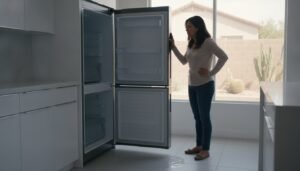
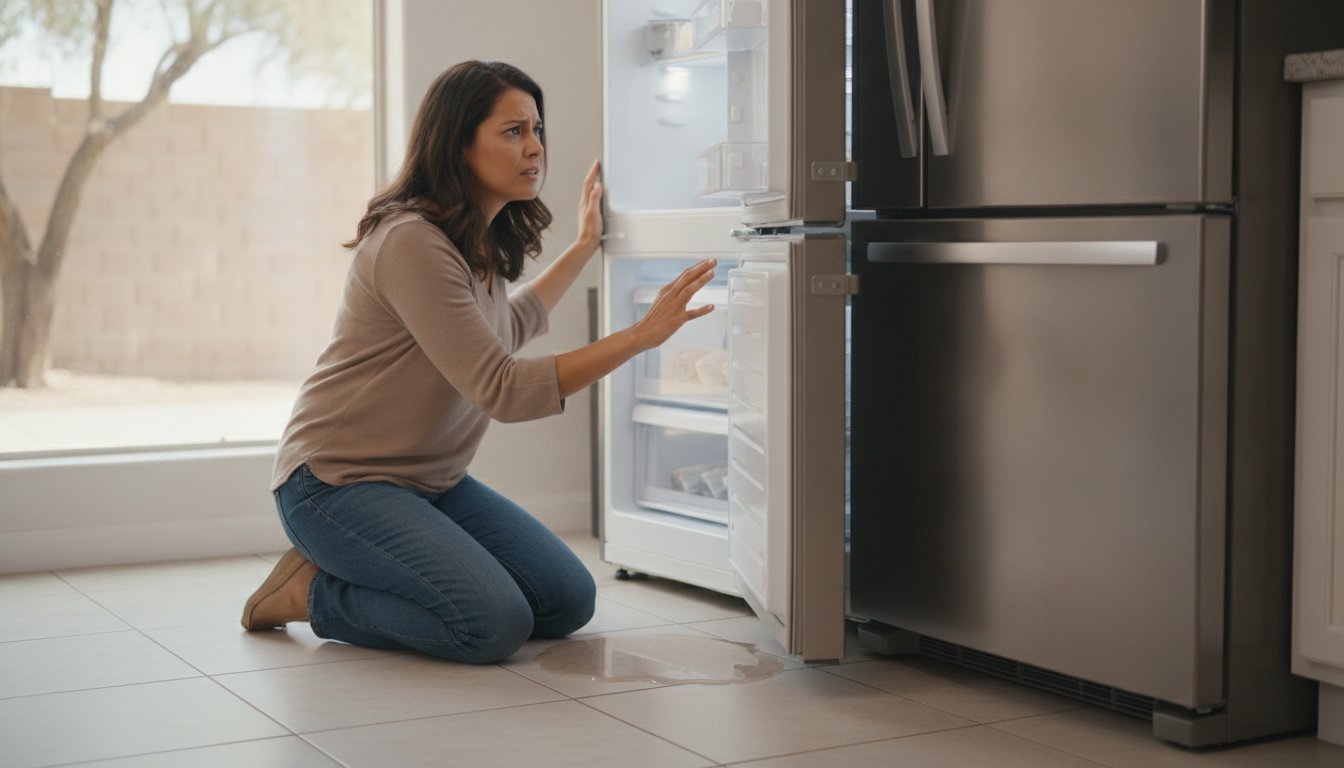
Last Tuesday, Sarah discovered a puddle on her kitchen floor and realized her freezer was not getting cold enough to keep the week’s groceries frozen. That sinking feeling starts the moment you see the mess. It’s a high-stakes guessing game. No homeowner wants to play it before their morning coffee.
We understand the anxiety of a failing appliance. You’re worried about food spoilage. You’re stressed about repair costs. Your daily routine is a mess. It’s frustrating when your home stops working for you. This guide provides a definitive diagnostic checklist. We’ll show you how to catch subtle warning signs before they turn into expensive emergencies. We’ll walk through when to call for a repair, how to weigh your options, and the risks of delaying maintenance. Catching issues early saves money and keeps your home running smoothly.
Key Takeaways
- Learn how to distinguish between normal operating sounds and mechanical failures to catch issues before they escalate into expensive emergencies.
- Identify why your freezer not getting cold enough might be a simple overpacking issue or a critical mechanical failure requiring professional attention.
- Understand the specific laundry room red flags that signal a high risk for preventable water damage and fire hazards.
- Apply the “50% Rule” to quickly decide if your modern appliance is worth a repair or if a full replacement is the smarter financial move.
- Discover the benefits of hiring a local, family-owned East Valley technician for transparent service and reliable residential repairs.
Signs Your Home Appliance Needs Urgent Repair
Most homeowners wait for a total breakdown before calling for help. This “wait and see” approach is the fastest way to turn a minor fix into a major crisis. Adopting a checklist mentality allows you to spot trouble early. Appliances rarely fail without a struggle. They give off subtle warnings like a freezer not getting cold enough or a dishwasher that leaves a film on your plates. Ignoring these small glitches often leads to expensive secondary property damage like warped subfloors from slow leaks or electrical fires from frayed wiring.
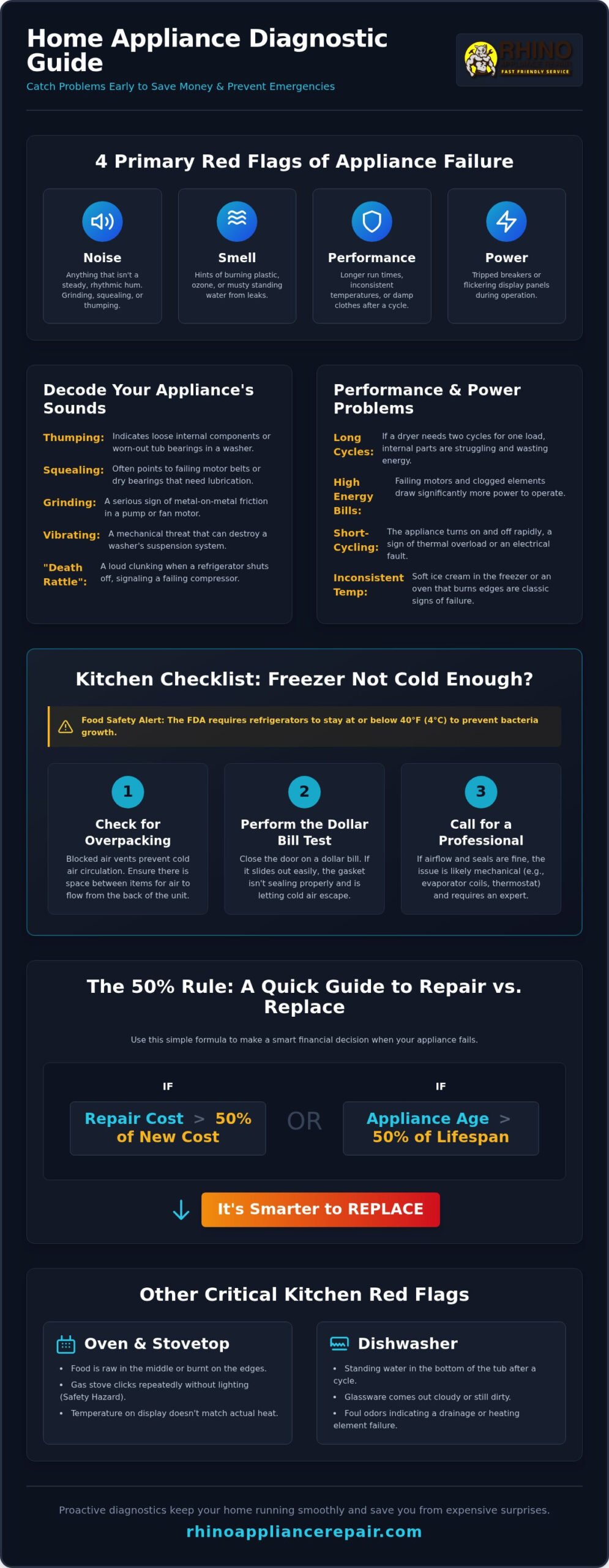
Appliances are the heartbeat of your home. When they struggle, your daily routine suffers. We categorize these warnings into four red flag categories:
- Noise: Anything that doesn’t sound like a steady, rhythmic hum.
- Smell: Hints of burning plastic, ozone, or musty standing water.
- Performance: Longer run times, inconsistent temperatures, or damp clothes.
- Power: Tripped breakers or flickering display panels during a cycle.
Unusual Noises and Vibrations
You know the standard sounds of your home. A sudden change in the acoustic profile of your kitchen or laundry room is a cry for help. Thumping sounds usually indicate loose internal components or worn-out tub bearings in a washer. Squealing or high-pitched whining often points to failing motor belts or dry bearings. If you hear grinding, it means metal-on-metal friction is occurring in a pump or fan motor. A vibrating washer is more than a nuisance. It’s a mechanical threat that eventually destroys the suspension system and outer tub. Pay close attention to the “death rattle” of a refrigerator. This loud, clunking sound when the unit shuts off is a primary sign of a failing compressor.
Performance Lag and High Energy Bills
Efficiency is the first thing to go when a component starts to fail. If your dryer suddenly needs two cycles to finish a load, or your freezer is not getting cold enough to keep ice cream firm, internal parts are struggling. This extra effort shows up on your monthly utility costs. Failing motors and clogged heating elements draw significantly more current to achieve the same results. Watch out for “short-cycling” as well. This happens when an appliance turns on and off rapidly. It’s a common sign of a thermal overload protector or an electrical fault. These issues won’t fix themselves; they only get more expensive as the wear spreads to healthy components.
Kitchen Checklist: Is Your Freezer Not Getting Cold Enough?
Kitchen repairs are about more than just convenience. They are critical for food safety and household hygiene. According to the FDA, refrigerators must stay at or below 40°F to prevent bacteria growth. When your freezer not getting cold enough becomes a recurring issue, you risk more than just a melted mess. You risk your family’s health. Before assuming the worst, check for user error. Overpacking is a common culprit. If frozen items block the air vents, the unit can’t circulate cold air properly. It’s a simple fix that costs nothing.
Check your door seals and gaskets next. These rubber strips keep the cold air in and the Arizona heat out. If you see cracks or feel a draft, the seal is failing. Try the dollar bill test. Close the door on a single dollar bill. If it slides out easily, your gasket isn’t sealing. If the airflow and seals are fine, you likely need a professional fridge not cooling repair to check the evaporator coils or thermostat.
Freezer and Refrigerator Cooling Symptoms
The first sign of trouble is usually the texture of your food. Soft ice cream is a classic red flag. It should be a solid brick; if it feels like soft-serve, your freezer is not getting cold enough. You might also notice slow ice production or “sweat” on the exterior of the unit. Watch the floor, too. A refrigerator leaking water repair is urgent for East Valley homeowners. Standing water can quickly warp subfloors or damage expensive cabinetry in the Gilbert and Chandler heat. If you’re unsure about a cooling shift, our team can provide a quick diagnostic to protect your kitchen.
Oven and Dishwasher Red Flags
Kitchen safety extends to your cooking and cleaning units. If your cakes are raw in the middle or burnt on the edges, you likely need an oven temperature not accurate repair. Don’t ignore a gas stove that clicks repeatedly without lighting; this is a serious safety hazard. Dishwashers also give off clear signals. Standing water in the bottom of the tub, cloudy glassware, or foul odors mean the drainage system or heating element is failing. These issues compromise the sanitization of your dishes and require professional attention to ensure your kitchen remains a healthy environment.
Laundry Room Warning Signs: Washer and Dryer Red Flags
Laundry room failures are sneaky. While a freezer not getting cold enough gives you a clear warning with soft ice cream, a washing machine leak might hide behind the unit for weeks. By the time you see the puddle, the subfloor is already warped. Laundry room malfunctions are a leading cause of preventable water damage in East Valley homes. You might also notice “ghost cycles.” This is when the machine runs its full time, but the clothes come out soapy or soaking wet. These red flags suggest your units are reaching their mechanical limit.
Washing Machine Leaks and Spinning Issues
Identifying the source of a leak is your first priority. Check the connections first. A loose hose or a worn rubber washer is a simple, cheap fix. However, if water is pooling under the center of the machine, you might have a cracked outer tub. This is a critical failure. If your machine refuses to rotate during the cycle, seek washing machine repair San Tan Valley AZ to diagnose the motor coupler or drive belt. Another frequent issue involves drainage. Finding a washer won’t drain fix often means clearing a pump blockage. If the pump is clear but the water stays put, the drain motor has likely failed.
Dryer Heat and Cycle Time Problems
Dryer maintenance is directly linked to household fire safety. If your dryer takes multiple cycles to finish a single load, your vent is likely clogged with lint. This creates dangerous backpressure and heat buildup. If the drum spins but the air stays cold, you need a dryer not heating repair specialist to check the thermal fuse or heating element. Watch for these specific dryer red flags:
- Burning Smells: This is an emergency. Shut the unit off immediately. It usually indicates lint buildup inside the machine cabinet or a failing motor.
- Excessive Heat: If the top of the dryer is hot to the touch, air isn’t flowing correctly.
- Squealing Noises: This points to worn drum rollers or idler pulleys that need replacement.
Just like a freezer not getting cold enough, a dryer that loses efficiency is costing you extra on your utility bills every month. Catching these laundry room issues early prevents structural damage and keeps your family safe.
The Repair or Replace Decision: When to Call a Pro
Deciding whether to fix or ditch an appliance is a major financial crossroads. If your freezer not getting cold enough has you browsing new models at a big-box store, stop. You need a strategy. Replacing a major unit is a significant investment that often isn’t necessary. Most modern appliances are built with modular components. This means a technician can often swap a single part to restore full function without the cost of a new machine. However, you must weigh the age of the unit against the cost of the fix. Parts for units older than 10 years are often discontinued, making repairs difficult or impossible.
Be wary of “cheap” DIY fixes you find on social media. Modern high-efficiency appliances are packed with sensitive electronics. One wrong move with a multimeter can fry a control board, instantly doubling your repair bill. Even worse, many manufacturers will void your remaining warranty if they see evidence of uncertified tampering. Prioritize professional repair for high-end or built-in units. These are designed for longevity and almost always justify a professional service call over a total replacement.
The 50% Rule and Lifespan Factors
The industry standard is the 50% rule. If a repair costs more than half the price of a new unit, it’s time to replace it. But don’t look at the repair cost in a vacuum. Consider the average lifespan of your unit. Refrigerators typically last 10 to 14 years, while washers and dryers usually reach 8 to 12 years. If your unit is near the end of its life, a $650 refrigerator repair might not be a wise investment. However, if the unit is only five years old, a professional fix is far more sustainable and cost-effective than adding to a landfill. One-off professional repairs provide a clear resolution, whereas DIY tinkering often leads to a cycle of recurring failures.
Safety Risks: Electricity, Gas, and Water
Appliance repair involves more than just a screwdriver. You’re dealing with 240V laundry circuits that carry enough current to be lethal. Gas oven lines and cooktops present an even higher risk of fire or carbon monoxide leaks if not handled with precision. A professional technician sees the hidden damage a homeowner misses, such as scorched wiring or hairline cracks in a water valve. Professional diagnostics prevent “parts cannon” spending, where you buy items you don’t actually need. If you’re stuck at this crossroads, schedule a professional diagnostic to get the facts before you spend another dime.
Choosing a Trusted Appliance Repair Technician in the East Valley
Finding a freezer not getting cold enough in the middle of a Mesa summer is a genuine household crisis. You need more than just a repair; you need a neighbor who understands the local environment. A local, family-owned business in Maricopa County provides a level of accountability that national chains cannot match. They live in your community. They shop at your grocery stores. This connection drives a commitment to honesty and quality that keeps East Valley homes running. Specialization in residential units is equally important. You want a technician who spends every day fixing the specific brands found in modern kitchens, not someone distracted by commercial cooling systems.
Transparency is the foundation of trust. When vetting a provider, look for detailed service descriptions and clear reviews. A reliable technician will explain the diagnostic process without hiding behind technical jargon. They should be upfront about their process and focused on solving your specific problem. In Arizona, we face unique challenges like extreme heat and heavy mineral deposits in our water. A local expert understands how these factors accelerate wear on your appliances. They know that a freezer not getting cold enough in Gilbert might be struggling against a clogged condenser coil caked in desert dust.
Local Expertise: Why Gilbert and Chandler Homeowners Choose Local
Gilbert and Chandler homeowners prioritize speed and local knowledge. A technician in your neighborhood can respond much faster than someone driving in from across the valley. This quick response prevents food spoilage and minimizes the disruption to your routine. Choosing local also supports the East Valley economy, keeping resources within our community. Furthermore, our specific water profile matters. Arizona water minerals lead to significant scale buildup in dishwashers and ice makers. A local tech knows exactly how to clear these deposits to restore peak performance and extend the life of your units. Chandler residents dealing with a warm refrigerator can count on refrigerator repair Chandler AZ specialists who understand the unique demands of the local climate.
Preparing for Your Service Call
You can help your technician provide a faster fix by preparing before they arrive. Locate your model and serial number. These are usually found on a sticker inside the door frame or on the back of the unit. Having this info ready allows the tech to research common issues for your specific model. Clear the area around the appliance to ensure safe, fast access. If you have a refrigerator repair Gilbert AZ specialist coming over, make sure they have room to pull the unit out. Use this final checklist of questions to ensure a smooth interaction:
- Is the diagnostic fee credited toward the final repair?
- Do you have the necessary parts on the truck for this specific model?
- What is the estimated timeframe for the completed fix?
- How does the hard water in our area affect this specific component?
Restore Your Home’s Efficiency Today
Proactive maintenance is the difference between a quick fix and a total kitchen overhaul. By watching for performance lags or a freezer not getting cold enough, you protect your home from water damage and high utility costs. Use the 50% rule to make smart financial decisions. Always prioritize safety over risky DIY attempts that might void your manufacturer warranty or lead to dangerous electrical faults.
You don’t have to navigate these household crises alone. As family-owned local experts, we specialize in major residential brands across Gilbert, Chandler, Mesa, and the entire East Valley. We understand how the Arizona heat impacts your units and provide the fast, transparent service you deserve. Our team takes pride in being the helpful problem-solvers your neighborhood relies on for honest advice and quality craftsmanship.
Schedule your expert appliance repair in the East Valley today! Let us handle the technical details so you can get back to your normal routine with total peace of mind. Your home is in good hands and we are ready to help you resolve these disruptions quickly.
Frequently Asked Questions
How do I know if my refrigerator repair is an emergency?
Refrigerator repairs become emergencies when internal temperatures rise above 40°F or if you see active water leaks. In the East Valley heat, food spoils quickly, making speed essential for your family’s health. If your unit stays warm or you notice a freezer not getting cold enough, call a technician immediately. Prompt action prevents foodborne illness and protects your kitchen floors from expensive water damage. Don’t wait for total failure if safety is on the line.
Is it worth repairing a 10-year-old washing machine?
Deciding to fix a 10-year-old washing machine depends on the specific failure and the unit’s overall condition. Most residential washers have a typical lifespan of 8 to 12 years. If the repair is a simple belt or pump replacement, it’s often worth the investment. However, if the motor or transmission has failed, you’re likely better off replacing the unit. Use the 50% rule to weigh the repair cost against a new energy-efficient model.
What are the signs that my dishwasher motor is failing?
A failing dishwasher motor often produces a distinct humming sound or a high-pitched squeal during the wash cycle. You might also notice that the machine won’t start even though the control panel is lit. Poor cleaning performance and standing water are other common indicators of motor trouble. If the motor is seized, it won’t circulate water properly. This requires a professional diagnostic to determine if the motor or the pump assembly needs a full replacement.
Why does my dryer smell like it is burning?
A burning smell from your dryer is a serious safety hazard that requires you to shut the unit off immediately. This scent usually indicates a heavy buildup of lint inside the cabinet or a failing drive motor. Lint is highly flammable and is a leading cause of household fires in Maricopa County. Professional cleaning and a thorough inspection of the internal components are necessary to ensure the unit is safe to operate again in your home.
Can I fix a leaking refrigerator myself or should I call a pro?
You can handle basic checks like clearing a clogged defrost drain or tightening a loose water line connection yourself. However, internal leaks or cooling system issues require professional expertise. If your freezer not getting cold enough is accompanied by puddles, the problem might involve the evaporator coils or a failing seal. Pro technicians have the specialized tools to find the source without causing further damage to your home’s subfloors or expensive cabinetry.
What is the 50% rule in appliance repair?
The 50% rule is a simple guideline used to decide between repairing or replacing an appliance. If the estimated repair cost exceeds 50% of the price of a brand-new unit, replacement is generally the smarter financial move. You should also consider the age of the machine and its recent repair history. For high-end residential units in Gilbert or Chandler, professional repairs often make more sense because these machines are built for long-term longevity.
How much does a typical appliance service call cost in Gilbert, AZ?
Appliance service call fees in Gilbert and the surrounding East Valley typically cover the technician’s travel and the initial diagnostic time. National averages for these fees often range from $50 to $200, but local rates vary based on the complexity of the unit and the technician’s experience level. Many local companies will credit this diagnostic fee toward the total cost of your repair. Always ask for a clear explanation of these fees before booking.
What information should I have ready before calling an appliance repairman?
Having the right details ready helps your technician arrive prepared with the correct parts for your machine. Locate the model and serial number on the sticker inside the door frame or on the back of the appliance. Clear a path to the unit and remove any items stored on top of or inside it. Be ready to describe the specific sounds, smells, or performance issues you’ve noticed. This information allows for a faster diagnostic.