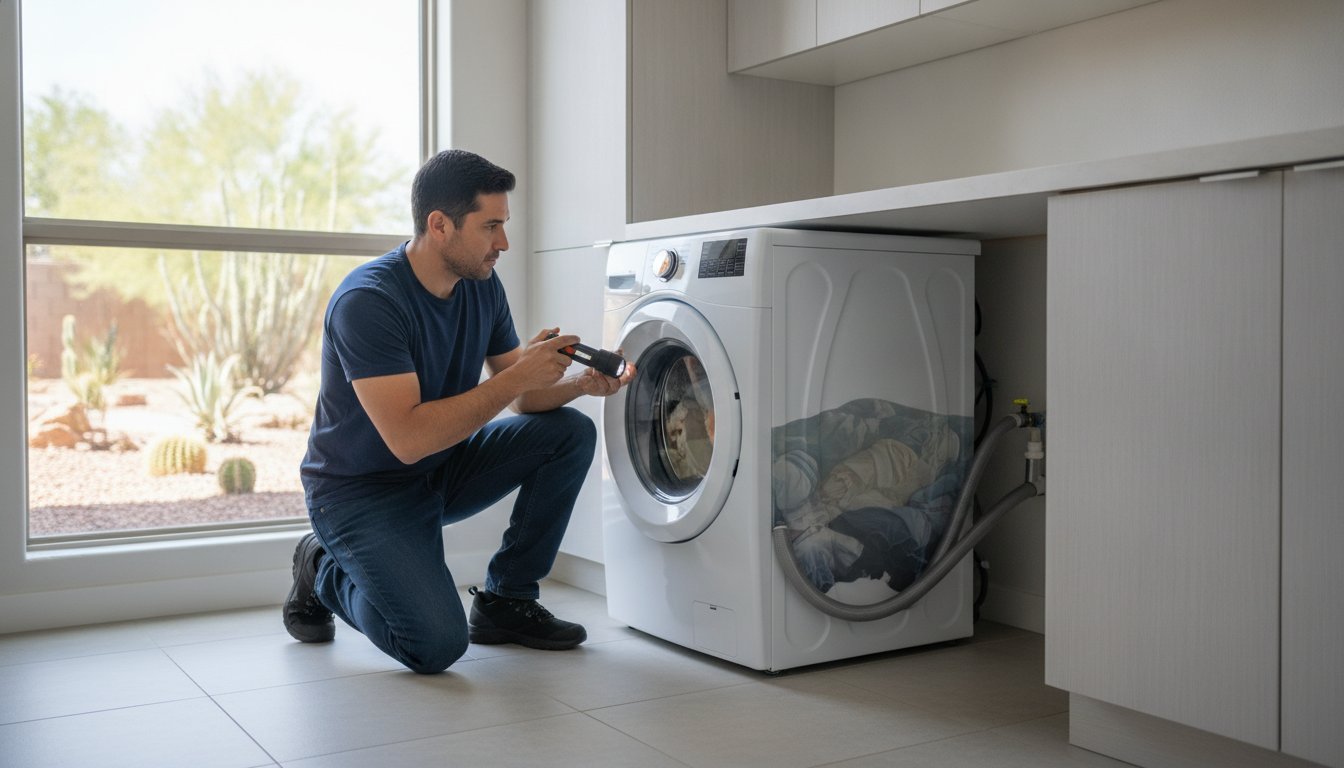
Last Monday, a homeowner in Mesa opened her washing machine to find her work clothes submerged in a swamp of cold, grey water. It’s a stressful sight that immediately triggers a fear of a flooded laundry room. You’re likely staring at your own tub of dirty water right now, wondering if you’re facing a massive repair bill or a ruined afternoon. It’s frustrating to feel stuck when the laundry is piling up and the machine refuses to cooperate.
We understand that technical parts like drain pumps can feel confusing and intimidating. However, most drainage issues are actually simple mechanical blockages rather than total electrical failures. Finding a reliable washer won’t drain fix is often easier than you think. This step-by-step guide from your local East Valley experts will help you troubleshoot the problem with confidence. We’ll show you how to identify the specific cause of the clog, check your drain hose, and clear the filter. You’ll learn how to get your washer drained today and keep your repair costs as low as possible.
Key Takeaways
- Spot the early signs of drainage failure to prevent a messy laundry room flood.
- Master a simple washer won’t drain fix by checking the hose and filter before assuming the pump is dead.
- Learn why front-load clogs differ from top-load lid switch issues to find your solution faster.
- Protect your machine from East Valley mineral buildup with easy maintenance habits.
- Recognize critical warning signs like burning smells that require professional repair expertise.
Why Your Washing Machine Won’t Drain
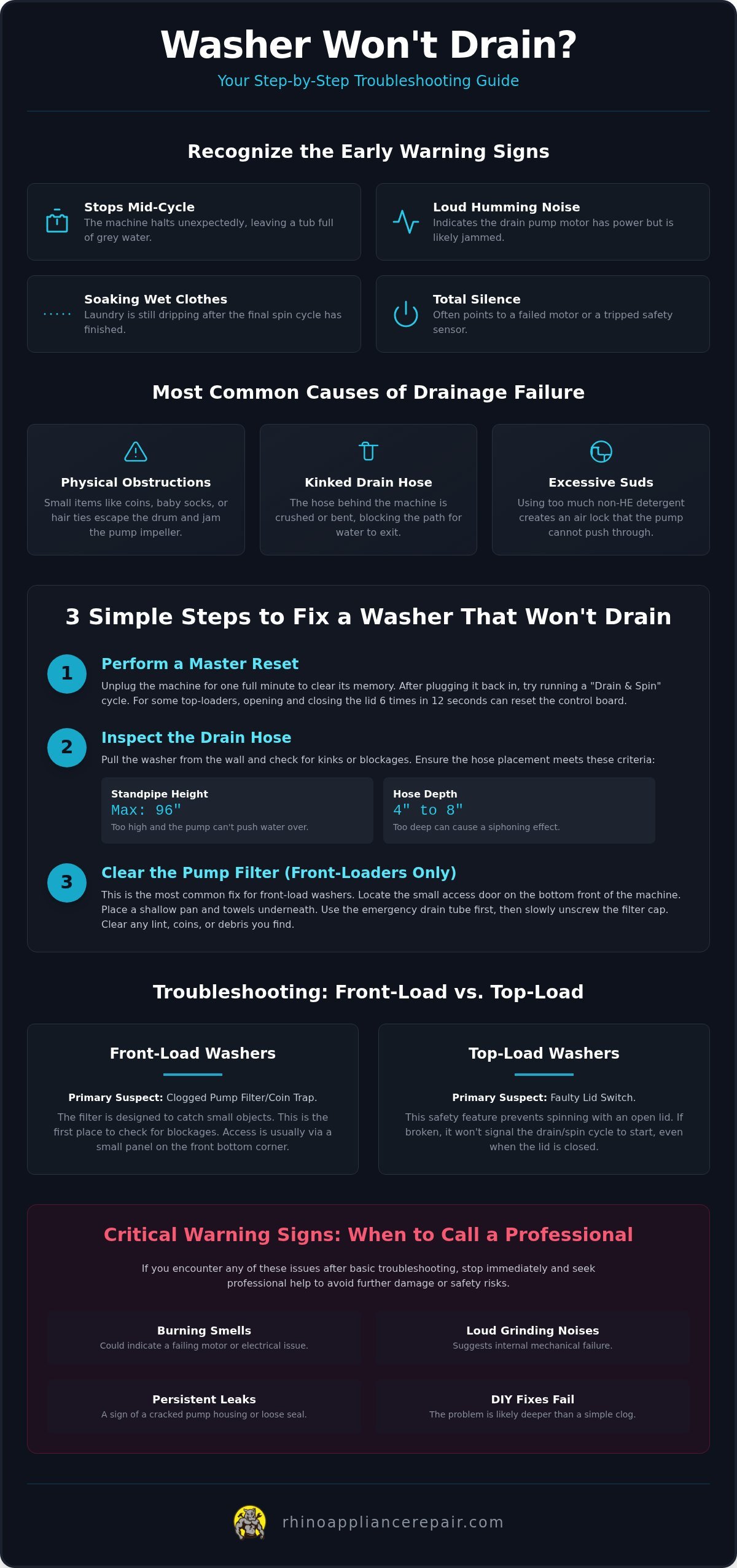
A washer drainage failure is a mechanical roadblock that brings your chore day to a grinding halt. It occurs when the drain pump cannot successfully move water out of the tub and into the standpipe. You might notice the machine stopping mid-cycle with a tub full of grey water, or perhaps you find your clothes are still dripping wet after the spin cycle finishes. Identifying the right washer won’t drain fix begins with listening to your appliance. A loud humming sound usually indicates the pump motor is receiving power but is physically jammed. Total silence often points to a failed motor or a triggered safety sensor.
The Core Components of Your Washer’s Drain System
Your machine relies on three main parts to stay dry. Understanding how they work helps you narrow down the culprit quickly.
- The Drain Pump: This is the heart of the drainage process. It uses a small motor to spin an impeller, which creates the force needed to push water upward and out.
- The Drain Hose: This corrugated plastic tube is the exit path for dirty water. If it’s blocked, pinched, or positioned too high, gravity and friction will win the battle against the pump.
- The Lid Switch or Door Lock: This is a safety feature designed to prevent the machine from spinning while open. If the switch is broken, the washer won’t signal the pump to start, leaving you with a full tub.
Most Common Causes for Drainage Failure
Most issues we see in East Valley homes aren’t complex electrical mysteries. They are usually simple physical obstructions. Small items like coins, hair ties, or baby socks frequently escape the drum and lodge themselves directly in the pump housing. This stops the impeller from spinning and can eventually burn out the motor. Finding an effective washer won’t drain fix often starts with a search for these hidden treasures.
External factors play a role too. Check behind the machine to ensure the drain hose isn’t kinked or crushed against the wall. In Gilbert and Mesa, we also see issues with excessive suds. If you use too much detergent in a High-Efficiency (HE) washer, the resulting foam creates an air lock. The pump can’t move air as easily as water, which causes the cycle to stall. Keeping your repair simple often means just checking these external points before diving into the internal mechanics.
5 Simple Steps to Fix a Washer That Won’t Drain
Before you start, preparation is key. Troubleshooting drainage is inherently wet work. Keep a sturdy bucket and a stack of old towels nearby. If the tub is full, you will need to drain it manually before moving the machine to avoid a flood in your laundry room. Always disconnect the power cord and turn off the water valves before attempting any internal repairs. Following a logical sequence allows you to isolate the problem efficiently without making a mess of your East Valley home.
Step 1: Perform a Master Reset
Modern washers rely on complex control boards that can occasionally glitch. A master reset is the easiest washer won’t drain fix because it requires zero tools. Start by unplugging the machine for one full minute to clear the memory. Plug it back in and, for many popular top-load brands, quickly open and close the lid six times within a 12 second window. This signals the computer to reset its cycle logic. Try running a “Drain and Spin” cycle to see if the error clears and the water begins to move.
Step 2: Inspect the Drain Hose
Gravity and pressure do the heavy lifting in your laundry room. Pull the washer away from the wall and look for kinks or crushed sections in the corrugated hose. Ensure the hose isn’t pushed too far into the standpipe; if it’s deeper than 6 to 8 inches, it can create a siphoning effect that pulls dirty water back into the drum. Also, verify the standpipe height. It should never be higher than 96 inches. If the exit point is too high, the pump won’t have enough power to push the water over the hill.
Step 3: Clear the Pump Filter (Front Loaders Only)
Front-load machines usually have a dedicated coin trap or filter designed to catch debris. This is the most common washer won’t drain fix for front-load owners. Locate the small access door on the bottom front panel. Place a shallow pan down first. Most models have a small emergency drain tube; pull the plug on this to empty the standing water slowly. Once the flow stops, unscrew the large plastic filter cap. You’ll likely find lint, hairpins, or coins blocking the impeller. Clean the filter thoroughly and screw it back in tightly to avoid leaks.
If these quick checks don’t solve the problem, it might be time for a professional washer repair to handle more complex pump failures or electrical issues. Our team can handle the heavy lifting and messy pump replacements so you don’t have to.
Troubleshooting Front-Load vs. Top-Load Washers
The architecture of your machine dictates exactly where the debris is hiding. While the end goal is a dry tub, the path to a washer won’t drain fix looks very different depending on your model. Front-load and top-load machines have unique “choke points” where clogs and component failures typically occur. Understanding these differences saves you from tearing apart the wrong end of your appliance.
Front-Load Specific Issues: The Coin Trap
Front-load machines are masterpieces of efficiency, but they have a few design quirks that lead to clogs. The bellows, that thick rubber door seal, is your first stop. It’s designed to keep water in, but its deep folds are notorious for swallowing baby socks, hair ties, and loose change. Before these items even reach the pump, they can get wedged in the bellows, obstructing the flow. If an item slips past the seal, it usually ends up in the coin trap filter located at the bottom of the unit. We recommend a thorough cleaning of this filter every 6 months to prevent a total backup.
Beyond physical clogs, front-loaders rely heavily on the door latch assembly. This is a digital gatekeeper. If the electronic lock fails to engage or the sensor is dirty, the control board won’t signal the drain pump to start. It’s a safety precaution to prevent the machine from opening while full of water. If your door doesn’t feel “snug” or you don’t hear the familiar electronic lock click at the start of the cycle, the latch is likely the reason your water isn’t moving.
Top-Load Specific Issues: The Lid Switch
Top-loaders are the kings of the lid switch failure. This small plastic component is the most frequent point of failure for machines that won’t spin or drain. For safety, the washer must “know” the lid is closed before it starts the high-speed pump cycle. You can often perform a “click test” by manually pressing the switch with a screwdriver while the lid is open. If there’s no audible click, the switch is likely broken. You can also verify this with a multimeter to check for continuity.
While front-loaders have those accessible filters, many top-load models use internal pump guards or screens. These are tucked away inside the pump housing or under the agitator, making them much harder to reach for the average homeowner. In the East Valley, our hard water can cause mineral scale to build up on these internal screens. This scale acts like a magnet for lint, eventually creating a “felt-like” plug that stops the flow entirely. Additionally, in older belt-driven units, a worn-out or snapped drive belt can mimic a drainage failure because the pump simply isn’t being turned by the motor.
Maintenance Tips to Prevent Future Drainage Failures
Preventative care is always cheaper than an emergency service call in Gilbert or Mesa. While the previous steps provided a quick washer won’t drain fix, your goal should be making sure you never need those fixes again. Most drainage failures are entirely preventable with a few small changes to your laundry routine. By staying ahead of clogs and buildup, you protect your appliance and your wallet from unexpected repair bills.
Fighting Hard Water Buildup in Arizona
Living in the East Valley means dealing with some of the hardest water in the country. Over time, calcium and magnesium deposits build up inside your washer’s internal components. These minerals can eventually seize the drain pump motor or coat the impeller blades, making them brittle and prone to breaking. While some online forums suggest using vinegar, we advise against it. The high acidity can degrade rubber seals and hoses over time, leading to leaks. Instead, use specialized descaling tablets once a month on a dedicated cleaning cycle. If you have a whole-home water softener, keep it maintained. It is the best defense for extending the life of your washer’s plumbing system.
The ‘Too Much Soap’ Trap
Using the correct amount of High-Efficiency (HE) detergent is the single best way to avoid a “sud lock” situation. Modern washers use very little water. Consequently, they require very little soap. When you use too much, the machine creates a mountain of bubbles that the pump cannot effectively move. This foam confuses the pressure switch. The switch then tells the control board there is still “water” in the tub, causing the cycle to stall indefinitely. You can identify “oversudsing” if you see film or bubbles remaining on the glass or tub after a cycle. Follow the “less is more” rule. Often, two tablespoons of concentrated HE detergent is plenty for a standard load.
Finally, check every pocket before clothes hit the drum. A single dime or a rogue hair tie is often the difference between a working machine and a flooded floor. Small items are the primary cause of pump failures. If you’ve tried these maintenance steps and your machine still struggles, don’t wait for a total breakdown. Contact us for professional washer repair in Mesa and Gilbert. Our family-owned team handles the messy jobs so you can get back to your day.
When to Call a Professional for Washer Repair
Sometimes a simple washer won’t drain fix isn’t enough to solve the problem. If you’ve already cleared the drain hose and the coin trap but your tub is still full of stagnant water, you’re likely facing a mechanical failure. Your machine will usually give you audible warnings. A loud grinding or screeching noise typically means the drain pump motor is shot. The internal bearings have failed or the impeller has shattered, which requires a full part replacement to restore function.
Electrical burning smells are an even bigger red flag. If you catch a whiff of ozone or scorched plastic, turn off the power immediately. This suggests a short circuit or a motor that’s overheated while trying to force a clog. Continuing to run the machine could damage the expensive main control board. At this stage, professional intervention is the safest and most cost-effective path forward to avoid a massive repair bill later.
Why Choose Rhino for Your East Valley Washer Repair?
We’re your local neighbors. Rhino Appliance Repair serves Gilbert, Chandler, Mesa, Tempe, and Queen Creek with the urgency your household deserves. We focus on residential machines and understand the specific brands found in Arizona homes. Our technicians excel at diagnosing complex control board issues. These digital systems often require specialized voltage testing and error code interpretation that most homeowners shouldn’t attempt without the right tools.
We take pride in being a family-owned local business. Our service is transparent, honest, and friendly. We value long-term relationships over quick transactions. We want to be the team you trust every time an appliance acts up. If you’re dealing with other appliance headaches in the kitchen, check these 5 things first if your fridge isn’t cooling. If your meals are coming out burnt or undercooked despite following recipes carefully, our oven temperature not accurate repair and calibration guide can help you diagnose a faulty sensor or heating element.
What to Expect During a Professional Repair Visit
Our process is designed to be frictionless and fast. We start with a comprehensive diagnostic check of the drain pump, motor, and control system. We identify the specific failure point so you don’t pay for parts you don’t need. Our technicians follow a methodical checklist to get your laundry moving again:
- Full Diagnostic: We inspect the pump, motor, and wiring to find the root cause of the failure.
- Part Replacement: We swap out failed components with professional-grade residential parts.
- System Testing: We run a live drain cycle to verify there are no leaks and the flow is strong.
- Final Inspection: We ensure the machine is leveled and the hoses are secure.
We use high-quality components for every replacement. Our trucks are stocked with common parts to ensure we can provide a washer won’t drain fix during our first visit whenever possible. After the repair, we perform a final test to ensure your laundry room stays dry. For more home maintenance tips, explore the common causes for a washer leaking water.
Get Your Laundry Day Back on Track
Dealing with a tub full of water is stressful. You now have the tools to handle it. Most drainage issues stem from simple physical blocks like a kinked hose or a trapped coin in the filter. By keeping up with monthly descaling cycles, you’ll protect your pump from the harsh East Valley hard water and avoid a sudden breakdown. Staying ahead of these small maintenance tasks keeps your machine running efficiently for years.
Finding a reliable washer won’t drain fix often starts with a simple reset or a quick hose inspection. However, if you’ve cleared the clogs and your machine still refuses to cooperate, don’t risk a flood or electrical damage. As a family-owned local business, we take pride in helping our neighbors in Gilbert, Chandler, and Mesa. Our team has the expertise to handle all major residential brands with fast response times.
Schedule your fast, friendly washer repair in the East Valley today! We’ll handle the heavy lifting and messy pump replacements so you can get back to your routine with total peace of mind. You’ve got this, and we’re here to help if you need us.
Frequently Asked Questions
How do I manually drain a washing machine that is full of water?
You can manually drain your machine by using gravity. For front-loaders, locate the small emergency drain tube behind the access panel at the bottom. For top-loaders, you will need to lower the drain hose into a shallow bucket on the floor. Always have plenty of towels ready for the mess. This is a critical first step in any washer won’t drain fix before you attempt to open the pump or filter.
Is it worth fixing a washer that won’t drain or should I replace it?
Follow the 50 percent rule to decide. If the repair costs more than half the price of a new machine and the unit is over eight years old, replacement is usually better. Most drainage issues are simple clogs or pump failures. Since new washers range from $500 to $1,500, a professional repair is often the smarter, more economical choice for East Valley families looking to save money on their laundry appliances.
Can a clogged drain hose cause a washer not to spin?
Yes, modern washers have safety sensors that prevent spinning if water remains in the tub. The control board won’t signal the high-speed spin cycle until the pressure switch confirms the water has cleared. If your hose is kinked or blocked, the machine stays stuck in the drain phase. Clearing the hose is a common washer won’t drain fix that restores the spin function immediately without needing expensive internal parts or motor repairs.
How much detergent should I actually be using to avoid clogs?
Use no more than two tablespoons of High-Efficiency (HE) detergent for a standard load. Many homeowners use too much, which creates excessive suds that lead to an air lock in the pump. This “sud lock” stops the drainage process entirely. If you see bubbles left on the glass after a cycle, you’re overusing soap. Switching to the correct amount prevents future drainage failures and protects your pump’s motor from unnecessary strain over time.
Why does my washer hum but won’t drain the water?
A humming sound usually means the pump motor is receiving power but the impeller is physically jammed. This happens when small items like coins, hair ties, or screws get stuck in the pump housing. The motor tries to turn but can’t, creating a distinct vibration. If you hear this, turn off the power quickly. This prevents the motor from burning out before you can clear the obstruction and get the water moving again.
How often should I clean my front-load washer’s drain filter?
You should clean the drain filter every six months to maintain proper flow. This “coin trap” catches lint, debris, and small items before they reach the pump. If you have pets or wash heavily soiled work clothes, you might need to check it every three months. Regular cleaning prevents clogs and reduces the strain on your washer’s motor. It is the easiest way to avoid a messy drainage failure in the future.
Can hard water in Arizona cause my washer pump to fail?
Yes, the high mineral content in East Valley water leads to calcium buildup on the pump’s internal parts. These deposits can seize the impeller or cause the rubber seals to become brittle and leak. Using a monthly descaling tablet is essential for homeowners in Mesa and Gilbert. This simple maintenance step dissolves mineral scale and keeps the drainage system moving freely despite the tough local water conditions we face in Arizona.
What does it mean when my washer shows an ‘OE’ or ‘5E’ error code?
These codes indicate a “Drain Error,” meaning the machine couldn’t empty the water within a set timeframe. On LG models, you’ll see ‘OE’, while Samsung machines typically display ‘5E’. This is the computer’s way of telling you there’s a blockage in the filter, a kinked hose, or a failed pump. Checking these physical components is the first step to clearing the code and getting your laundry cycle back on track today.



Pingback: Expert Range Repair in East Valley AZ: The Homeowner’s Buying Guide
Pingback: Dishwasher Leaking from Bottom: How to Diagnose and Repair the Leak – rhinoappliancerepair.com
Pingback: Weekend Washer Repair Service in Gilbert: Fast Residential Solutions – rhinoappliancerepair.com
Pingback: Washing Machine Not Draining? Troubleshooting and Fast Fixes for Homeowners – rhinoappliancerepair.com
Pingback: Is It Worth Fixing My Washing Machine? A Gilbert Homeowner’s Guide – rhinoappliancerepair.com
Pingback: Washer Leaking Water Fix: A Homeowner’s Guide to Troubleshooting & Repair (2026) – rhinoappliancerepair.com
Pingback: Expert Maytag Washer Repair Service in Gilbert, AZ: Fast & Local – rhinoappliancerepair.com