Burner failure is rarely a complete mystery. When you turn the knob and nothing happens, the breakdown almost always boils down to a problem with the fuel supply, the heating element or igniter, or the control switch. If an interrupted meal has you searching for a dependable stove burner not working repair, you’re likely balancing the annoyance of a cold pan with valid concerns about electrical sparks or gas leaks.
It’s completely reasonable to feel uneasy when a stovetop fails mid-recipe. You want your kitchen running smoothly, but you also need to know whether you’re dealing with a simple fix or a serious safety hazard. We’ll show you why your gas or electric burner won’t heat, which visual checks you can handle safely on your own, and how to tell if you need help from an East Valley professional.
Ahead, you’ll discover the most common causes behind dead cooktop burners, vital safety warnings every homeowner should know, and practical steps to get your stove working again.
Key Takeaways
- Pinpoint whether your issue stems from fuel delivery, ignition failure, or damaged internal heating coils.
- Learn simple, safe checks to clear clogged gas ports before scheduling a stove burner not working repair.
- Inspect electric coils and glass cooktop sockets for blistering, corrosion, or burnt terminal wiring.
- Recognize critical warning signs like sulfur smells or electrical arcing that require immediate professional attention.
- Find out when calling an East Valley technician protects your appliance warranty and restores your stove safely.
Identifying Your Stove Burner Type and Symptoms
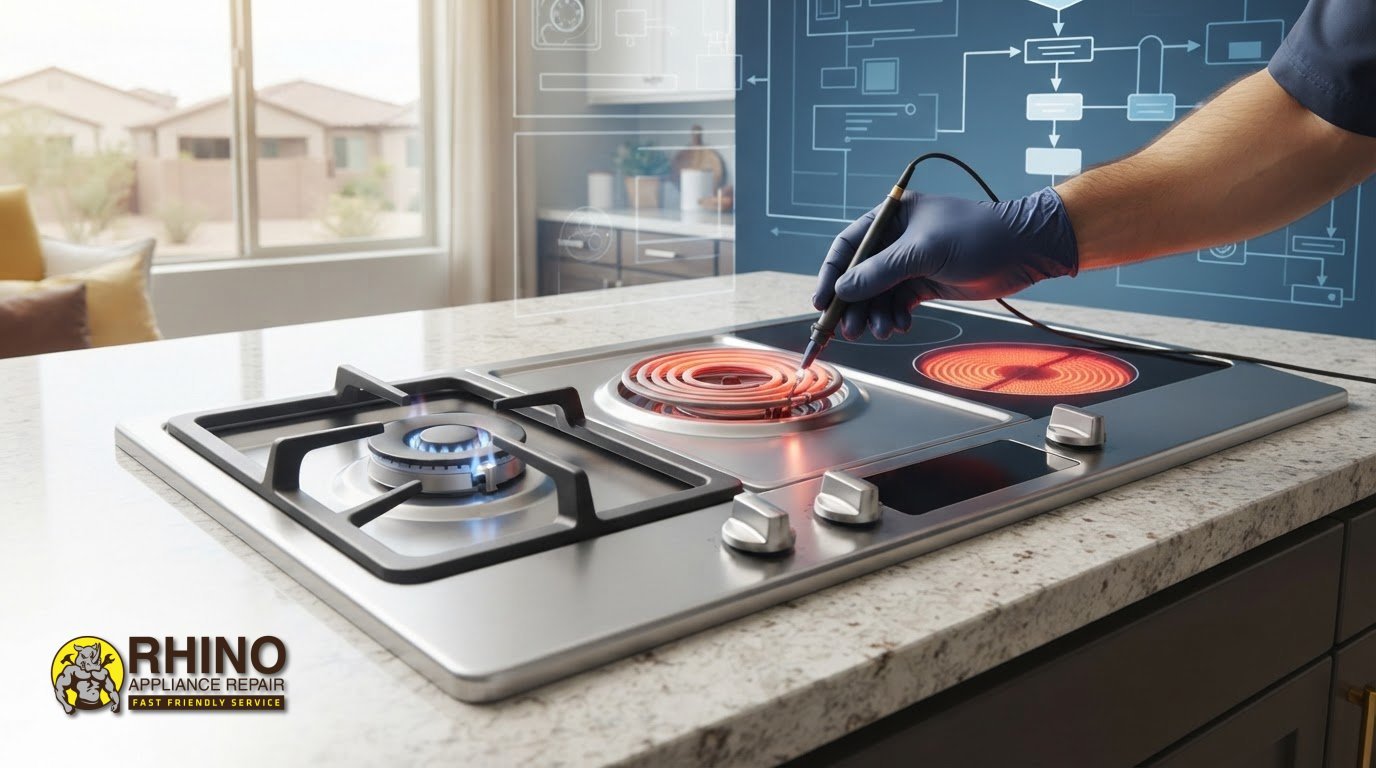
A stove burner is the primary heating component of a range or cooktop, designed to deliver controlled thermal energy directly to your cookware. Pinpointing the root problem starts with knowing whether you cook on a gas flame, a traditional electric coil, or a radiant glass ceramic surface. When only one burner acts up while the rest work normally, you can usually rule out whole-house utility outages; this pattern points directly to a localized component failure that requires a focused stove burner not working repair.
Gas Burner Basics
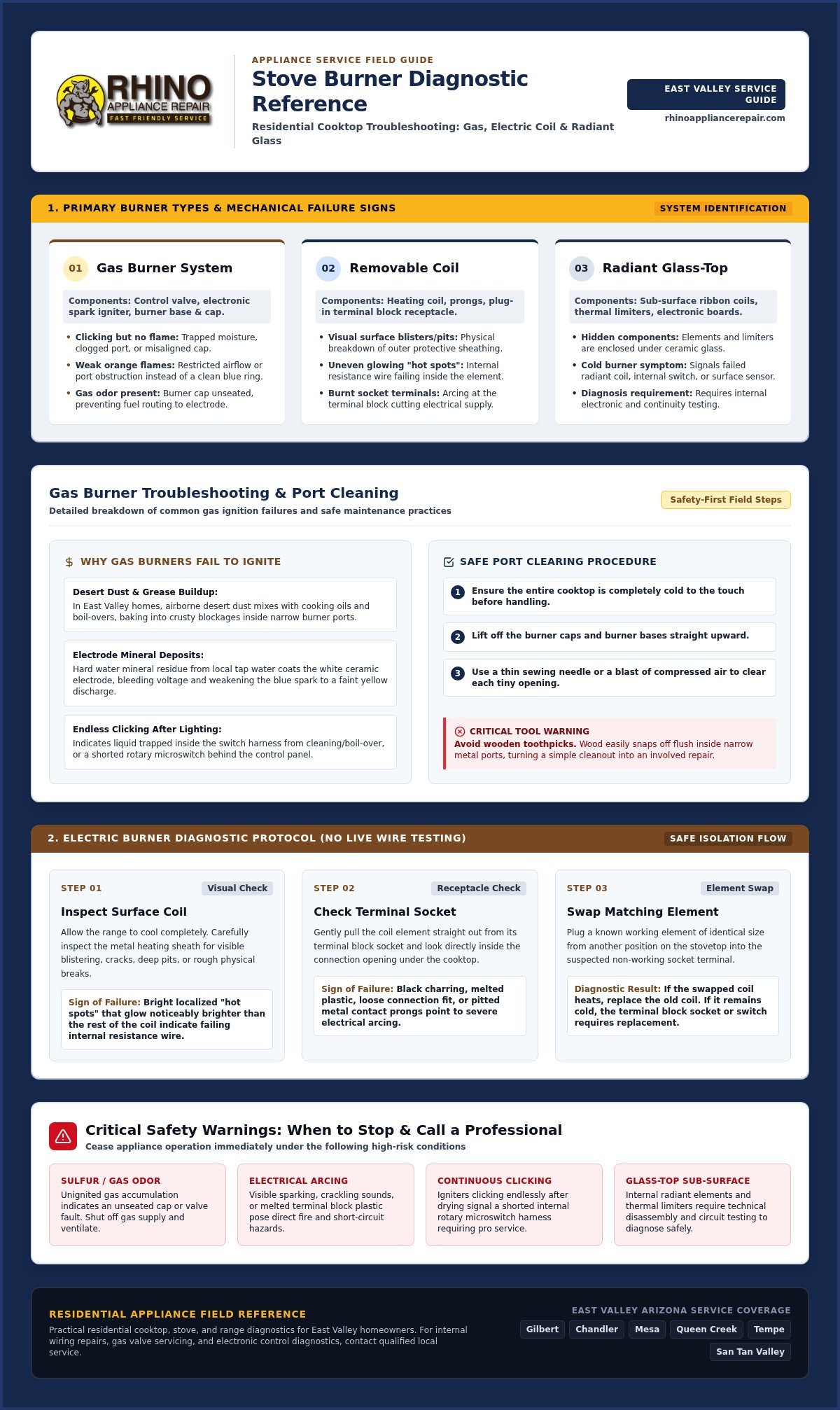
Gas systems rely on a straightforward partnership between the control valve and an electronic spark igniter. When you turn the knob, the valve releases fuel while the igniter produces a rapid spark against the burner base. The burner cap sits on top to spread the fuel mixture into an even circle. If you hear a click but see no fire, or if you notice weak orange flames instead of a sharp blue ring, the failure is often isolated to that specific burner assembly or spark switch.
Electric Burner Varieties
Electric cooktops deliver heat through heavy-duty resistance wiring, but the mechanical setup changes how you troubleshoot them:
- Removable Coil Elements: These plug straight into a terminal block socket underneath the cooktop. A loose connection or burnt socket terminal can instantly cut power to that specific burner.
- Radiant Glass-Top Burners: These heating elements sit hidden beneath a smooth ceramic glass surface, regulated by internal thermal limiters and electronic boards.
For coil models, inspect the metal surface closely for bubbling, blistering, or visible breaks. If a burner develops bright “hot spots” that glow far brighter than the surrounding coil, the internal resistance wire is failing. Glass-top units hide these parts from view, meaning a cold burner usually signals a failed internal switch, radiant coil, or surface sensor that requires a professional stove burner not working repair.
Why Gas Stove Burners Fail to Light
Gas ranges rely on an exact balance of air, fuel, and electrical discharge. If one piece fails, your burner refuses to ignite. Most gas burner breakdowns stem from blocked gas pathways, misaligned burner caps, or trapped moisture from a recent boil-over. When water or liquid cleaner seeps into the burner well, it temporarily grounds the electrical pulse, preventing a spark. Similarly, an unseated burner cap stops fuel from channeling toward the electrode, leaving you with raw gas odors and no flame.
Cleaning Clogged Burner Ports
Across East Valley kitchens, airborne desert dust settles into cooktop crevices constantly. When fine dust mixes with cooking grease and boiling spills, it bakes into a stubborn, crusty barrier inside the burner ports. This buildup blocks the gas from reaching the ignition point.
You can clear these channels safely with a few basic precautions:
- Wait until the cooktop is completely cold to the touch.
- Lift off the burner caps and bases.
- Use a thin sewing needle or a blast of compressed air to clear each tiny port.
- Avoid wooden toothpicks; the wood snaps easily inside narrow metal openings and turns a simple cleanout into an involved stove burner not working repair.
Igniter and Spark Module Issues
If the ports are clear and dry but you hear no clicking, the problem shifts to the electrical circuit. A healthy igniter produces a sharp, audible click paired with a crisp blue spark jumping to the metal base. If the spark looks faint or yellow, hard water mineral deposits from local tap water may be coating the white ceramic electrode, bleeding off voltage.
A burner that lights successfully but keeps clicking endlessly points to a different issue. That continuous snapping usually means water is trapped inside the switch harness, or an internal rotary microswitch has shorted out behind the control panel. When simple cleaning fails to revive the flame, scheduling a cooktop and range evaluation with a trained local technician protects your home from unnecessary gas hazards and ensures accurate electrical troubleshooting.
Troubleshooting Electric Coil and Glass Top Burners
Diagnosing an electric stove involves tracing how electricity flows through the circuit. Many online tutorials claim that a dead burner simply means a burned-out heating element, but switches and terminal sockets fail just as frequently. Homeowners can pinpoint the issue systematically without handling live electrical wiring:
- Step 1: Check the surface element. Let the stove cool completely, then inspect the metal coil for physical blistering, pits, or cracked sheathing.
- Step 2: Examine the terminal block socket. Pull the coil out gently and look inside the receptacle. Black charring, melted plastic, or pitted metal prongs indicate electrical arcing.
- Step 3: Swap with a matching element. Take a working burner of the exact same size from another spot on the cooktop and plug it into the suspect socket. If the known good burner heats up, the original coil is dead. If it stays cold, the socket or switch is the culprit.
- Step 4: Evaluate the infinite control switch. When an element works strictly on maximum heat regardless of dial position, or fails to heat despite a good coil and clean socket, the internal switch contacts have welded shut or burned out.
Coil Element and Socket Failures
Heavy cookware combined with years of thermal expansion loosens the spring tension inside traditional terminal blocks. That loose fit creates electrical resistance, generating extreme heat that melts the plastic casing and chars the connection points. Installing a fresh coil into a charred socket will ruin the new part immediately. Reviewing Expert Range Repair in East Valley AZ helps clarify when component degradation warrants targeted replacement over quick adjustments.
Radiant Burner Issues in Glass Cooktops
Smooth-top ranges require a different diagnostic approach because radiant assemblies sit secured beneath heavy ceramic glass. Homeowners cannot safely swap these parts from above. Inside the housing, coiled metal heating ribbons work alongside a sensitive thermal limiter that cycles power to keep the glass from shattering under high heat.
When a radiant zone refuses to glow, the problem often stems from a severed heating ribbon, a tripped internal thermal limiter, or a damaged relay board. Because opening the glass chassis exposes high-voltage terminal blocks and fragile brackets, this diagnostic requires specialized multimeters and insulated tools to execute a safe stove burner not working repair.
Safety Warnings: When to Stop and Call a Pro
Cooking appliances operate under intense electrical loads and combustible gas pressures. While clearing debris from a burner port is a great homeowner maintenance task, complex internal failures cross the line into real property hazards. According to the National Fire Protection Association, ranges or cooktops account for 53% of all reported home cooking fires and 88% of cooking fire deaths. Recognizing when to stop troubleshooting protects both your home and your family.
Stop immediately, cut power, and step away if you encounter any of the following red flags:
- Gas odors when burners are off: Unburned fuel pooling in your kitchen signals a leaking valve or loose pipe fitting.
- Visible smoke or burning smells: Acrid plastic or ozone odors around the knobs point to overheating wire insulation or melting control boards.
- Water intrusion near electronics: Large liquid spills that wash down behind the control panel create immediate shock risks.
- Bypassing safety switches: Never jump a thermal limiter, tape down a safety switch, or modify supply lines to force a burner to run.
Recognizing Gas Leaks and Hazards
Natural gas companies add mercaptan to utility supplies to produce that familiar “rotten egg” smell. If you catch a strong sulfur whiff while the stove sits idle, leave the burner knobs untouched. Do not switch on exhaust hoods or flip light switches, because any tiny electrical arc can ignite the air. If you can safely access the manual gas shutoff valve within six feet of the range, close it, evacuate the home, and contact your utility provider or emergency services. When persistent clicking occurs without a flame, a shorted ignition switch is dumping voltage into the spark module, requiring specialized manifold service.
Electrical Faults and Wiring Damage
Electric ranges draw heavy 240-volt power. Scorched wiring harnesses, blistered terminal posts, and snapped internal leads can arc against the range’s metal chassis, creating severe shock hazards. Homeowners should never attempt live multimeter testing or panel disassembly on these appliances. Knowing when to call a trusted appliance technician ensures your stove burner not working repair is completed safely with proper diagnostic isolation rather than risky guesswork. If you are experiencing persistent electrical faults or spark failures, schedule professional range repair to restore safe kitchen operation.
Professional Stove and Range Repair in the East Valley
Guessing which part broke often leads to wasted time and unnecessary expense. Ordering a replacement heating coil only to discover a burned infinite switch or melted wire harness leaves you right where you started. Rhino Appliance Repair eliminates the guesswork by delivering precise diagnostics for residential cooktops and ranges. When you need an accurate stove burner not working repair, targeted component testing protects your appliance and restores your kitchen without risky parts swapping.
Local Expertise for Arizona Homeowners
Kitchen appliances in our desert environment face unique wear over time. Fine airborne dust settles into control housings, while local hard water can speed up corrosion around ignition electrodes and terminal connections. As a family-owned and operated local business, Rhino Appliance Repair provides dependable service to neighbors across Gilbert, Chandler, Mesa, Tempe, and Queen Creek. We focus strictly on residential household appliances, bringing deep diagnostic experience to major brands including Samsung, LG, Whirlpool, KitchenAid, Maytag, Bosch, and Frigidaire.
Scheduling Your Diagnostic Visit
Setting up a service call is straightforward. During a diagnostic visit, a technician isolates the appliance from power or gas, inspects the mechanical switches and wiring harnesses, and pinpoints the exact cause of the failure. You’ll receive a clear explanation of what went wrong before any work begins.
To help streamline your appointment, locate your range or cooktop’s model number tag before the visit:
- Check along the frame just inside the oven door.
- Inspect the side panels behind the lower storage drawer.
- Look at the underside of the burner chassis on drop-in cooktops.
Having that model number ready allows for rapid reference to factory schematics and correct part specifications. Connect with our team today for reliable range repair East Valley AZ homeowners can trust to keep their kitchens running safely.
Restore Safe Cooking to Your Kitchen
A malfunctioning stovetop doesn’t have to derail your family’s dinner plans or leave you stressing over electrical hazards. Whether your gas ports need clearing after a spill or a failed internal switch leaves a radiant element cold, identifying the core symptom is the first step toward the right fix. When simple maintenance doesn’t solve the issue, leaving electrical testing and mechanical teardowns to a qualified technician prevents unnecessary parts costs and protects your home.
As a locally owned and operated family business in the East Valley, Rhino Appliance Repair delivers friendly, dependable service from Gilbert to San Tan Valley. We bring practical expertise across all major residential stove brands, giving you clear answers and straightforward solutions. If you need an accurate stove burner not working repair, Schedule Your Stove Repair with Rhino Appliance Repair Today and get your kitchen running safely again.
Frequently Asked Questions
Why does my gas stove click but the burner won’t light?
A gas burner that clicks without igniting usually suffers from clogged gas ports, an improperly seated burner cap, or moisture trapped around the spark electrode. When food spills dry over the ports or a cap sits crooked, fuel cannot reach the spark. In other cases, the spark electrode produces voltage but lacks the strength to ignite the gas due to mineral buildup or a failing ignition module. Testing these components requires careful diagnosis.
Can I use my stove if one burner is not working?
You can generally use the other burners if the failure is isolated to a single faulty electric coil or a clogged gas port. However, if you smell raw gas, hear constant clicking across multiple knobs, or notice burning electrical odors, turn the entire appliance off immediately. Those symptoms suggest a wiring short, a faulty manifold valve, or a gas leak that makes operating any part of the cooktop unsafe.
How do I know if my electric stove burner is burnt out?
You can tell an electric coil is burnt out if you see physical blistering, cracked metal sheathing, or if it stays completely cold when swapped into a working socket. For smooth ceramic glass cooktops, testing is less obvious because radiant elements sit hidden underneath. If a glass zone fails to glow while its indicator light turns on, the internal ribbon element or thermal limiter has likely failed, requiring a professional stove burner not working repair.
Is it safe to clean stove igniters with water?
No, you should never saturate stove igniters with water or liquid cleaners. Ceramic igniters are porous and absorb liquid easily. Trapped moisture prevents the electrode from sparking, or worse, causes continuous clicking that shorts out the spark module. Instead, scrub the tip gently using a dry toothbrush or a cotton swab lightly dampened with rubbing alcohol, which evaporates quickly without leaving conductive residue behind.
Why does my electric burner only work on the highest setting?
An electric burner that only heats on the highest setting indicates a failed infinite switch behind the control knob. The infinite switch regulates temperature by cycling power on and off at set intervals. When the internal electrical contacts weld shut from electrical arcing or heat fatigue, power flows continuously without cycling. This creates an unregulated overheating risk that can damage cookware or scorch food, meaning the switch must be replaced.
What should I do if I smell gas near my stove?
If you smell a persistent sulfur or rotten egg odor, turn all burner knobs off immediately, leave the house, and call your gas utility provider. Do not switch on lights, plug in devices, or turn on the range vent hood, as small electrical sparks can ignite gas fumes. If you can safely access the shutoff valve behind or beside the range, close it before exiting. Avoid testing gas lines yourself; always rely on certified emergency personnel or technicians.
Can a faulty infinite switch cause a burner to stop working?
Yes, a faulty infinite switch is one of the most frequent reasons an electric burner stops heating altogether. If the internal contacts burn out completely, electrical current cannot reach the burner terminal block, leaving the element cold. Testing whether power exits the switch requires voltage diagnostics. When a swap test confirms your burner coil is fine, scheduling a stove burner not working repair will identify whether the switch or wiring harness failed.
How often should I clean my stove burners to prevent clogs?
You should clean your stove burners thoroughly once a month, or immediately after any major liquid boil-over. In East Valley cities like Mesa and Gilbert, desert dust accumulates quickly in open kitchen spaces and combines with cooking grease inside burner ports. Wiping down the burner base, clearing the ports with a needle, and keeping the caps dry prevents corrosion, ensures even flames, and prolongs the lifespan of your appliance.