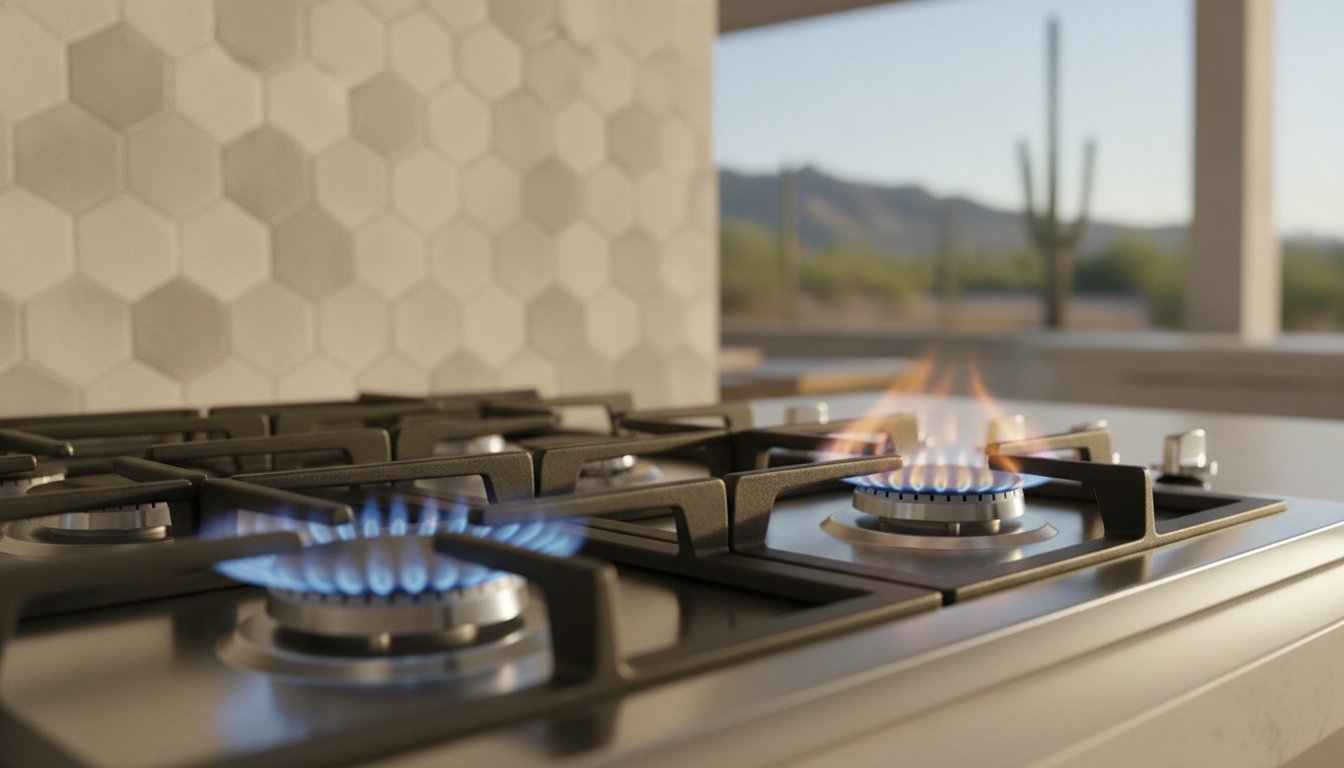
A yellow flame on your stove burner isn’t just a nuisance. It’s a serious warning that your kitchen’s air quality is at risk. When you notice your gas stove flame yellow instead of a crisp, steady blue, you are looking at incomplete combustion. This isn’t just about annoying soot on your pans or uneven cooking temperatures. It’s a signal that carbon monoxide might be building up in your home. With over 400 people in the U.S. dying from unintentional CO poisoning every year, this is one “check engine light” you cannot afford to ignore.
We understand the stress of a kitchen emergency. It is frustrating when a reliable appliance starts acting up, especially when you’re worried about your family’s safety. You want to know if it’s safe to finish dinner or if you need to shut everything off. This guide will show you exactly why that flame changed color and how to restore a clean, efficient burn. We will walk through simple cleaning fixes, air adjustment tips, and when it’s time to call a professional. You can avoid a costly replacement and get back to cooking with total peace of mind.
Key Takeaways
- Identify the “check engine light” of your kitchen by spotting the difference between a healthy blue flame and a dangerous yellow one.
- Discover how clogged ports and misaligned caps make your gas stove flame yellow and disrupt your cooking efficiency.
- Protect your family from the silent threat of carbon monoxide and prevent messy soot from ruining your expensive cookware.
- Follow a step-by-step cleaning guide to safely restore your stove’s performance and avoid the cost of a full replacement.
- Know exactly when a lingering gas odor or persistent flame issue means it is time to call in a local East Valley expert.
Understanding Gas Stove Flame Colors: Blue vs. Yellow
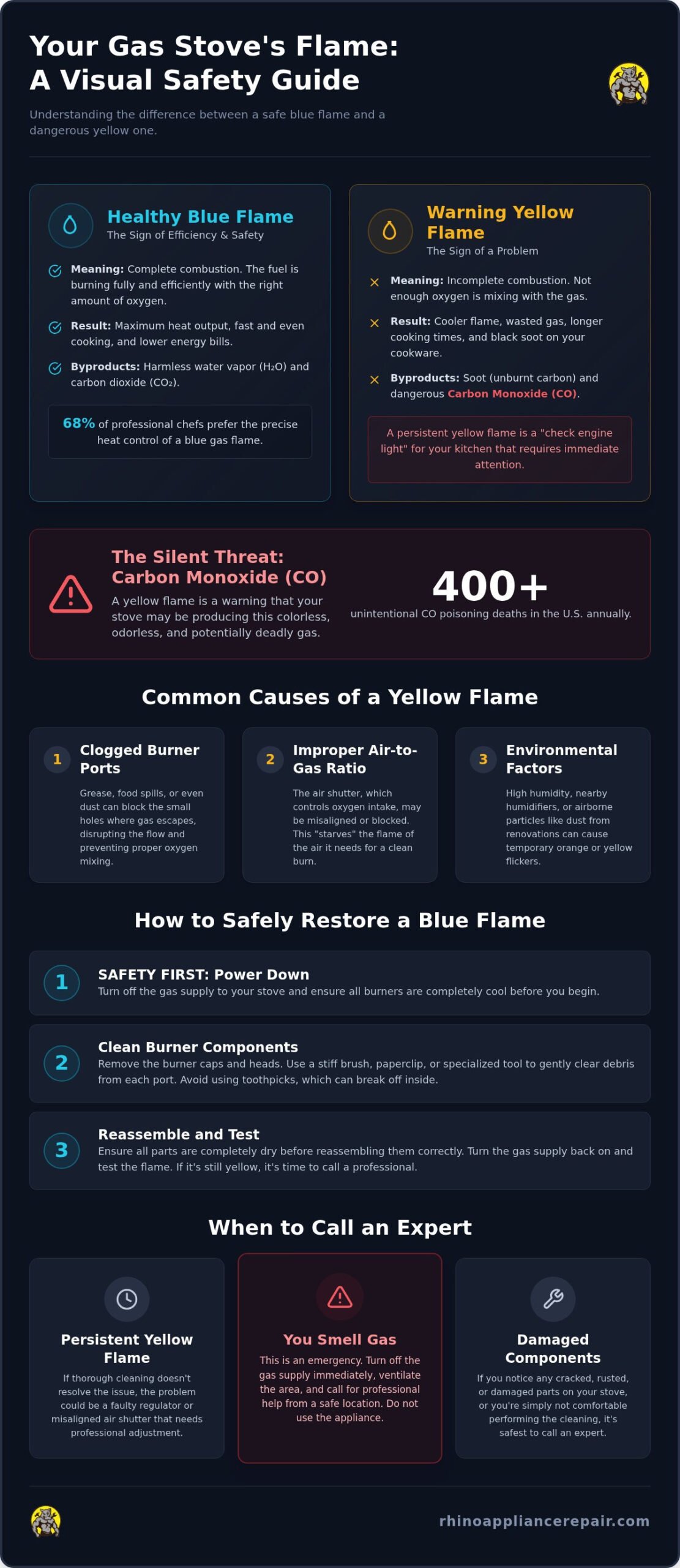
Your stove’s flame is the most direct diagnostic tool you have in the kitchen. A healthy, well adjusted burner produces a crisp, steady blue flame with a distinct light blue inner cone. This color is a visual confirmation that your appliance is maximizing every bit of gas it consumes. When the flame is blue, it’s burning at its highest possible temperature, providing the instant and precise heat control that 68% of professional chefs preferred in 2026 tests.
The Science of the Blue Flame
A blue flame is the result of a chemically perfect marriage between oxygen and fuel. When your stove is tuned correctly, it achieves what experts call complete combustion. Complete combustion is the reaction where fuel reacts fully with oxygen to produce only water and carbon dioxide. This process releases the maximum amount of heat energy possible from the gas. It’s why your water boils quickly and your pans heat evenly. This efficiency is essential for modern range performance, ensuring you don’t waste energy or money while preparing meals. If you see a steady blue glow, your burner’s air shutters are likely set to the ideal position for your specific gas type.
What a Yellow Flame is Telling You
A persistent gas stove flame yellow color is a red flag for incomplete combustion. This “lazy” flame happens when there isn’t enough oxygen to burn the gas entirely. Instead of turning into pure heat, the unburnt carbon particles grow hot and glow, creating a luminous flame. While a yellow flame might look like a cozy candle, it’s a sign of a failing system. These flames are significantly cooler than blue ones, which means your food takes longer to cook and your utility bills climb. Since natural gas spot prices rose to $2.77 USD/MMBtu in August 2026, a wasteful flame is more than just a safety risk; it’s an unnecessary expense.
You should also watch for physical signs of trouble beyond the color itself. A yellow flame often produces heavy flickering and thick soot that stains the bottom of your pots and pans. It’s vital to distinguish between a momentary orange flicker, which is usually just dust or high humidity, and a steady yellow glow. If the yellow color doesn’t vanish after a few seconds, the air-to-gas ratio is definitely wrong. This imbalance is a safety warning that your stove is producing carbon monoxide instead of harmless carbon dioxide. Don’t ignore a flame that has lost its blue edge, as it’s the first sign that your kitchen environment is becoming hazardous.
Common Causes of a Yellow Flame on Your Gas Burner
When your stove stops burning blue, it is usually because something is physically interfering with the combustion process. A gas stove flame yellow color is rarely a mystery; it is a mechanical symptom. Most issues stem from either a physical blockage or a failure in the system that mixes air with gas. Understanding these triggers helps you decide if you need a screwdriver or a professional technician.
Mechanical Blockages and Debris
The most frequent culprit is simple kitchen grime. When you boil over a pot of pasta or sear a steak, grease and liquids can seep into the burner ports. Over time, this debris carbonizes into a hard crust. These tiny blockages prevent gas from flowing evenly, which disrupts the aeration needed for a clean burn. The orifice, a small brass fitting that regulates gas flow, is especially sensitive. Even a microscopic speck of food can cause a major flame shift.
Homeowners in the East Valley face a unique challenge: desert dust. In cities like Gilbert and Mesa, fine silt can accumulate inside your appliance over time. This dust often settles in the burner heads or even the internal gas lines during home renovations. When this happens, the dust particles burn off in the flame, creating that telltale yellow glow. If you have recently dealt with a haboob or a dusty construction project, your burners might just need a deep internal cleaning.
Air-to-Gas Ratio Imbalances
Your stove relies on a specific balance of oxygen and fuel to stay efficient. The air shutter is a small adjustable plate located near the burner valve that controls how much air enters the mix. If this shutter is loose, damaged, or bumped out of position, the burner will “starve” for oxygen. This leads to the Common causes of a yellow flame seen in many residential ranges. Without enough air, the gas cannot burn completely, resulting in a cooler, sootier fire.
Environmental factors also play a surprising role. High humidity from a nearby humidifier or a heavy Arizona monsoon can temporarily turn flames orange or yellow. This is usually harmless and resolves once the air dries out. However, if the yellow color persists, it may indicate a drop in gas pressure from your utility line. If your DIY cleaning doesn’t bring back the blue, it is time for a professional stove repair expert to inspect your pressure regulator and air shutter settings to ensure your kitchen remains safe.
- Clogged ports: Grease and food spills blocking gas exit points.
- Misaligned caps: Burner covers that aren’t seated perfectly.
- Dust: Arizona silt burning off in the flame.
- Shutter issues: Improper air-to-gas mixing at the valve.
The Hidden Dangers of Incomplete Combustion
A gas stove flame yellow is more than an aesthetic issue; it is a direct indicator of incomplete combustion. When gas doesn’t burn fully, it creates byproducts that are hazardous to both your health and your home’s integrity. An unstable, flickering flame is a primary fire hazard because it can easily ignite nearby grease or debris. If your burner has lost its steady blue glow, it is a clear signal that your range repair East Valley AZ needs professional attention before the problem escalates.
Carbon Monoxide: The Silent Killer
Carbon monoxide (CO) is the most dangerous byproduct of a yellow flame. Because CO is colorless and odorless, you cannot see or smell the danger. Gas stoves are a leading cause of indoor CO spikes when they aren’t maintained or cleaned properly. The CDC reports that more than 400 people in the U.S. die from unintentional, non-fire-related CO poisoning every year. In early 2026, some regions saw emergency room visits for CO exposure increase by nearly 50% compared to the previous year, highlighting the urgent need for appliance maintenance.
Watch for these symptoms in your household:
- Dull headaches that worsen when you are near the kitchen
- Unexplained weakness or dizziness
- Nausea or vomiting during meal prep
- Shortness of breath
- Confusion or blurred vision
If these symptoms occur while the stove is on, turn it off and get fresh air immediately. Arizona homes are often tightly sealed for air conditioning efficiency. This makes working CO detectors a non-negotiable safety requirement for families in Gilbert, Chandler, and Mesa.
Damage to Your Appliances and Home
Incomplete combustion creates more than just gas; it produces physical soot. This black, powdery substance is a byproduct of unburnt carbon. It acts as a powerful insulator. When soot builds up on your burner heads or oven sensors, it traps heat where it doesn’t belong. This forces your stove to work much harder to achieve the same cooking results, leading to higher energy waste and uneven heat distribution.
Over time, this buildup damages sensitive components like igniters and thermocouples. It can even lead to calibration issues that ruin your recipes. If you notice your baked goods aren’t cooking evenly, check out our oven temperature not accurate repair guide. Soot can also escape the stove area, staining your kitchen walls and cabinets with a greasy film. This film is notoriously difficult to clean and can cause permanent damage to your paint. Addressing the yellow flame early prevents these long-term repair costs and keeps your kitchen surfaces pristine. If soot and grease have also affected your other kitchen appliances, Chandler homeowners dealing with multiple appliance issues can also rely on professional dishwasher repair Chandler AZ services to keep the entire kitchen running smoothly.
Troubleshooting and Fixing a Yellow Stove Flame
You have identified the problem. Now it is time to take action. Most cases of a gas stove flame yellow are caused by simple maintenance gaps that you can often handle at home. However, you must prioritize safety before you begin any mechanical work. Working with gas appliances requires a methodical approach to prevent accidents.
Follow these safety steps before starting:
- Turn off the gas supply valve located behind the stove or at the main line.
- Allow the burners and grates to cool completely for at least 30 minutes.
- Unplug the stove from the wall outlet to disable the electric igniters.
Cleaning Your Burner Like a Pro
Deep cleaning is the most effective way to restore the air-to-fuel ratio. Start by removing the burner grates and lifting off the burner caps. Most modern heads lift straight up. Soak these parts in a basin of warm water mixed with a degreasing dish soap. Use a soft cloth or a non-abrasive sponge to wipe away loosened grease. Avoid using steel wool, as it can scratch the surface and lead to premature rusting.
The most critical step is clearing the burner ports. These are the tiny holes where the gas exits. Use a small needle or a thin paperclip to gently poke through each port. This removes carbonized food that a soak might miss. Never use wooden toothpicks for this task. They can easily snap off inside the port, creating a permanent blockage that is nearly impossible to remove without a total part replacement. Once cleaned, dry every component thoroughly before reassembling. Trapped moisture can lead to a “lazy” flame or prevent the igniter from sparking.
Addressing the “Stove Burner Not Working” Repair
Sometimes, a yellow flame is just the first sign of a total system failure. If you notice the flame is weak or the burner struggles to stay lit, check the alignment of the burner cap. If the cap is tilted even slightly, it creates a gap that disrupts the seal. This prevents the gas from mixing with air at the correct velocity, which is a common cause of poor performance. Ensure the cap sits perfectly flat on the burner head.
If a burner fails to light after cleaning, the issue likely lies in the spark module or gas valve. You should also inspect the air shutter, which is the sliding metal plate near the burner valve. In the East Valley, dust and spider webs frequently clog these intakes. Use a vacuum or a soft brush to clear any obstructions. If the blue color doesn’t return after these steps, your appliance likely has an internal pressure issue or a failing regulator. For a safe and fast resolution, schedule a stove repair appointment with our expert team today.
When to Call Rhino Appliance Repair in the East Valley
If you have followed our cleaning guide and your gas stove flame yellow persists, you have reached the limit of safe DIY maintenance. A lingering yellow flame after a thorough scrub usually points to an internal component failure. Continuing to use a stove in this condition risks carbon monoxide buildup and further damage to your appliance’s ignition system. At this stage, the issue is likely hidden within the gas delivery system itself.
Watch for these critical warning signs that require immediate expert attention:
- Persistent gas odors that remain even when all burners are turned off.
- A “lazy” yellow flame that doesn’t improve after cleaning the burner ports and caps.
- Visible corrosion or heavy soot buildup on the internal gas valves or manifold.
- Burners that make a “popping” or “whooshing” sound when extinguished.
- A flame that “lifts” or floats off the burner head entirely.
Professional Diagnostics vs. DIY Risks
Adjusting the internal gas pressure of a residential range is not a job for a standard household toolkit. Professional technicians use specialized tools like manometers to measure the exact water column pressure entering your burner. If the pressure is too high or too low, the air-to-gas ratio will never be correct, no matter how clean the ports are. Attempting to calibrate these valves yourself can lead to dangerous gas leaks or damage to the manifold.
East Valley homeowners face specific environmental challenges, from fine desert silt to fluctuating utility pressures. Residents in Gilbert, Mesa, Chandler, and Queen Creek trust Rhino Appliance Repair because we understand these local factors. We focus exclusively on residential service, ensuring your home’s kitchen is handled with the precision it deserves. Our technicians arrive with the right diagnostic equipment to find the root cause, whether it’s a faulty regulator or a failing spark module.
The Rhino Difference for Your Kitchen
We know that a broken stove disrupts your entire family routine. When you’re dealing with a safety-related issue like a yellow flame, you need a fast, reliable response. As a family-owned and operated business, we treat our East Valley neighbors with the honesty and transparency we would expect for our own homes. We don’t just patch the problem; we find a permanent solution that restores your stove to factory standards.
Our commitment to quality means we specialize in all major residential cooking brands. We focus on getting your range back to a clean, blue burn without the stress of hidden fees or convoluted explanations. By choosing a local expert, you’re ensuring that your appliance is calibrated to the specific standards required for safe operation in our Arizona climate. Don’t let a yellow flame compromise your family’s safety. Let our dedicated team restore the efficiency and security of your kitchen today.
Restore Your Kitchen’s Safety and Performance
Your kitchen is the heart of your home, and keeping it safe starts with a clean, blue burner. You now know that a gas stove flame yellow isn’t just a cooking nuisance; it’s a signal that your appliance needs attention to prevent carbon monoxide buildup and energy waste. While deep cleaning the burner ports often solves the problem, persistent issues with air shutters or gas pressure require a professional touch to ensure your family’s safety.
Don’t let a faulty burner disrupt your dinner plans or your peace of mind. As your local East Valley experts serving Gilbert, Chandler, and Mesa, we specialize in residential stove, oven, and range repair. We are ready to provide the fast, honest service you need to get back to cooking with confidence.
Schedule your expert stove repair with Rhino Appliance Repair today!
We are here to help you keep your kitchen running smoothly and safely.
Frequently Asked Questions
Is a yellow flame on a gas stove dangerous?
Yes, it is a safety warning. It indicates incomplete combustion, which produces carbon monoxide. CO is a colorless, odorless gas that can be fatal. If you see a persistent yellow glow, it means the air-to-gas ratio is wrong. Turn off the appliance and ventilate your kitchen immediately. Don’t ignore this “check engine light” for your home’s air quality.
Can I still cook on a stove with a yellow flame?
You should stop cooking immediately if you see a persistent yellow flame. While it might still heat your pan, the cooler temperature leads to uneven cooking and wasted gas. More importantly, it releases carbon monoxide into your living space. The soot produced can also coat your cookware in a greasy black film that is difficult to remove. Safety must always come before finishing a meal.
Why is my gas stove flame orange instead of blue?
Orange flames are usually caused by dust or high humidity in the air. This is a common occurrence in East Valley homes during monsoon season or when using a humidifier. Unlike a steady gas stove flame yellow, orange flickers are often temporary and harmless. The orange color comes from tiny particles, like salt or dust, burning off in the heat. If it doesn’t clear up, check for burner debris.
How do I clean a gas stove burner that has a yellow flame?
Start by removing the burner caps and heads once they are cool. Soak them in warm, soapy water to loosen grease. Use a thin needle or a paperclip to clear out the small gas ports. Avoid using toothpicks because they can break off inside. Ensure every piece is completely dry before you put it back together. Moisture trapped in the ports will cause the flame to sputter or stay yellow.
Does a humidifier cause yellow flames on a gas stove?
Yes, humidifiers are a frequent cause of temporary color changes. They release minerals from your tap water into the air. When these minerals pass through the burner, they glow orange or yellow. This isn’t a sign of a broken stove or a gas leak. To test this, turn off your humidifier for a few hours. If the blue flame returns, your appliance is working perfectly.
When should I call a professional for a yellow stove flame?
Call a professional if the yellow color remains after you have thoroughly cleaned the burners. If you notice a persistent gas odor or hear unusual popping sounds, it is time for an expert. Issues with the internal gas regulator or manifold require specialized tools like manometers for safe calibration. Don’t attempt to adjust gas pressure yourself, as this can lead to dangerous leaks or appliance damage.
Why is only one burner on my stove burning yellow?
This usually means the problem is localized to that specific burner assembly. A gas stove flame yellow on just one burner often points to a clogged orifice or a misaligned burner cap. Food spills or grease likely blocked the ports on that side of the range. If all burners were yellow, the issue would more likely be the main gas pressure or a house-wide air quality problem like high humidity.
How much does it cost to fix a gas stove flame issue?
The cost varies based on the underlying cause and the parts required for the repair. A simple cleaning is often a free DIY fix. However, if a technician needs to replace a failing gas valve or a pressure regulator, the total will depend on your specific stove model and brand. We provide transparent, fair pricing for all East Valley residents. Contact us for a professional diagnostic to get an accurate quote.



Pingback: Electric Cooktop Repair in Gilbert AZ: A Homeowner’s Troubleshooting Guide – rhinoappliancerepair.com