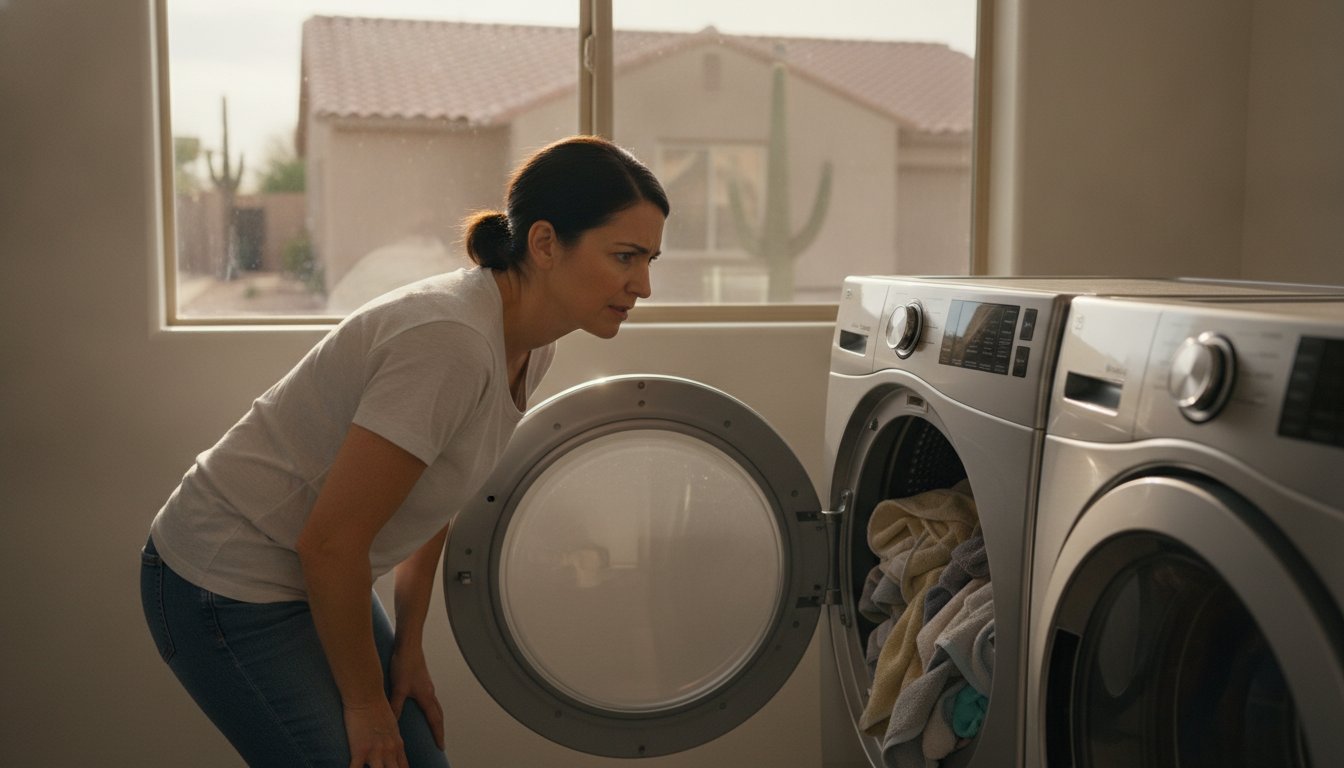
You’ve just finished a long day and the laundry buzzer finally goes off. You open the door, expecting warm, fluffy towels, but instead, you’re greeted by a heavy, damp pile of clothes. It’s a common frustration for many homeowners in the East Valley. Dealing with a dryer not heating repair doesn’t have to ruin your week or your budget. Whether your machine is spinning but staying cold or just taking three cycles to get the job done, you need a solution that works fast.
We know how it feels to watch your energy bills climb while you worry about the potential fire hazards of a clogged vent. You want your laundry finished in one cycle so you can move on with your day. This guide will walk you through the most frequent causes of heating issues, from blown thermal fuses to faulty heating elements. We’ll also help you weigh the costs of a professional fix versus a full replacement. By the end, you’ll know exactly how to get your dryer back in top shape with the help of a trusted local expert here in Gilbert.
Key Takeaways
- Check simple fixes first, like your dryer settings and lint screen, to see if a quick adjustment solves the problem.
- Understand why a dryer not heating repair often involves the thermal fuse or heating element, the most common causes of cold cycles.
- Identify whether you have a gas or electric model to help your technician pinpoint specific part failures like igniters or coils.
- Recognize that long drying times are usually a warning sign of airflow issues or failing internal components that need immediate attention.
- Learn when to call a local Gilbert specialist to handle complex internal repairs safely and get your laundry routine back on track.
Why Your Dryer Stopped Heating Up
A dryer is essentially a simple machine that relies on a precise balance of three elements: airflow, drum rotation, and heat. When any one of these factors fails, your laundry routine comes to a standstill. You’ll likely realize you need a dryer not heating repair when you open the door to find a heavy, damp pile of clothes instead of the warm, dry laundry you expected. It’s a frustrating moment that usually happens when you’re already in a rush.
If your machine takes two or three cycles to get the job done, it’s often a sign of a deeper internal struggle. A dryer that takes too long to dry is usually overheating internally. The machine is working harder than it should, which leads to higher energy bills and potential safety risks. Identifying these issues early is the best way to save money and avoid a total breakdown. It’s about more than just convenience; it’s about protecting your home and your wallet.
The Frustration of Damp Laundry
Dealing with wet clothes after a full cycle is more than just an inconvenience. It’s a drain on your household resources. Running your dryer multiple times for a single load wastes a significant amount of electricity and time. This extra tumbling also puts unnecessary wear on your clothing fibers, causing them to thin and fray much faster than normal. Beyond the physical damage, wet clothes left in a dark, warm drum can develop a stubborn musty smell within an hour. This often means you have to wash the entire load again, doubling your workload and your utility costs.
Common Symptoms of a Heating Issue
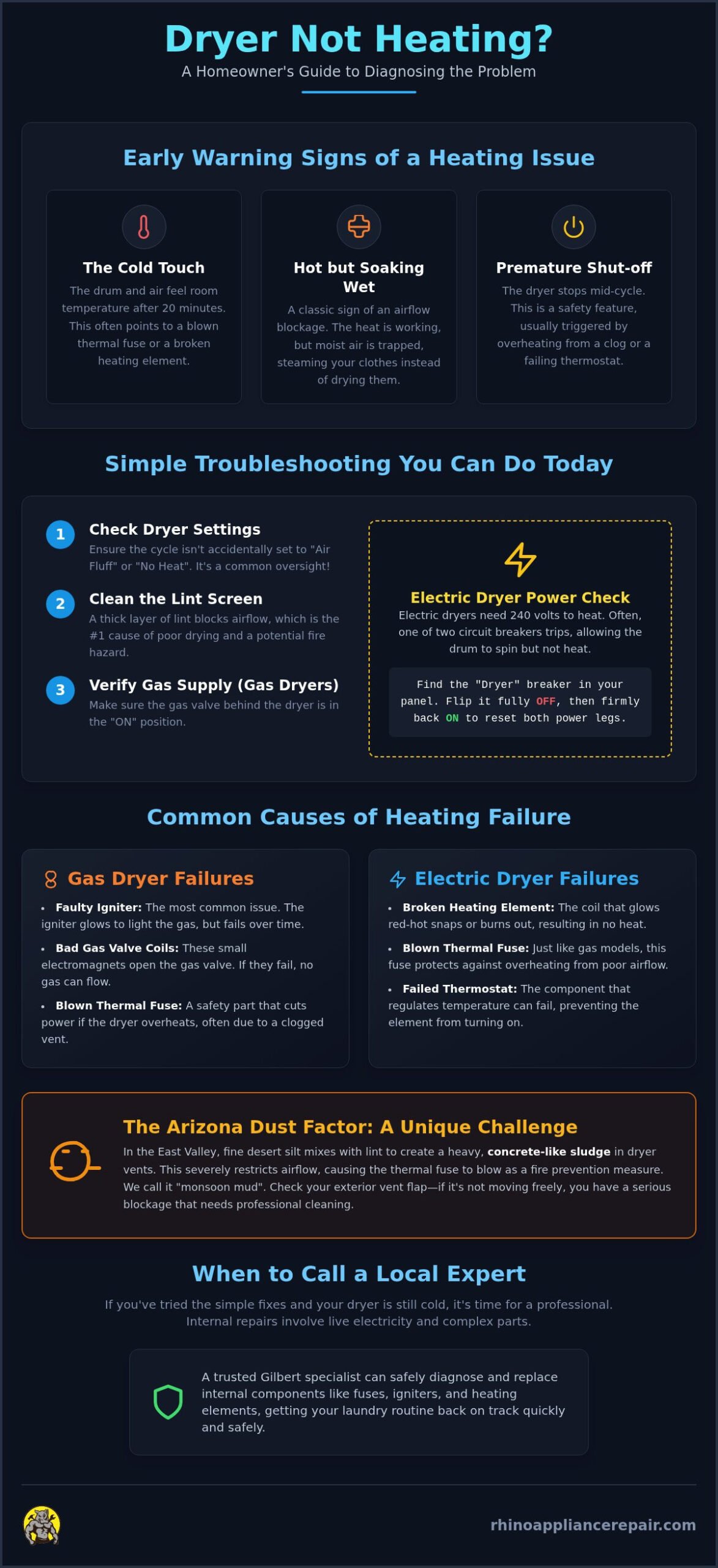
Recognizing the early warning signs can help you decide when to call for a dryer not heating repair. Here are the most frequent symptoms we see in Gilbert homes:
- The Cold Touch: If you reach into the dryer after it has been running for 20 minutes and the air feels room temperature, the heating source has failed. This is common when a thermal fuse blows or a heating element snaps.
- Hot but Soaking Wet: This is a classic sign of an airflow blockage. The heater is working, but the moist air has nowhere to go. It just sits in the drum, steaming your clothes instead of drying them.
- Premature Shut-off: Many modern dryers have sensors that detect overheating. If the internal temperature spikes because of a clog or a failing thermostat, the machine will shut down early to prevent a fire.
By paying attention to these cues, you can catch a minor part failure before it turns into a major appliance replacement. We focus on getting to the root of the problem quickly so you can get back to your day with dry clothes and peace of mind.
Simple Troubleshooting You Can Do Today
Before you assume the worst, start with the basics. Sometimes the fix is as simple as a dial turn. Check your settings first. It sounds obvious, but many machines are just set to Air Fluff or No Heat by mistake. Next, pull out your lint screen. If there’s a thick layer of debris, your dryer can’t breathe. For gas dryer owners, verify that the gas supply valve is in the “on” position. If you’ve recently moved or had work done, it might have been bumped closed during the process.
The Power Source: 240 Volts Matter
Electric dryers are unique because they require 240 volts to operate. This power is split across two separate legs of electricity, each controlled by its own breaker. It’s common for one breaker to trip while the other stays on. When this happens, your dryer might have enough power to spin the drum and light up the display, but it won’t have enough to engage the heating element. To fix this, find your electrical panel. Look for the double-pole breaker labeled “Dryer.” Flip it completely to the Off position, then firmly back to On. This ensures both legs of power are fully engaged.
Airflow and the Arizona Dust Factor
Living in the East Valley adds a unique challenge to appliance maintenance: the Arizona dust. When our fine desert silt mixes with laundry lint, it creates a heavy, concrete-like substance that clings to vent walls. This buildup is a primary reason homeowners eventually need a dryer not heating repair because it restricts airflow so severely that the internal thermal fuse trips to prevent a house fire.
Check your exterior vent flap while the machine is running. It should move freely. If it’s stuck or if you see bird nests blocking the exit, the hot air has nowhere to go. In Gilbert, we often see “monsoon mud” inside vents where rain has mixed with existing dust. Clearing these obstructions can instantly restore your heat. If you’ve cleared the lint and reset the breakers but still have cold laundry, the problem is likely an internal component that requires a professional look.
Gas vs. Electric Dryer Heating Problems
How your dryer generates heat depends entirely on its power source. Electric and gas models are built with different internal architectures. This means the strategy for a dryer not heating repair changes based on what’s in your laundry room. While both types use thermostats to regulate temperature, the components that actually create the warmth are distinct. Understanding these differences helps us pinpoint the failure faster.
Electric Dryer Heating Elements
Electric dryers use a heavy-duty heating element coil. You can think of this part like the wires inside a toaster. When electricity flows through the coil, it glows red and produces heat. Over time, this metal wire becomes brittle from constant expanding and contracting. Eventually, the coil will burn out or snap. A broken coil creates a gap in the electrical circuit, which prevents any heat from entering the drum. Visual signs of a burnt element include black scorch marks or a clearly severed wire. In most cases, the entire assembly must be replaced to get your dryer back to its peak performance.
Gas Dryer Igniters and Coils
Gas dryers rely on a complex ignition sequence. To start the flame, an igniter must glow white-hot. This heat triggers the gas valve solenoids to open and release fuel. If the igniter is cracked or weak, the gas will never flow. A common frustration with gas models is a dryer that starts hot but turns cold mid-cycle. This usually points to faulty solenoids. These small coils are heat-sensitive. They might work perfectly for the first ten minutes but fail once the dryer warms up. When they fail, the gas valve snaps shut, and the flame dies. This leaves your clothes tumbling in cold air for the rest of the cycle.
Diagnosis steps differ significantly between these two systems. Electric dryers require testing for electrical continuity. Gas dryers require a visual inspection of the burner assembly while it’s running. Both systems are safe when maintained properly, but they require a steady hand and technical expertise to repair correctly. Our team in the East Valley specializes in both, ensuring your home stays safe while your laundry gets dry.
When the Problem Is Internal: Complex Repairs
Once you’ve ruled out tripped breakers and blocked vents, it’s time to look under the hood. Internal components are the brains and safety guards of your machine. When they fail, you need a professional dryer not heating repair to restore the heat safely. Before you touch a single screw, always unplug the unit. Working on a live appliance is dangerous and entirely unnecessary. Technical repairs require a steady hand and the right tools to avoid further damage to your machine.
Testing the Thermal Fuse
The thermal fuse is the most common internal failure we see in Gilbert homes. It’s a small, white plastic strip located on the blower housing or near the heating element. Its only job is to blow if the dryer gets too hot. Think of it like a one-way street; once it breaks, power stops flowing to the heater. This part is a critical safety feature designed to prevent house fires.
To test it, a technician uses a digital multimeter to check for continuity. If the meter shows no path for electricity, the fuse is dead. Replacing the fuse is only half the job. If you don’t find out why it blew, the new one will fail within a week. Usually, this means you must also deep clean your vents to restore the airflow we discussed earlier. A blown fuse is almost always a symptom of a larger airflow problem.
High-Limit Thermostats and Sensors
Your dryer uses several thermostats to manage its internal climate. High-limit thermostats act as a backup safety system. If the dryer reaches a dangerous temperature, these parts cut the power to the heating element or gas valve. Unlike a fuse, which stays broken, some thermostats can “stick” in the open or closed position. This prevents the heating circuit from ever completing its path.
Cycling thermostats are different. They turn the heat on and off throughout the cycle to keep the drum at a consistent temperature. If this sensor becomes faulty or coated in waxy dryer sheet residue, it might tell the heater to shut off too early. This leads to the common complaint of a dryer taking too long to dry. Testing these parts requires full disassembly and precise readings. If you aren’t comfortable with a multimeter, it’s best to call in a neighbor who is.
If your machine is spinning but staying cold, we can help. Our team provides expert dryer not heating repair for all major residential brands in the East Valley. We prioritize safety and transparency, ensuring your machine is fixed right the first time so you can get back to your routine.
Professional Dryer Repair in Gilbert and the East Valley
Choosing between a repair and a replacement is a major decision for any homeowner. While it might be tempting to browse the latest models, a new high-end dryer can easily cost $1,000 or more. In most cases, a professional dryer not heating repair is the far more economical path. Common failures like snapped heating coils or faulty sensors are straightforward fixes for an expert. Repairing your current machine is also a more sustainable choice, keeping bulky appliances out of local landfills while saving you hundreds of dollars in unnecessary replacement costs.
The Benefits of Local, Expert Service
Local expertise makes a real difference when your laundry is piling up. Residents in Gilbert, Mesa, and Chandler need fast response times from a team that actually lives and works in the East Valley. As a family-owned and operated business, Rhino Appliance Repair prioritizes your home’s safety over corporate profit margins. We don’t hide behind “big box” corporate fees or confusing technical jargon. You get honest, transparent communication from a neighbor who genuinely cares about solving your problem. We treat every home with the respect a neighbor deserves, ensuring the job is finished correctly the first time.
We take on the complex electrical and gas work so you can stay safe. Dealing with 240-volt circuits or gas valve solenoids requires specific training and precision. One wrong move during a DIY attempt can lead to expensive damage or serious safety risks. We bring the specialized diagnostic tools needed to find the exact part failure without the guesswork. This methodical approach ensures your machine runs efficiently again, lowering your monthly energy bills and eliminating the fear of fire hazards from overheating internal components.
Schedule Your Repair Today
Don’t let a broken dryer ruin your week or hike your power bill. A machine that requires multiple cycles to dry a single load is a warning sign that shouldn’t be ignored. It’s a signal that your appliance is working too hard and potentially risking a total breakdown. We provide a professional diagnosis and a long-lasting fix that gets your household back on track quickly. Our team is dedicated to residential service, meaning we focus entirely on the needs of homeowners like you.
Book your dryer repair with Rhino Appliance Repair today and experience the relief of a job done right. We’re ready to help you get your laundry routine back to normal with the speed and honesty you expect from a local expert.
Get Your Laundry Back on Track Today
Dealing with damp clothes doesn’t have to be a permanent part of your weekly routine. We’ve seen how simple issues like blocked vents or tripped breakers can stall your machine, while complex internal failures like blown thermal fuses or burnt heating elements require a more technical touch. Remember that a dryer taking too long to dry is often a cry for help before a total breakdown occurs. Addressing these warning signs early keeps your home safe and your utility bills manageable.
If you’re ready for a reliable dryer not heating repair, our team is standing by. Rhino Appliance Repair is a family-owned and operated business in AZ, dedicated to providing fast service for East Valley homeowners. Our expert residential appliance technicians handle the difficult electrical and gas work so you can enjoy dry clothes in a single cycle once again. Don’t let a faulty appliance slow you down any longer.
Schedule Your Professional Dryer Repair in Gilbert and let us handle the hard part. We’re here to help you get back to your day with confidence and peace of mind.
Frequently Asked Questions
Why is my dryer running but there is no heat?
If your dryer spins but stays cold, the most common culprit is a blown thermal fuse or a broken heating element. These components act as the heat source or safety gate. When they fail, the motor still turns the drum, but the air remains room temperature. It’s often a sign that the machine overheated due to poor airflow. Checking these internal parts requires a multimeter to confirm they still have electrical continuity.
How do I know if my dryer heating element is burned out?
You can identify a burned-out heating element by looking for physical breaks or black scorch marks on the metal coils. These coils function like the wires in a toaster. If the wire is snapped, the electrical circuit is broken and no heat can be produced. A technician will usually perform a continuity test to be certain. If the element is faulty, a full dryer not heating repair is necessary to replace the assembly safely.
Is it worth repairing a 10-year-old dryer that isn’t heating?
Repairing a 10-year-old dryer is often worth it if the rest of the machine is in good condition. Most dryers have a lifespan of 10 to 20 years. If the fix involves a simple part like a fuse or sensor, it’s much cheaper than spending $1,000 on a new unit. We recommend checking the overall wear of the drum and motor before deciding. If the repair cost is less than half the price of a replacement, fixing it is the smarter choice.
Can a clogged lint vent cause a dryer to stop getting hot?
Yes, a clogged vent is a leading cause of heating failures. When lint and Arizona dust block the exhaust, heat builds up inside the cabinet with nowhere to go. This triggers the thermal fuse to blow, which immediately cuts power to the heating element or gas valve to prevent a fire. Even if you replace the fuse, the heat won’t return to normal until you clear the obstruction from the entire vent line for better airflow.
How much does it typically cost to replace a dryer thermal fuse?
Replacing a thermal fuse is a common and necessary maintenance task. The total cost typically reflects the price of the part and the labor required to safely disassemble the unit. Since a blown fuse is often a symptom of poor airflow, a professional will also inspect your vents to prevent the new fuse from blowing immediately. This comprehensive approach ensures you don’t waste money on repeat repairs or risk a house fire.
Why does my dryer take two or three cycles to dry a single load?
Taking multiple cycles to dry clothes is almost always an airflow problem. If the moist air can’t escape through the vent, your clothes just sit in a steam bath. This inefficiency forces the machine to run longer, which hikes your energy bills and wears out the motor. It can also happen if a cycling thermostat is faulty, causing the heater to shut off before the drum reaches the proper temperature for drying your laundry load.
What are the signs that my dryer might start a fire?
Warning signs of a fire hazard include:
- A strong burning smell during operation.
- A cabinet that feels unusually hot to the touch.
- Clothes that come out with singe marks or visible damage.
If your dryer takes too long to dry, lint is likely building up in dangerous areas. This accumulation near the heating element is a major safety risk. If you notice these symptoms, stop using the appliance immediately and seek a professional inspection to clear the hazards.
Does Rhino Appliance Repair service gas dryers in Gilbert?
Yes, we provide expert service for both gas and electric residential dryers throughout Gilbert and the East Valley. Gas models require specialized knowledge of igniters, flame sensors, and gas valve solenoids to ensure they operate safely and efficiently. Our family-owned team is trained to handle these complex systems with the care and precision your home deserves. We focus purely on residential needs to provide the most reliable dryer not heating repair for our neighbors.


Pingback: Refrigerator Not Making Ice? 5 Common Causes and Fast Fixes
Pingback: Freezer Repair Near Me: Fast Residential Service in the East Valley