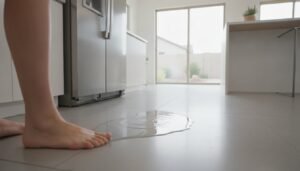
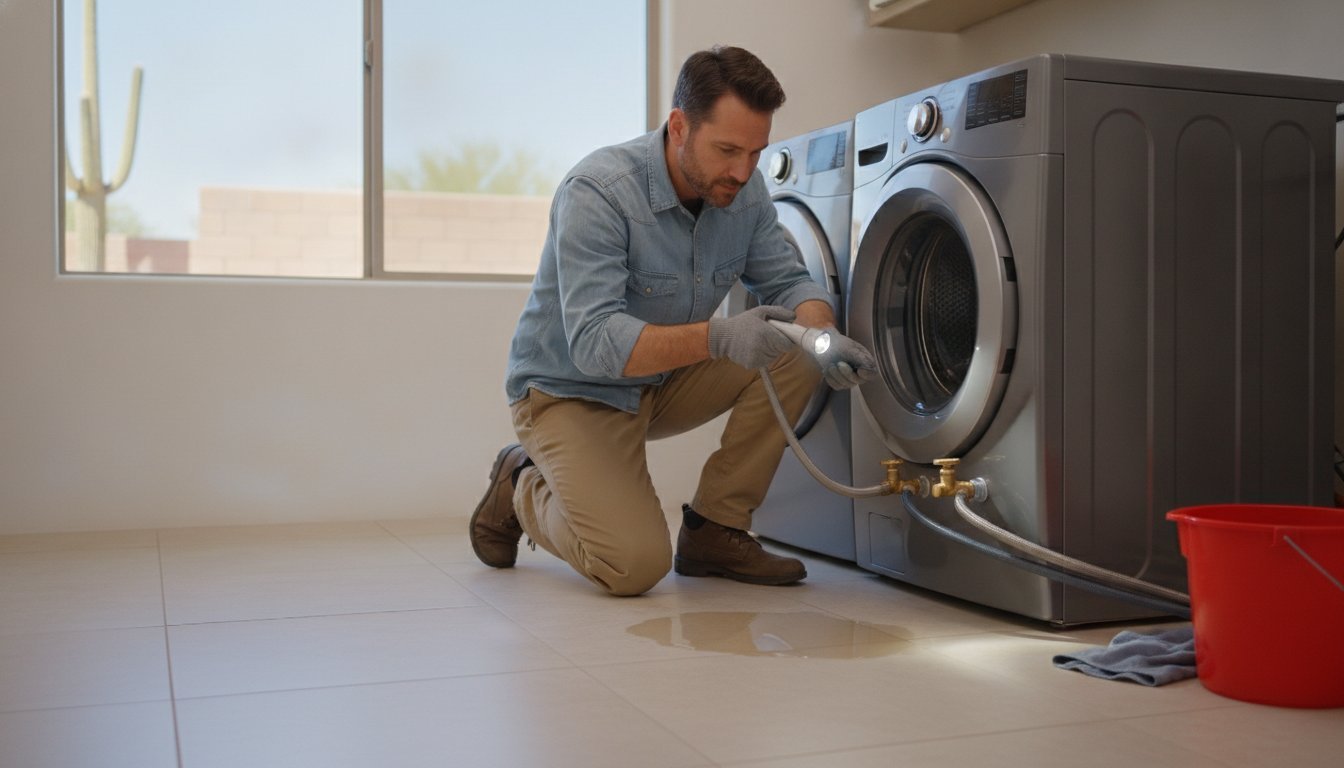
Last Tuesday, Sarah in Chandler discovered a small puddle that quickly turned into a flooded hallway before the rinse cycle even finished. It’s a nightmare scenario that leaves you worried about warped drywall, ruined flooring, and the fear of replacing expensive parts you don’t actually need. Finding a reliable washer leaking water fix shouldn’t feel like a guessing game while your house is actively taking on water. We understand the stress of mounting laundry piles and the urgency of protecting your home’s foundation.
You deserve a dry laundry room and a machine that works without the drama. This expert guide simplifies the troubleshooting process so you can stop the leak before it causes permanent damage. We’ll show you how to read the “puddle clues” to find the exact source of the problem. You’ll learn which repairs are simple DIY projects and when the complexity of modern high-efficiency machines means it’s time to call a professional. From checking the water inlet valve to inspecting the drain pump, we’ve got you covered.
Key Takeaways
- Prioritize safety by disconnecting the power and water supply immediately to prevent electrical hazards and water damage.
- Identify the source of the puddle to determine the best washer leaking water fix, focusing on supply hoses for leaks at the back.
- Save time and money by checking simple DIY culprits like clogged drain pump filters or loose hose connections first.
- Distinguish between minor maintenance and serious mechanical issues like cracked internal pumps or failing tub bearings.
- Get professional help for complex residential repairs to protect your flooring and ensure your machine runs efficiently for years.
Emergency First Steps: What to Do When You Find a Leak
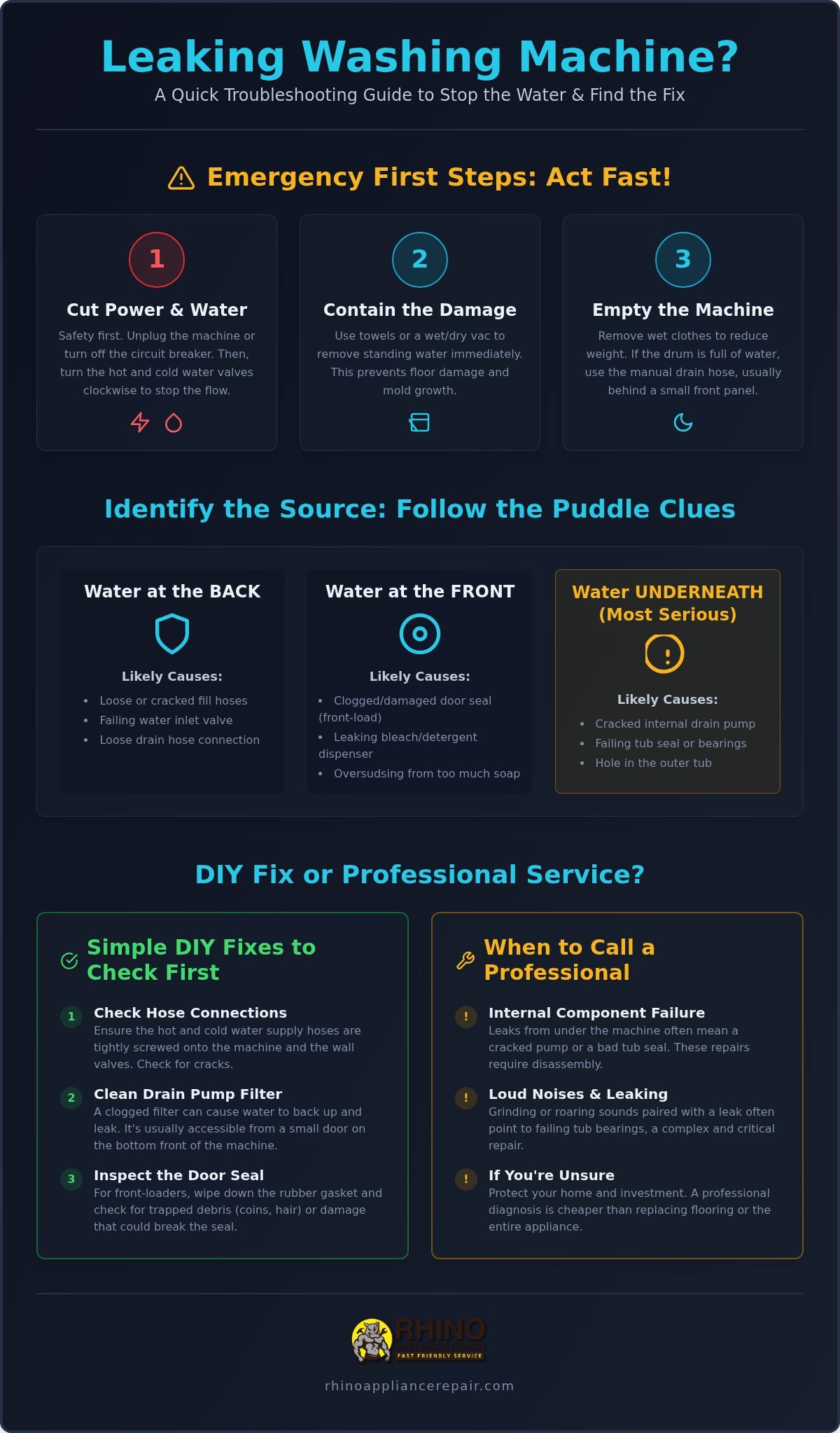
Finding a puddle in your laundry room is an immediate stressor that requires fast action. A small leak can quickly turn into a major disaster, damaging your subfloor and leading to expensive restoration bills. Before you can implement a permanent washer leaking water fix, you must stabilize the area to protect your home and your family. Taking these initial steps prevents the situation from escalating into a full-scale flood while you diagnose the problem.
Cutting the Power and Water Safely
Safety is your absolute priority. Water and electricity are a dangerous combination, so never step into standing water to reach a power cord. If the puddle has reached the outlet, go directly to your home’s breaker box and kill the power to the laundry room first. Many homes in the East Valley use GFCI outlets for appliances. Check if the reset button has popped, as this is a common sign that moisture has already interfered with the electrical circuit.
Once the power is off, reach behind the machine to locate the hot and cold water shut-off valves. Turn these knobs clockwise until they stop. Understanding how washing machines work helps you realize that these valves are the primary barrier between your home and constant city water pressure. Shutting them off stops the flow immediately, even if an internal hose has burst.
Protecting Your East Valley Home from Water Damage
Arizona homeowners know that moisture trapped in dark, warm spaces leads to rapid mold growth. You need to clear the standing water as quickly as possible using a wet/dry vac or a heavy stack of towels. In Gilbert and Chandler, many homes feature tile or laminate flooring that can hide water in the grout lines or under the planks. If water sits too long, it can seep into the subfloor and cause warping or structural issues.
After you’ve mopped up the initial mess, use a piece of painter’s tape to mark the edge of any remaining damp spots. This visual check helps you determine if the leak is continuing from residual water in the drum or if the flow has successfully stopped. If the puddle grows after the valves are shut, you’re likely dealing with a drainage issue rather than a supply line problem.
Don’t forget the laundry inside the machine. A half-washed load of wet clothes is incredibly heavy and will begin to smell in just a few hours. Carefully move the sodden items into a plastic bin and transfer them to a bathtub or utility sink. If the drum is still full of water, check the bottom front of your machine for a small access door. Most modern units have a manual drain hose here that allows you to empty the tub safely into a shallow pan. This simple step is a critical part of any effective washer leaking water fix because it removes the weight and pressure from the failing components.
Identifying the Source: Where Is the Water Coming From?
Finding a reliable washer leaking water fix starts with a bit of detective work. You don’t need to take the whole machine apart to get answers immediately. Usually, the location of the puddle tells the entire story of what’s failing inside. By observing where the water pools, you can narrow down the list of suspects and decide if you’re facing a simple hose tightening or a more complex mechanical failure.
- Water at the back: This usually points to the fill hoses, the water inlet valve, or a loose drain hose connection.
- Water at the front: On front-load units, this is almost always a door seal issue. On top-load units, it could be a leaking bleach dispenser.
- Water underneath: This is the most serious sign. It often indicates a cracked internal drain pump, a failing tub seal, or a hole in the outer tub itself.
If the source isn’t obvious, try the “Paper Towel Test.” Lay dry paper towels around the perimeter of the machine and run a short cycle. The first towel to show moisture reveals the exact direction of the leak. This simple DIY trick saves you from guessing and helps you explain the issue clearly if you eventually need to call for help.
Front-Load vs. Top-Load Leak Patterns
Front-loading machines frequently leak from the large rubber door gasket, also known as the boot seal. Debris like pet hair, coins, or even a stray sock can get trapped in the folds, preventing a watertight seal. Over time, mold or mineral buildup can also cause the rubber to lose its flexibility. Top-load machines are more prone to leaks caused by “oversudsing” from using too much detergent. This creates a mountain of foam that overflows from the back of the tub. If your machine is also struggling to clear water effectively, you might need a Washer won’t drain fix to prevent these messy overflows from recurring.
Checking the External Connections
Examine the hot and cold fill hoses first. These rubber or braided steel lines stay under constant pressure even when the machine isn’t running. Look for blisters, cracks, or rusted couplings that suggest the material is failing. In the East Valley, our high mineral content is a known enemy of appliance longevity. Hard water buildup can accumulate inside the hose connections, creating a crusty layer that prevents a tight seal. This leads to slow, steady drips that often go unnoticed until the floor is damaged.
Check the drain hose as well. It should be securely hooked into the wall’s standpipe without being pushed in so far that it causes siphoning. If the hoses look fine but you still have a mess, the problem is likely an internal component like a cracked pump. For residents in Gilbert or Mesa, scheduling a professional diagnostic is the fastest way to stop the damage and get your laundry room back in order.
Common DIY Fixes for a Leaking Washing Machine
Many homeowners are surprised to find that a washer leaking water fix is often as simple as a five-minute adjustment. Before you assume a major part has failed, look at the basics. If your machine isn’t perfectly level, the water can splash over the top of the tub during a high-speed spin cycle. This creates “ghost” leaks that seem to come from the bottom of the unit but are actually just overflow from an unbalanced load. Use a bubble level on the top of the machine and adjust the feet until it stays steady.
Managing suds is another common culprit. Using too much high-efficiency (HE) detergent, or using standard soap in an HE machine, creates a mountain of foam. This foam eventually forces its way out of the back air vent or under the lid, appearing as a leak. If you see white residue or bubbles near the back of the unit, try running a “tub clean” cycle with vinegar and reduce your detergent usage by half in the future.
Replacing Your Washer Fill Hoses
The supply hoses at the back of your machine are the most common source of catastrophic floods. Standard rubber hoses are prone to drying out and cracking, especially given the temperature fluctuations in Arizona. We recommend upgrading to stainless steel braided hoses. These are much more resistant to bursting under pressure and provide a higher level of security for your laundry room.
When swapping hoses, always use two hands: one to hold the inlet valve steady and one to turn the wrench. This prevents you from accidentally cracking the plastic valve inside the machine. To maintain a dry home, replace these hoses every five years regardless of how they look. In Maricopa County, the high mineral content in our water causes internal scaling that can weaken the hose material from the inside out, making proactive replacement a smart investment.
Cleaning the Door Gasket and Pump Filter
Front-load washers rely on a thick rubber door gasket to keep water inside. Over time, pet hair, lint, and small items like coins get stuck in the folds of this seal. This debris creates a tiny gap that allows water to trickle down the front of the machine. Wipe this area down weekly with a damp cloth to ensure a tight fit.
Our local hard water specifically accelerates gasket failure because mineral deposits can build up on the rubber, making it brittle and less flexible. If the seal looks cracked or has visible lime scale, it may be time for a replacement. Additionally, don’t forget the drain pump filter located behind the small door at the bottom of your front-loader. If this filter is clogged, water can back up and leak through the emergency drain tube. For complex clogs or internal issues, you can always find expert washing machine repair in San Tan Valley to get things flowing properly again.
Advanced Repairs: When It is Time for Professional Service
Sometimes, a simple washer leaking water fix isn’t enough when the damage is buried deep within the machine’s mechanical core. While external hoses are easy to swap, internal components require a much higher level of technical expertise. If you have already checked the connections and the puddle keeps returning, you’re likely dealing with a failure that requires professional diagnostic tools. Recognizing these signs early can prevent a small drip from becoming a major flood that ruins your laundry room subfloor.
One of the most common advanced issues is an internal drain pump failure. If you see water pooling directly under the center of the unit, the pump housing may have developed a hairline crack. Another red flag is a “loud roar” or a sound like a jet engine during the spin cycle. This noise indicates that the tub seal has failed, allowing water to leak into the bearings. If left unaddressed, this moisture will rust the bearings and eventually seize the motor. Additionally, if your machine overflows, the pressure switch or its sensing tube is likely clogged with sediment, preventing the unit from knowing when to stop the water flow.
Deciding whether to invest in these major parts can be difficult. We recommend using the “50/50 rule” as a guide. If your washer is more than halfway through its expected lifespan and the repair costs more than half the price of a new unit, replacement is often the smarter financial move. You can find more detail in our Repair or replace appliance guide to help you weigh the options for your specific model.
The Dangers of DIY Internal Repairs
Modern high-efficiency washers are complex machines with sensitive electronic boards and tightly packed components. Opening the outer tub to reach a seal or bearing requires specialized pullers and heavy-duty tools that most homeowners don’t have in their garage. There is also a significant risk of electrical shock from large capacitors, even when the machine is unplugged. Attempting these repairs yourself can often lead to further mechanical damage or void any remaining manufacturer warranty. It’s safer to let an expert handle the heavy lifting while you focus on your family.
What to Expect During a Professional Repair Visit
When you call for help, a Rhino technician will perform a comprehensive diagnostic to find the “invisible” leak that software codes often miss. We prioritize transparent pricing, so you’ll receive a clear explanation of the problem and the total cost before any work begins. Our goal is to provide a fast turnaround so your laundry routine stays on track. If you’re tired of mopping up puddles and want a guaranteed result, schedule a professional inspection today to protect your home from further water damage.
Reliable Washer Repair in Gilbert, Mesa, and the East Valley
When a DIY washer leaking water fix doesn’t stop the puddle, you need a partner who understands the specific plumbing challenges of Arizona homes. Rhino Appliance Repair has been the East Valley’s trusted solution for residential laundry issues since 2020. As a family-owned and operated local business, we don’t just see a service call; we see a neighbor in need of help. We prioritize integrity and transparency in every interaction, ensuring you get your laundry room back to normal without the stress of hidden fees or unnecessary part replacements.
Our team specializes in major residential units from the brands you rely on most, including Samsung, Maytag, LG, and Whirlpool. We focus exclusively on the machines found in your home, which means we carry the specific diagnostic tools and high-quality parts required for a fast, effective repair. We serve homeowners across the East Valley, including Gilbert, Chandler, Mesa, Tempe, Queen Creek, and San Tan Valley. Whether you are dealing with a front-load gasket failure or a top-load pump leak, we have the expertise to handle it promptly.
Why East Valley Homeowners Trust Rhino
Arizona homes face unique environmental stressors that impact appliance longevity. Our intense desert heat can cause rubber components to dry out and crack faster than in more humid climates. When combined with the high mineral content found in Maricopa County water, your washer’s internal seals and valves are under constant attack from scale buildup. We’ve spent years studying these local patterns to provide a more durable washer leaking water fix for our community.
Because we are dedicated to residential service, we offer a level of specialized knowledge that commercial-only shops simply don’t provide. We understand that a broken washer disrupts your entire family’s routine. Our “good neighbor” approach means we provide honest advice and straightforward solutions. We take personal pride in our craftsmanship, aiming to build long-term relationships with our clients rather than focusing on a single transaction. You can count on us for professional confidence and a friendly, approachable service experience every time.
Schedule Your Washer Repair Today
A small drip today can quickly escalate into a major flood that causes thousands of dollars in damage to your flooring or drywall. Don’t wait for the puddle to grow or for mold to take hold in your laundry room. Taking action now protects your home’s value and ensures your appliance continues to run efficiently for years to come. We move quickly from identifying your pain point to delivering a clear, effective resolution that respects your time and your budget.
Our technicians are ready to provide the fast response you need to restore order to your household. We offer a methodical, logical path to help that is as frictionless as possible for the homeowner. Book your residential washer repair with Rhino Appliance Repair today and let our family take care of yours. We are proud to serve the East Valley with the professional standards and honest service you deserve.
Protect Your Floors and Restore Your Laundry Routine
Dealing with a puddle in the laundry room doesn’t have to be a disaster. By acting fast to shut off the water and tracing the leak to its source, you’ve already taken the most important steps toward protecting your home. Whether the issue is a simple hose replacement or a more complex internal failure, a clear understanding of the cause is the first part of a successful washer leaking water fix. Don’t let a small drip escalate into a structural nightmare for your subfloor.
When a repair goes beyond a loose connection, you need a dependable partner. Rhino Appliance Repair is family-owned and operated, providing the fast residential service that East Valley families depend on. As local experts, we understand the specific wear and tear our desert climate places on your machines. We’re committed to helping our neighbors in Gilbert, Chandler, and Mesa stay dry and functional.
Schedule Your Expert Washer Repair at RhinoApplianceRepair.com to get your household back on track. You’ve handled the emergency; let us handle the permanent solution.
Frequently Asked Questions
Is it worth fixing a leaking washing machine?
Yes, repairing a leak is usually the most cost-effective choice if your machine is less than eight to ten years old. Most leaks stem from affordable components like hoses, valves, or pumps. Fixing these parts is significantly cheaper than purchasing a new high-efficiency unit and paying for installation. If the machine is otherwise in good mechanical shape, a professional repair can extend its lifespan by several more years.
Why is my washer leaking water from the bottom only when it spins?
Timing a leak during the spin cycle usually points to a failing tub seal or a cracked outer tub. The high-speed rotation creates intense centrifugal force that pushes water higher up the sides of the drum. If the seal is worn, moisture bypasses the bearings and drips onto your floor. If you also hear a loud roaring sound like a jet engine, your bearings are likely failing alongside the seal.
Can a clogged drain cause a washing machine to leak?
A blockage in your standpipe or drain hose is a very common cause of laundry room floods. When the wall drain is slow, the machine pumps water out faster than the pipe can handle it, leading to a messy overflow. You might think you need a complex washer leaking water fix, but the solution could be as simple as clearing a lint clog from the plumbing line or the pump filter.
How much does it usually cost to fix a washer leak in Arizona?
The total cost depends on the specific part that failed and the brand of your residential appliance. Minor repairs like replacing a fill hose or cleaning a filter are budget-friendly. Major mechanical failures involving the tub or motor require a larger investment in parts and labor. Most homeowners in Gilbert and Mesa find that professional diagnostics prevent the “parts cannon” approach, saving money by identifying the exact problem first.
Why is my front-load washer leaking from the door?
Water trickling down the front of your machine almost always indicates a problem with the rubber door gasket. Pet hair, lint, and coins can get trapped in the folds, preventing a watertight seal. In the East Valley, mineral deposits from our hard water can also make the rubber brittle and prone to cracking. Regularly wiping down the seal and checking for debris is the best way to prevent these specific front-load leaks.
Can hard water cause my washing machine to leak?
Hard water is a primary cause of appliance failure in Maricopa County. Calcium and magnesium deposits accumulate inside water inlet valves, preventing them from closing completely. This leads to slow, persistent drips even when the machine is off. These minerals also attack rubber seals and gaskets, making them lose the flexibility needed to stay watertight. Regular descaling can help protect your internal components from this aggressive mineral buildup.
How do I stop my washing machine from leaking immediately?
Shut off the hot and cold water valves located behind the unit and unplug the power cord right away. If you can’t reach the valves, you may need to turn off the main water supply to your home. Clearing standing water with a wet/dry vac prevents mold growth and subfloor damage. Once the area is stable, you can safely look for a permanent washer leaking water fix without the stress of an active flood.
What are the signs that my washer pump is failing?
You will typically see water pooling directly under the center of the machine or hear a loud grinding noise during the drain portion of the cycle. A failing pump often leaves clothes sodden because it cannot remove water effectively. If the leak only appears while the machine is trying to empty the tub, the pump housing is likely cracked or the internal seal has reached the end of its life.