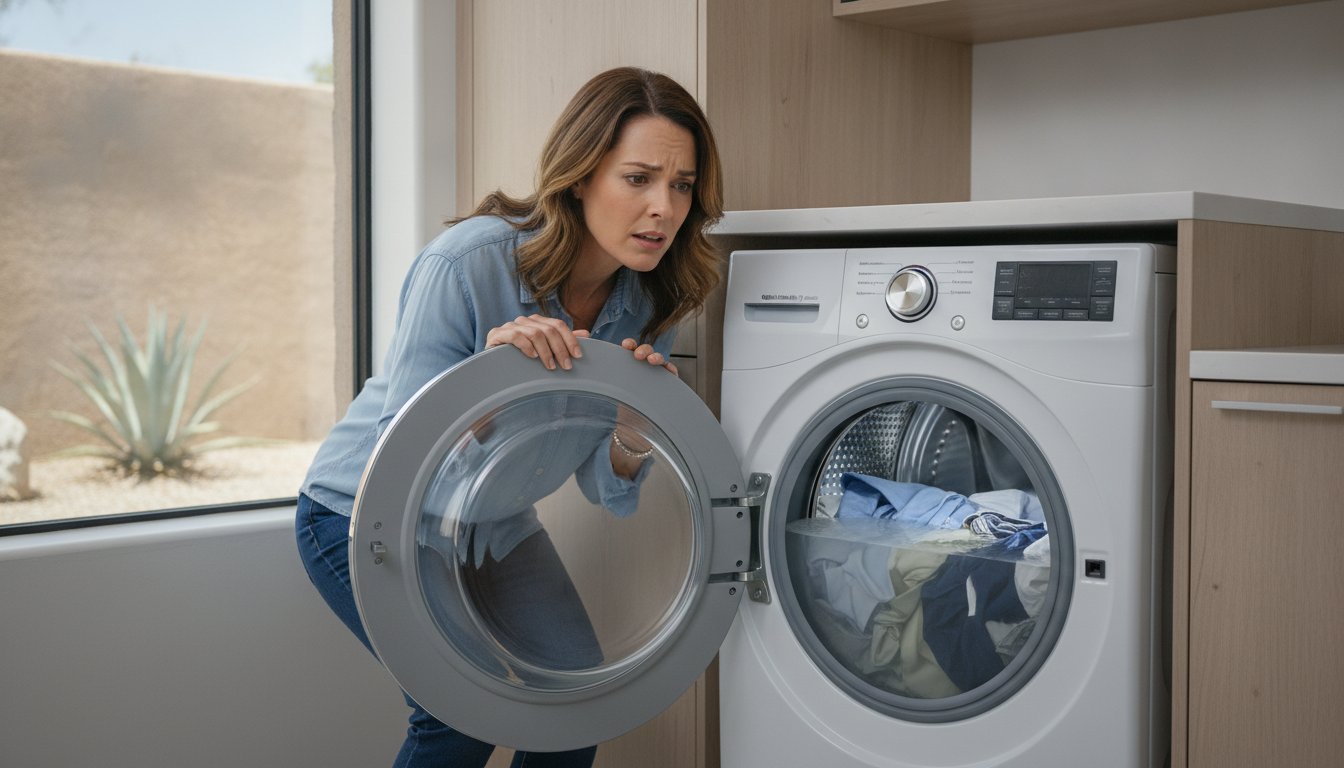
Imagine opening your washer to find your favorite clothes swimming in a pool of gray, murky water. It’s a heavy, soggy mess that threatens to soak your laundry room floor if you aren’t careful. You’re likely staring at that tub and wondering if this is a quick fix or a budget-breaking disaster. Dealing with a washing machine not draining is one of the most frustrating interruptions to a busy week. We know the stress of seeing a machine full of water, especially when you’re worried about the cost of a replacement.
The good news is that many drainage issues are simpler than they look. You don’t have to panic about water damage or expensive service calls just yet. We’ll show you how to drain the unit safely without making a mess and help you identify exactly what’s causing the backup. In the East Valley, where hard water can complicate appliance health, knowing these steps is vital for every homeowner. This guide covers the DIY steps to clear clogs, tips to check your drain pump, and clear signs that indicate it’s time to call in a local expert. Let’s get your laundry moving again.
Key Takeaways
- Spot warning signs like unusual humming or failed spin cycles before they lead to a major flood in your laundry room.
- Identify the most common causes for a washing machine not draining, from clogged hoses to items stuck in the coin trap.
- Master the technique for manually draining a full washer drum safely to avoid making a mess on your floor.
- Learn how hard water in the East Valley affects your pump and how to prevent scale buildup through routine maintenance.
- Know when to tackle a repair yourself and when a complex motor or control board issue requires a professional technician.
Understanding Why Your Washing Machine Is Not Draining
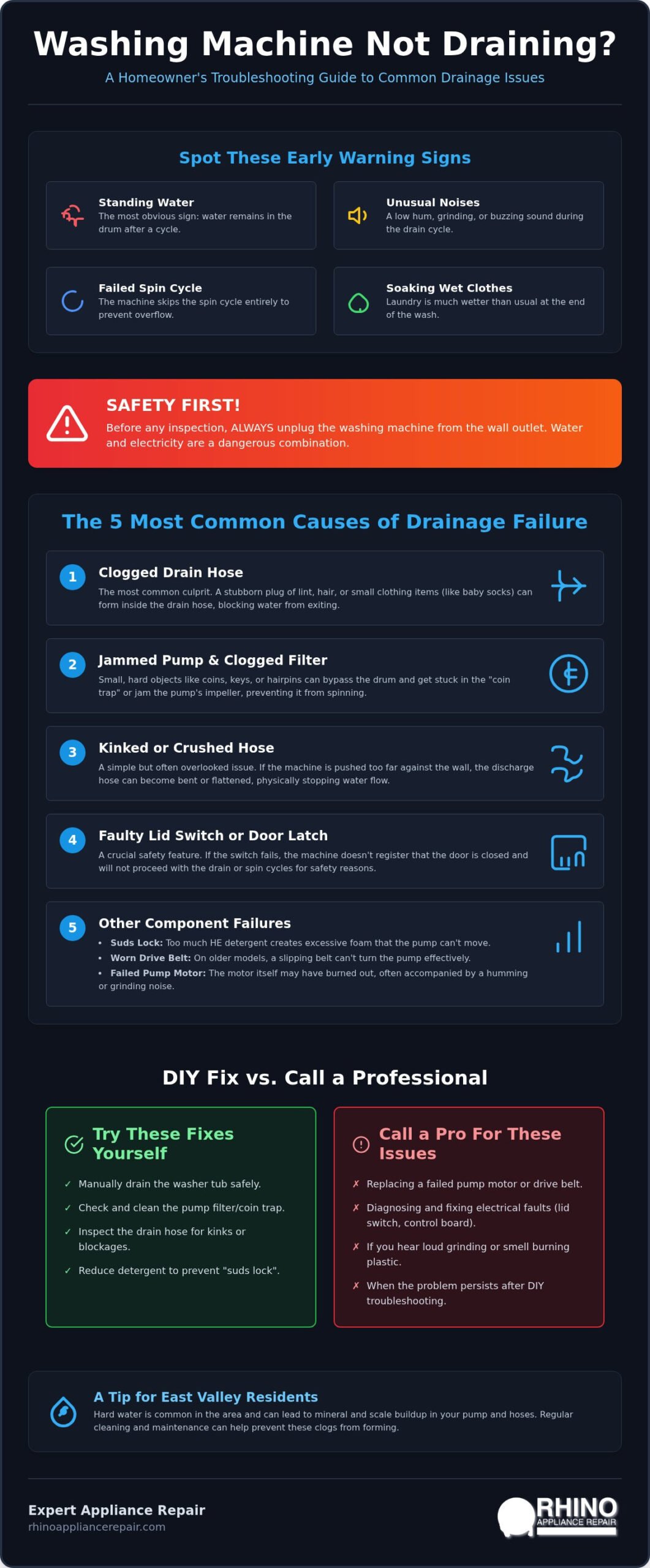
Safety is the absolute first step before you touch a tool or reach into the drum. Unplug the unit immediately. Water and electricity are a dangerous combination, and you don’t want the machine to activate while you are inspecting the internal parts. Once the power is cut, you can safely investigate why you have a washing machine not draining. Most drainage failures aren’t random; they are the result of a specific breakdown in the machine’s communication or mechanical systems.
To find the fix, it helps to understand how washing machines work during the final stages of a cycle. The process is a coordinated effort between the timer, the pressure switch, and the drain pump. When the wash cycle ends, the timer or control board sends a signal to the pump to start moving water. If you see standing water, hear a low humming sound, or notice the machine skip the spin cycle entirely, one of these components has likely failed. Sometimes a machine will spin but leave water behind, which usually points to a partial clog in the exit line rather than a dead motor.
The Role of the Drain Pump and Filter
The drain pump is the heavy lifter. It uses a small plastic impeller to force water out of the drum and through the drain hose. In most front-load models, you’ll find a dedicated filter behind a small door at the bottom front of the unit. Top-load models are often different; their filters might be tucked away inside the pump housing or underneath the agitator. When the pump motor fails, it usually goes silent or makes a loud grinding noise. However, if you hear a steady hum but no water moves, a physical object like a stray sock or a coin is likely jamming the impeller blades.
Sensors and Switches: The Brains of the Operation
Your washer relies on sensors to know it’s safe to proceed. The lid switch on top-loaders and the door latch on front-loaders act as safety kill-switches. If the machine doesn’t “see” that the door is securely closed, it won’t trigger the drain or spin cycles for safety reasons. Another critical part is the pressure switch. This sensor monitors the water level by measuring air pressure in a small tube. If this tube gets blocked by lint or hard water sediment, the machine gets “tricked” into thinking the tub is already empty. It will simply sit still while your laundry stays submerged in a murky pool.
The 5 Most Common Causes of Drainage Failure
When your laundry day comes to a screeching halt, the cause is usually one of five common culprits. Identifying these issues early can prevent water damage to your floors and save your clothes from sitting in stagnant water. Most homeowners struggle with a washing machine not draining due to simple mechanical obstructions or detergent mistakes that are easy to overlook.
Mechanical Blockages: Hoses and Pumps
Clogs are the most frequent offenders in any laundry room. Lint, hair, and even small garments like baby socks can migrate into the drain hose and create a stubborn plug. Beyond lint, we often see the ‘coin trap’ problem. Loose change, screws, or hairpins slip through the drum and jam the pump impeller. Unlike a simple filter clog, these heavy objects can physically break the plastic pump blades. You should also check behind the machine to ensure the discharge hose isn’t kinked or crushed against the wall. If the hose is clear, check your home’s standpipe. A backup in your household plumbing can often mimic an appliance failure, especially in older homes.
Electrical and Component Failures
If the mechanics look clear, the problem might be electrical or sensor-based. On older top-load models, a worn or slipping drive belt prevents the pump from spinning correctly. For modern units, the lid switch or door latch is a common failure point. This safety feature stops the machine from spinning; if it fails, the unit won’t trigger the drain cycle because it doesn’t know the door is closed. Testing for continuity with a multimeter can confirm if this switch is the culprit. If you’ve checked the basics and the tub is still full, reaching out for expert washer repair is the safest way to protect your investment.
Watch out for ‘suds lock’ as well. Using too much high-efficiency (HE) detergent creates excessive foam that ‘locks’ the pump, making it unable to move water. Finally, a burnt-out motor often gives itself away with a distinct acrid, burning smell. This usually happens when the motor tries to turn a jammed impeller for too long. If the control board itself glitches, it may simply fail to send the ‘drain’ command to the pump, which often requires a professional diagnostic tool to identify.
Step-by-Step Troubleshooting for Front and Top Loaders
Once you’ve confirmed your washing machine not draining isn’t just a one-time glitch, it’s time to get your hands dirty. Before you can fix the internal parts, you must remove the standing water. Doing this without flooding your laundry room requires a methodical approach and a few basic household tools. A controlled drain prevents floor damage and makes the machine light enough to move for a closer look.
The ‘Clean Drain’ Protocol for Manual Emptying
To start, gather a few shallow pans, several old towels, and a shop vac if you have one. For front-loading machines, look for a small access door at the bottom. Most modern units have a tiny emergency drain hose located right next to the filter cap. Pull the plug on this hose and let the water flow into your shallow pan. It’s a slow process, but it’s the cleanest way to empty a full drum without a deluge.
- Gravity Draining: If your machine lacks an emergency hose, pull the large corrugated drain hose from the wall standpipe. Lower it into a bucket kept as close to the floor as possible. Gravity will pull the water out naturally.
- Shop Vac Method: Use a wet/dry vacuum to suck water directly from the drain hose or the drum itself for a faster, mess-free experience.
To safely access the pump on a top-loader, ensure the drum is fully empty before gently tilting the unit back against a wall for support.
Inspecting the Pump and Filter
With the water gone, you can now open the pump filter. On front loaders, unscrew the large cap slowly; keep a towel ready for the small amount of residual water that always remains. Inside, you’ll likely find the “treasure” that caused the backup: coins, bra wires, or a thick layer of compressed lint. Reach in and feel the impeller blades. They should spin with a slight “clicky” resistance. If they are loose, wobbly, or won’t move at all, the pump is physically damaged and needs replacement.
Don’t forget to check the connection where the hose meets the standpipe. Sometimes the clog isn’t in the machine, but in the household plumbing itself. If everything looks clear, try a ‘Master Reset.’ For many digital washers, this involves unplugging the unit for one minute, plugging it back in, and then opening and closing the lid six times within 12 seconds. This can clear electronic glitches that prevent the drain cycle from starting. If these steps don’t resolve the issue, the problem likely lies deep within the motor or control board.
Preventing Future Clogs: Maintenance Tips for East Valley Residents
Once you’ve cleared the water, you don’t want to repeat the experience. Preventing a washing machine not draining starts with understanding your specific environment. Living in the East Valley brings a unique set of challenges for your appliances. Between the high mineral content in our water and the heavy dust of the desert, your washer works harder than units in other parts of the country. A few proactive habits can save you from a soggy laundry room in the future.
Combating Hard Water Buildup
Gilbert and Mesa are known for high mineral counts. This “Arizona factor” leads to significant calcium and magnesium scale. These deposits don’t just stay in your pipes; they seize up pump impellers and narrow the diameter of internal hoses. Over time, this restriction forces the motor to work harder until it eventually fails. Consider installing a whole-home water softening solution to protect all your appliances. At the very least, run a hot wash cycle with two cups of white vinegar every three months. This natural acid helps dissolve stubborn scale before it becomes a permanent blockage.
Routine Cleaning for Longevity
Most drainage failures are preventable with better habits. Pocket management is your first line of defense. Coins, hairpins, and screws are the natural enemies of your drain pump. They can easily chip plastic blades or jam the motor entirely. Check every pocket before clothes hit the drum. Additionally, practice strict detergent discipline. If you have a modern machine, only use High Efficiency (HE) soap. Standard detergents create “suds lock,” where excessive foam traps air in the pump and prevents water from moving. Even with HE soap, use the minimum amount necessary to avoid sticky residue buildup.
Monthly maintenance cycles are essential for flushing out sediment. Use the “empty load” trick by running a cycle with hot water and a specialized cleaner to keep the internal sensors clear. Don’t forget to wipe down the door gasket on front loaders. This prevents mold growth and keeps small items from slipping into the drainage path. For more quick tips on keeping your unit running, see our guide on Washer Won’t Drain? 5 Fast Fixes. Consistency is the key to avoiding a crisis.
If your maintenance routine reveals a part that’s already failing or making strange noises, don’t wait for a flood to happen. Our team provides reliable washer repair in Gilbert and Mesa to help you stay ahead of major appliance breakdowns.
When to Call a Professional Appliance Repair Expert
Sometimes, a washing machine not draining is more than just a clogged filter or a kinked hose. While checking the pump for coins is a great first step, internal mechanical failures require a deeper level of expertise. Components like the drive motor, the transmission, or the main electronic control board are complex systems. If these parts fail, the machine won’t just stop draining; it might stop functioning entirely. Attempting to repair these without the right tools or training can lead to further damage and higher costs in the long run.
Signs You Need a Professional Technician
Mechanical distress often speaks for itself. If your machine makes a loud grinding or screaming noise during the drain cycle, the pump motor bearings have likely seized. This is a physical failure that a simple cleaning cannot fix. You should also look for water pooling underneath the cabinet. Leaks from the bottom of the unit often indicate a cracked pump housing or a blown internal seal. Finally, keep an eye on the digital display. If your washer shows specific error codes like F05 or E21, it is signaling an electrical failure that requires a professional diagnostic tool to clear safely.
Safety is a major factor when dealing with internal repairs. Washing machines contain high-voltage capacitors and complex wiring. Even when the unit is unplugged, some components can hold a dangerous electrical charge. For homeowners in the East Valley, trying to navigate these systems without experience isn’t worth the risk. If you are struggling with a washing machine not draining, calling a technician is the fastest way to get your laundry room back in order.
Rhino’s Commitment to the East Valley
Rhino Appliance Repair is a family-owned business dedicated to Gilbert, Chandler, and Mesa families. We understand that a broken washer isn’t just an inconvenience; it’s a disruption to your family’s routine. We take pride in being a trusted local expert who provides fast, friendly service. Our team specializes in major residential washer brands and focuses on getting the job done right the first time.
We provide transparent pricing and honest assessments for every customer. Our goal is to help you decide if a fix is worth the investment or if you are better off with a new unit. Check out our Repair or Replace: An Appliance Decision Guide to see which path makes the most sense for your budget. We value long-term relationships with our neighbors and will always give you a straight answer about the health of your appliance.
Get Your Laundry Moving Again
Dealing with a washing machine not draining is a major headache, but it doesn’t have to ruin your week. Most drainage issues start with simple blockages or the unique hard water challenges we face here in the East Valley. By following a consistent maintenance schedule and checking those pockets for loose change, you can keep your appliance running smoothly for years. We’ve covered how to clear clogs safely and when a failure requires a deeper look into the motor or control board.
If you’ve tried the DIY steps and still have a tub full of water, don’t risk water damage to your floors. Our family-owned and locally operated team provides a fast response for families in Gilbert, Chandler, and Mesa. We offer expert service for all major residential brands, ensuring your repair is handled with integrity and professional care. Schedule Your Expert Washer Repair with Rhino Today! We are here to take the stress out of your appliance emergencies and provide honest assessments you can trust. You’ve got this, and we are just a call away if you need a hand.
Frequently Asked Questions
Is it safe to leave water in the washing machine overnight?
Leaving water stagnant in your machine is never a good idea. Stale water leads to mold growth, foul odors, and can eventually degrade the rubber seals. In our warm Arizona climate, bacteria multiply rapidly in damp environments. It also places constant pressure on the pump’s internal seals. If you are in Gilbert or Mesa, try to drain the unit manually as soon as you notice the backup to protect your machine.
How do I manually drain a front-load washing machine?
Most front-load machines feature a small emergency drain hose located behind an access panel at the bottom front. Simply pull this hose out and remove the cap to drain the water into a shallow pan. If your specific model doesn’t have one, you can lower the main corrugated drain hose into a bucket kept low to the floor. Gravity will naturally pull the water out and prevent a mess on your floor.
Why is my washer humming but not draining or spinning?
A low humming sound usually indicates that the motor is receiving power but is physically unable to turn. This is a common symptom of a washing machine not draining due to a jam. A coin, button, or small piece of clothing is likely stuck in the pump impeller. You must turn off the power immediately. Leaving it humming can burn out the motor, turning a simple clog into a costly repair.
Can a clogged house drain cause my washer to stop draining?
A backup in your home’s standpipe or main sewer line can definitely stop your washer from emptying. If the household plumbing is blocked, the pumped water has nowhere to go and will stay in the drum. Families in older Mesa or Tempe homes often face this issue. If your other household drains are slow, the problem is likely your plumbing rather than a mechanical failure within the washing machine itself.
How often should I clean my washing machine’s drain filter?
We recommend cleaning your drain filter at least once every three months to ensure peak performance. If you have pets or wash very dirty clothes, monthly checks are even better. Regular maintenance prevents the lint and debris buildup that causes a washing machine not draining. In San Tan Valley, frequent cleaning also allows you to catch hard water scale early before it causes the pump to seize or fail completely.
What does it mean when my washer stops mid-cycle with water still inside?
Stopping mid-cycle usually points to a safety sensor or electronic glitch. The machine won’t proceed if it thinks the door is unlocked or if the water level sensor is sending incorrect data. It can also happen due to ‘suds lock’ from using too much soap. The unit pauses to prevent a flood or mechanical damage. Try a master reset first, but if it continues, a professional diagnostic is usually necessary to identify the fault.
Can hard water actually break my washing machine pump?
Yes, hard water is a leading cause of appliance failure in the East Valley. High mineral levels lead to calcium buildup that can crystallize around the pump’s impeller and seals. This sediment acts like an abrasive, wearing down internal parts until the pump seizes or leaks. Running a hot vinegar cycle every few months helps dissolve this scale. Protecting your machine from Arizona’s water is vital for avoiding expensive residential washer repairs.